Cybersecurity News in Asia

RECENT STORIES:

SEGA moves faster with flow-based network monitoring
Warning: researchers cut quantum attack cost estimate for Bitcoin and ...
CyberDSA 2026 Draws Global Cyber Leaders for High-Level Talks on AI, D...
The 3rd GTI Forum on Digital Intelligence, Hong Kong Advances Global I...
Nearly Half of Reported Scam Incidents Go Unresolved Across Southeast ...
Futurise Impact Report 2025 Highlights Progress in Regulatory Innovati...
LOGIN REGISTER
CybersecAsia
  • Features
    • Featured

      The recovery-first approach to data resilience

      The recovery-first approach to data resilience

      Monday, September 7, 2026, 4:21 PM Asia/Singapore | Features
    • Featured

      Dealing with agentic AI governance and resilience challenges

      Dealing with agentic AI governance and resilience challenges

      Tuesday, September 1, 2026, 11:51 AM Asia/Singapore | Features
    • Featured

      How well do you know your agent?

      How well do you know your agent?

      Thursday, August 20, 2026, 3:21 PM Asia/Singapore | Features
  • Opinions
  • Tips
  • Whitepapers
  • AWARDS 2026
  • Directory
  • E-Learning

Select Page

News

Warning: researchers cut quantum attack cost estimate for Bitcoin and Ethereum by half

By CybersecAsia editors | Monday, September 14, 2026, 12:26 PM Asia/Singapore

Warning: researchers cut quantum attack cost estimate for Bitcoin and Ethereum by half

A public hacking challenge sees over 100 contributors optimizing circuits, slashing logical-qubit and Toffoli-gate scores by 86% to accelerate post-quantum upgrades

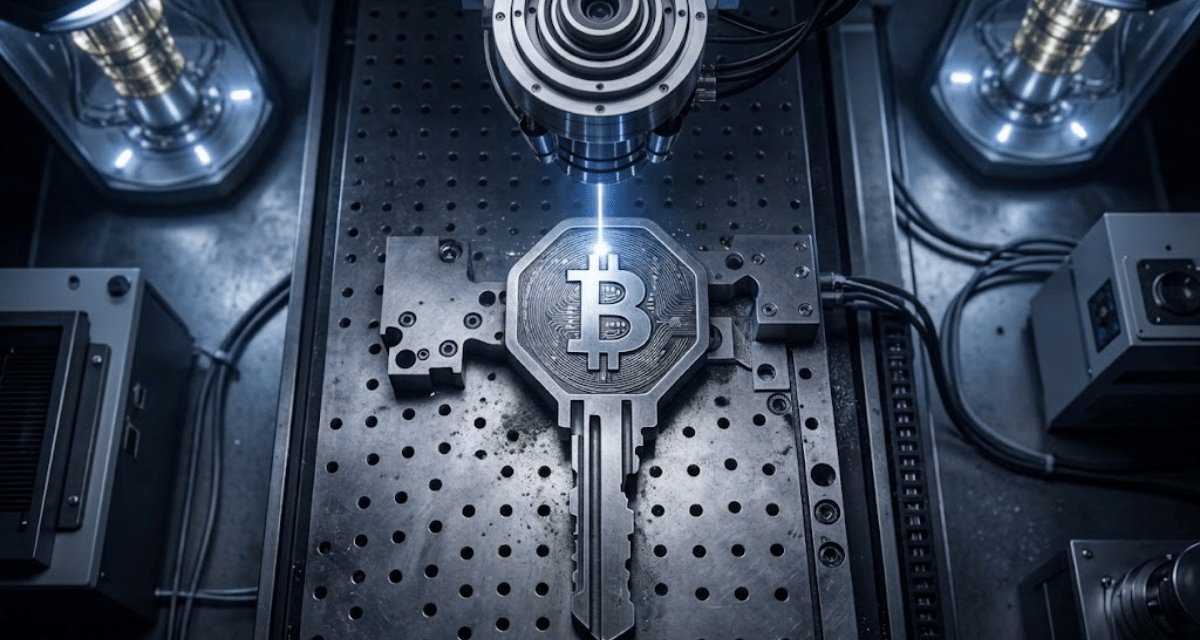
More than 100 cryptography researchers have reduced by over 50% the estimated computational resources required for a critical subroutine in a hypothetical quantum attack on Bitcoin and Ethereum, beating a benchmark Google’s Quantum AI team published in March 2026.

According to The Block, the findings, released on 10 September, 2026, arrive as both blockchain networks accelerate plans to replace their current elliptic-curve cryptography with quantum-resistant alternatives before sufficiently powerful quantum hardware emerges.

The reduction in computational demands  came through a public optimization challenge launched by Eigen Labs on 30 May, 2026, which used a circuit verifier that Google had made available alongside its March estimates. Over roughly eight weeks, participants submitted more than 400 accepted designs that collectively drove the combined cost score — a product of logical qubits and Toffoli gates — down 86%, from 10.75bn to 1.496bn, according to a technical paper led by Theta Labs CTO Jieyi Long.

Open challenge drives down cost scores

The final figure was less than half Google’s previously reported benchmark of about 3bn, although the paper notes differences in accounting methods and interfaces mean the comparison is numerical context rather than a formal head-to-head outperformance.

Contributors had included researchers affiliated with the Ethereum Foundation, Eigen Labs, StarkWare, Starknet Foundation, Theta Labs, Brevis, Sei Labs, and Trail of Bits.

After the paper’s cutoff, submissions had continued to improve: one design reached 952,707 Toffoli gates, while another required only 813 logical qubits, albeit with higher gate counts.

The authors have emphasized that the circuits represent only a key arithmetic operation — reversible secp256k1 point addition used repeatedly inside Shor’s algorithm — and do not constitute a full attack implementation or account for physical error-correction overhead.

Even so, StarkWare co-founder Eli Ben-Sasson told The Block he had had “butterflies” when his team brought him the results, warning that if the cost estimate to break this cryptography is halved, then every quoted timeline for “Q-Day” must be shortened accordingly.

Ethereum and Bitcoin advance post-quantum migrations

The research coincides with concrete migration efforts on both chains.

  • The Ethereum Foundation has set a December 2029 deadline for full quantum resistance across its execution, consensus, and data layers, calling the target non-negotiable at least until January 2027. On 10 September 2026 Ethereum co-founder Vitalik Buterin had said he hopes to include EIP-8288 — a draft proposal he co-authored in June — in a future network upgrade. The proposal would move heavy cryptographic verification off-chain by having mempool nodes batch proofs into a single recursive STARK per block, potentially reducing gas costs for quantum-safe private transactions from around 10m units to tens of thousands. EIP-8288 remains a draft and has not yet been implemented on Ethereum’s live protocol.
  • Bitcoin developers are advancing BIP-360 and BIP-361, which define a new quantum-resistant address format and a migration timeline that would eventually bar new transactions to legacy address types. More than 7m BTC sit in addresses whose public keys are already exposed on-chain, according to estimates cited by Coinbase’s quantum advisory board.

US funding accelerates quantum hardware timelines

The US government is simultaneously accelerating quantum hardware development. Their Department of Commerce has committed over US$2 billion in CHIPS and Science Act equity stakes across nine quantum computing firms. IBM alone is receiving US$1bn to build a dedicated quantum foundry.

The National Institute of Standards and Technology has told federal agencies to plan on deprecating ECDSA by 2030 and disallowing it by 2035. Theta Labs’ Long said: “None of this is urgent because an attack is imminent…It is urgent because the remedy takes years and cannot be applied retroactively.”

Share:

PreviousCyberDSA 2026 Draws Global Cyber Leaders for High-Level Talks on AI, Digital Trust and Critical Infrastructure

Related Posts

McAfee report on ransomware resurgence

McAfee report on ransomware resurgence

Monday, September 2, 2019

Malicious email spam targets Italy outbreak fears with virulent trickbot

Malicious email spam targets Italy outbreak fears with virulent trickbot

Thursday, March 12, 2020

Managing ransomware risk with zero-trust, encryption and immutable backups

Managing ransomware risk with zero-trust, encryption and immutable backups

Tuesday, August 31, 2021

Are cybersecurity personnel more immune to layoffs this year?

Are cybersecurity personnel more immune to layoffs this year?

Wednesday, March 15, 2023

Leave a reply Cancel reply

You must be logged in to post a comment.

Voters-draw/RCA-Sponsors

Slide
Slide
Slide
Slide
Slide
Slide
Slide
Slide
Slide
Slide
Slide
Slide
Slide
Slide
Slide
Slide
Slide
Slide
Slide
previous arrow
next arrow

CybersecAsia Voting Placement

Gamification listing or Participate Now

PARTICIPATE NOW

Vote Now -Placement(Google Ads)

Top-Sidebar-banner

Whitepapers

  • Critical Security Threatsand the Need for ZTNA: How evolving cyberattacks demand a Zero Trust approach

    Critical Security Threatsand the Need for ZTNA: How evolving cyberattacks demand a Zero Trust approach

    Cyber threats have become more frequent and sophisticated, targeting organizations of all sizes across all …Download Whitepaper
  • Zero Trust Made Simple: Why it matters and how to get started

    Zero Trust Made Simple: Why it matters and how to get started

    Data breaches and cyberattacks are no longer limited to large, high-profile organizations.Download Whitepaper
  • Cloud Secure Edge: Remote access, better security

    Cloud Secure Edge: Remote access, better security

    ​SonicWall Cloud Secure Edge™ is a modern, cloud-native Security Service Edge (SSE) solution that addresses …Download Whitepaper
  • Closing the Gap in Email Security:How To Stop The 7 Most SinisterAI-Powered Phishing Threats

    Closing the Gap in Email Security:How To Stop The 7 Most SinisterAI-Powered Phishing Threats

    Insider threats continue to be a major cybersecurity risk in 2024. Explore more insights on …Download Whitepaper

Middle-sidebar-banner

Case Studies

  • How a Vietnamese D2C retailer built its own secure digital infrastructure

    How a Vietnamese D2C retailer built its own secure digital infrastructure

    Would your organization build your own digital infrastructure – including AI governance and cybersecurity – …Read more
  • Cyber protection for medical clinics in Singapore

    Cyber protection for medical clinics in Singapore

    As Singapore’s healthcare sector becomes increasingly digital and interconnected, clinics are facing heightened cyber risks, …Read more
  • India’s WazirX strengthens governance and digital asset security

    India’s WazirX strengthens governance and digital asset security

    Revamping its custody infrastructure using multi‑party computation tools has improved operational resilience and institutional‑grade safeguardsRead more
  • Bangladesh LGED modernizes communication while addressing data security concerns

    Bangladesh LGED modernizes communication while addressing data security concerns

    To meet emerging data localization/privacy regulations, the government engineering agency deploys a secure, unified digital …Read more

Bottom sidebar

Other News

  • CyberDSA 2026 Draws Global Cyber Leaders for High-Level Talks on AI, Digital Trust and Critical Infrastructure

    Friday, September 11, 2026
    Minister of Digital Malaysia YB …Read More »
  • The 3rd GTI Forum on Digital Intelligence, Hong Kong Advances Global Inclusive AI Development

    Thursday, September 10, 2026
    HONG KONG, Sept. 10, 2026 …Read More »
  • Nearly Half of Reported Scam Incidents Go Unresolved Across Southeast Asia, Undermining Digital Trust, New GSMA Findings Reveal

    Wednesday, September 9, 2026
    Two new GSMA reports launched …Read More »
  • Futurise Impact Report 2025 Highlights Progress in Regulatory Innovation Future-Ready Technologies

    Wednesday, September 9, 2026
    CYBERJAYA, Malaysia, Sept. 9, 2026 …Read More »
  • Parseur Achieves SOC 2 Type II Compliance with Oneleet, Strengthening Enterprise-Grade Security for AI Document Processing

    Tuesday, September 8, 2026
    AI document processing platform serving …Read More »
  • Our Brands
  • DigiconAsia
  • MartechAsia
  • Home
  • About Us
  • Contact Us
  • Sitemap
  • Privacy & Cookies
  • Terms of Use
  • Advertising & Reprint Policy
  • Media Kit
  • Subscribe
  • Manage Subscriptions
  • Newsletter

Copyright © 2026 CybersecAsia All Rights Reserved.