


Cybersecurity News in Asia

RECENT STORIES:

SEGA moves faster with flow-based network monitoring
Sparsa AI Launches Sovereign Enterprise AI Platform with Global Deploy...
Conifers AI Opens Singapore Data Region, Bringing Local Data Residency...
Finally taken down: Residential proxy network of at least 2m smart dev...
DXC Opens Flagship AI-first Customer Experience Center in Bengaluru
AI speeds threat discovery as coverage gaps persist: survey
LOGIN REGISTER
CybersecAsia
  • Features
    • Featured

      S E Asia governments targeted by cyber-espionage group

      S E Asia governments targeted by cyber-espionage group

      Tuesday, June 23, 2026, 8:00 AM Asia/Singapore | Features
    • Featured

      Rethinking network and infrastructure design for resilience

      Rethinking network and infrastructure design for resilience

      Thursday, June 18, 2026, 2:17 PM Asia/Singapore | Features
    • Featured

      Bringing cybercriminals to justice in APAC

      Bringing cybercriminals to justice in APAC

      Thursday, June 11, 2026, 10:30 AM Asia/Singapore | Features
  • Opinions
  • Tips
  • Whitepapers
  • AWARDS 2026
  • Directory
  • E-Learning

Select Page

News

US DoJ dismantles four global IoT botnets behind record DDoS attacks

By CybersecAsia editors | Monday, March 23, 2026, 2:34 PM Asia/Singapore

US DoJ dismantles four global IoT botnets behind record DDoS attacks

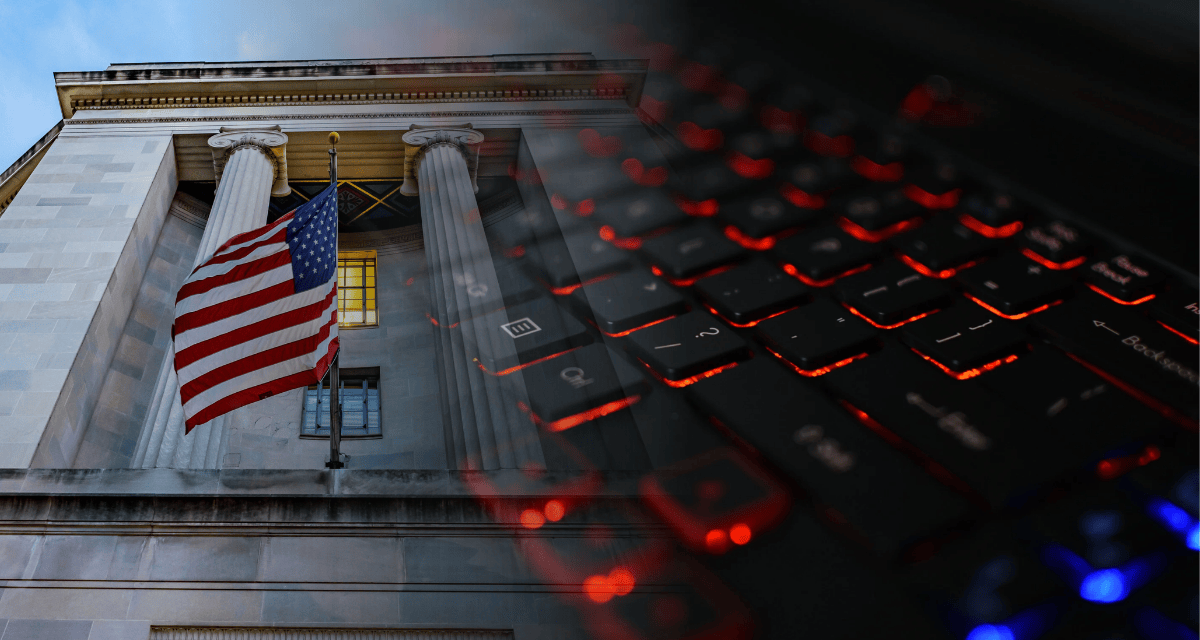
The country’s Department of Justice Department and global partners seize command‑and‑control infrastructure for botnets that have hijacked 3mn devices worldwide.

US authorities announced have dismantled the infrastructure behind four major Internet‑of‑Things (IoT) botnets responsible for some of the largest‑ever distributed‑denial‑of‑service (DDoS) attacks worldwide.

The court-authorized operation, carried out by the Justice Department and the Defense Criminal Investigative Service, with global partners invited to help seize critical command‑and‑control systems, targeted networks known as Aisuru, KimWolf, JackSkid, and Mossad, which together had hijacked more than 3m internet‑connected devices worldwide as of March 2026.

These botnets have infected mostly consumer‑grade IoT hardware such as digital video recorders, webcams, and Wi‑Fi routers — often tucked behind home firewalls yet still exposed to the public internet. Once compromised, the devices had become part of a “cybercrime‑as‑a‑service” model, where operators sold access to other attackers for waves of DDoS attacks that at times reached roughly 30–31.4tb per second, setting new records for scale. Targets have included commercial services, cloud providers, and IP addresses on the Department of Defense Information Network, escalating risks to both private‑sector platforms and US government infrastructure.

Under court‑authorized warrants, US agents from the Department of Justice seized US‑registered domains, virtual servers, and other infrastructure used to orchestrate these attacks, while law‑enforcement counterparts in Germany and Canada conducted parallel actions against individuals believed to control the botnets.

In terms of international cooperation, the operation involved EUROPOL’s PowerOFF team, the Netherlands Politie, as well as cybersecurity firms, major internet operators and other companies that had provided technical support — with some null‑routing or blocking thousands of infected command‑and‑control servers linked to Aisuru and KimWolf alone.

Officials have emphasized that the takedown does not fully eliminate the underlying code or malware, and many of the affected devices remain vulnerable unless owners patch or replace them. However, disrupting the centralized control layer has temporarily crippled the four botnets’ ability to mount large‑scale DDoS campaigns, giving defenders more time to harden exposed IoT ecosystems and pressure manufacturers to improve built‑in security.


Share:

PreviousNo-click iOS exploit persists, leaving 200m+ devices still vulnerable post-patches
NextOlight and Tesla Owners of Silicon Valley Spotlight the ArkPro for Spring Break Travel Safety

Related Posts

Cybercriminals turn to a malicious link-shortening service to obfuscate phishing URL links

Cybercriminals turn to a malicious link-shortening service to obfuscate phishing URL links

Tuesday, November 7, 2023

Double Extortion Ransomware and RaaS continue to rage on: report

Double Extortion Ransomware and RaaS continue to rage on: report

Monday, March 29, 2021

More universities and colleges turning to AI-enhanced cybersecurity

More universities and colleges turning to AI-enhanced cybersecurity

Tuesday, May 26, 2020

Filtering out false positive alerts helps True Digital Group defenders focus

Filtering out false positive alerts helps True Digital Group defenders focus

Tuesday, October 24, 2023

Leave a reply Cancel reply

You must be logged in to post a comment.

Voters-draw/RCA-Sponsors

Slide
Slide
Slide
Slide
Slide
Slide
Slide
Slide
Slide
Slide
Slide
Slide
Slide
Slide
previous arrow
next arrow

CybersecAsia Voting Placement

Gamification listing or Participate Now

PARTICIPATE NOW

Vote Now -Placement(Google Ads)

Top-Sidebar-banner

Whitepapers

  • Critical Security Threatsand the Need for ZTNA: How evolving cyberattacks demand a Zero Trust approach

    Critical Security Threatsand the Need for ZTNA: How evolving cyberattacks demand a Zero Trust approach

    Cyber threats have become more frequent and sophisticated, targeting organizations of all sizes across all …Download Whitepaper
  • Zero Trust Made Simple: Why it matters and how to get started

    Zero Trust Made Simple: Why it matters and how to get started

    Data breaches and cyberattacks are no longer limited to large, high-profile organizations.Download Whitepaper
  • Cloud Secure Edge: Remote access, better security

    Cloud Secure Edge: Remote access, better security

    ​SonicWall Cloud Secure Edge™ is a modern, cloud-native Security Service Edge (SSE) solution that addresses …Download Whitepaper
  • Closing the Gap in Email Security:How To Stop The 7 Most SinisterAI-Powered Phishing Threats

    Closing the Gap in Email Security:How To Stop The 7 Most SinisterAI-Powered Phishing Threats

    Insider threats continue to be a major cybersecurity risk in 2024. Explore more insights on …Download Whitepaper

Middle-sidebar-banner

Case Studies

  • How a Vietnamese D2C retailer built its own secure digital infrastructure

    How a Vietnamese D2C retailer built its own secure digital infrastructure

    Would your organization build your own digital infrastructure – including AI governance and cybersecurity – …Read more
  • Cyber protection for medical clinics in Singapore

    Cyber protection for medical clinics in Singapore

    As Singapore’s healthcare sector becomes increasingly digital and interconnected, clinics are facing heightened cyber risks, …Read more
  • India’s WazirX strengthens governance and digital asset security

    India’s WazirX strengthens governance and digital asset security

    Revamping its custody infrastructure using multi‑party computation tools has improved operational resilience and institutional‑grade safeguardsRead more
  • Bangladesh LGED modernizes communication while addressing data security concerns

    Bangladesh LGED modernizes communication while addressing data security concerns

    To meet emerging data localization/privacy regulations, the government engineering agency deploys a secure, unified digital …Read more

Bottom sidebar

Other News

  • Sparsa AI Launches Sovereign Enterprise AI Platform with Global Deployment at QNET

    Wednesday, July 8, 2026
    The Sparsa AI Enterprise Operating …Read More »
  • Conifers AI Opens Singapore Data Region, Bringing Local Data Residency to Asia-Pacific Security Teams

    Wednesday, July 8, 2026
    With data regions now spanning …Read More »
  • DXC Opens Flagship AI-first Customer Experience Center in Bengaluru

    Tuesday, July 7, 2026
    Strengthens DXC’s India presence with …Read More »
  • D-Link Brings Advanced AI Fall Detection and Privacy Protection to Home Elderly Care with the New DCS-8610 Wi-Fi Camera

    Monday, July 6, 2026
    Advanced technologies traditionally found in …Read More »
  • ICAC Commissioner attends first IAACA European regional anti-corruption conference in Hungary

    Friday, July 3, 2026
    BUDAPEST, Hungary, July 2, 2026 …Read More »
  • Our Brands
  • DigiconAsia
  • MartechAsia
  • Home
  • About Us
  • Contact Us
  • Sitemap
  • Privacy & Cookies
  • Terms of Use
  • Advertising & Reprint Policy
  • Media Kit
  • Subscribe
  • Manage Subscriptions
  • Newsletter

Copyright © 2026 CybersecAsia All Rights Reserved.