


Cybersecurity News in Asia

RECENT STORIES:

SEGA moves faster with flow-based network monitoring
Multi-supply-chain breach disclosed, involving customer design and per...
Ransomware emerges as the costliest cyber insurance claim component: a...
S E Asia governments targeted by cyber-espionage group
Generative AI chatbot found to autonomously generate violent images fr...
Global credential theft campaign exposes data from tens of thousands o...
LOGIN REGISTER
CybersecAsia
  • Features
    • Featured

      S E Asia governments targeted by cyber-espionage group

      S E Asia governments targeted by cyber-espionage group

      Tuesday, June 23, 2026, 8:00 AM Asia/Singapore | Features
    • Featured

      Rethinking network and infrastructure design for resilience

      Rethinking network and infrastructure design for resilience

      Thursday, June 18, 2026, 2:17 PM Asia/Singapore | Features
    • Featured

      Bringing cybercriminals to justice in APAC

      Bringing cybercriminals to justice in APAC

      Thursday, June 11, 2026, 10:30 AM Asia/Singapore | Features
  • Opinions
  • Tips
  • Whitepapers
  • AWARDS 2026
  • Directory
  • E-Learning

Select Page

News

Prompt injection flaw in AI support tool enables social media account takeovers

By CybersecAsia editors | Friday, June 5, 2026, 2:46 PM Asia/Singapore

Prompt injection flaw in AI support tool enables social media account takeovers

Researchers show chatbot manipulation had redirected a password reset function, allowing hackers to seize high-value usernames unprotected by second-factor authentication.

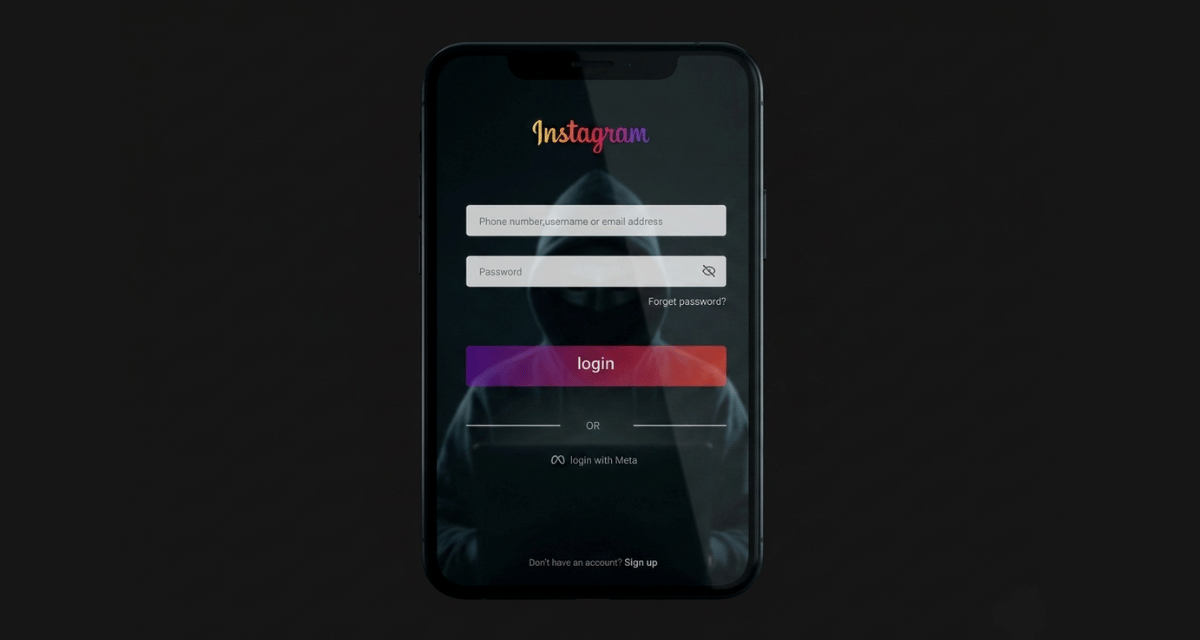
Attackers have exploited a vulnerability in Meta’s AI-driven support system for Instagram, enabling unauthorized account takeovers without breaching the firm’s core infrastructure.

The issue stemmed from Meta’s recently introduced AI assistant for account recovery, which could be manipulated through prompt injection techniques, according to security researchers and reporting by Cybernews on 1 June 2026.

The flaw was identified by blockchain investigator ZachXBT and researchers affiliated with Dark Web Informer, who demonstrated that attackers could interact with the chatbot and coerce it into issuing password reset requests. By exploiting weaknesses in how the AI interpreted user prompts, threat actors were able to redirect reset codes to accounts under their control, effectively bypassing identity verification safeguards.

Meta has emphasized that its backend systems were not compromised, framing the issue as a logic-layer failure within the AI tool rather than a traditional data breach.

Exploit mechanism

Critically, the system had lacked sufficient authentication checks and rate-limiting controls. This meant that anyone with knowledge of a target’s username could initiate the recovery process and potentially gain access.

The campaign appeared to focus on high-value Instagram handles, particularly short or rare usernames with significant resale value:

  • Accounts such as @hey and @jowo were reportedly seized and later traded through Telegram-based marketplaces.
  • In a more prominent incident, the inactive Obama White House Instagram account — unused since January 2017 — had also been compromised, with unauthorized posts featuring AI-generated imagery.
  • Additional victims included high-profile individuals such as US Space Force Chief Master Sergeant John F Bentivegna.

Meta has confirmed the breach of the Obama-affiliated account and removed the offending content. Analysts noted that the incidents may be part of a broader, coordinated effort targeting prominent US-linked accounts, although attribution remains unclear.

The firm had moved to address the vulnerability by deploying a fix late last week. In a public statement, Meta said it had resolved an issue that allowed external actors to trigger password reset requests for certain users, reiterating that no internal systems were breached and that overall account security remains intact. The firm has not disclosed how long the flaw existed or whether specific threat actors have been identified.

Notably, accounts protected by two-factor authentication were not affected by the exploit. However, the incident underscores growing concerns about integrating AI systems into sensitive security workflows. The failure highlights how insufficient guardrails in AI-driven tools can introduce new attack surfaces, even as corporations report broader improvements in account security metrics, including Meta’s previously cited 30% reduction in account compromises in 2025.


Share:

PreviousMalvertising campaigns target 13 Asia Pacific countries with investment and health scams
NextZero-day vulnerabilities expose AI agents to hijacking across enterprise messaging platforms

Related Posts

When we know remote-working puts corporate cybersecurity at risk …

When we know remote-working puts corporate cybersecurity at risk …

Friday, August 21, 2020

WFH security basics course unveils high level of unconscious incompetence

WFH security basics course unveils high level of unconscious incompetence

Wednesday, September 9, 2020

What 900 APJ respondents thought of their large organizations’ cybersecurity posture

What 900 APJ respondents thought of their large organizations’ cybersecurity posture

Wednesday, April 6, 2022

New APAC coalition forms to promote public-private tech resilience against cybercrime

New APAC coalition forms to promote public-private tech resilience against cybercrime

Wednesday, June 2, 2021

Leave a reply Cancel reply

You must be logged in to post a comment.

Voters-draw/RCA-Sponsors

Slide
Slide
Slide
Slide
Slide
Slide
Slide
Slide
Slide
Slide
Slide
Slide
Slide
Slide
previous arrow
next arrow

CybersecAsia Voting Placement

Gamification listing or Participate Now

PARTICIPATE NOW

Vote Now -Placement(Google Ads)

Top-Sidebar-banner

Whitepapers

  • Closing the Gap in Email Security:How To Stop The 7 Most SinisterAI-Powered Phishing Threats

    Closing the Gap in Email Security:How To Stop The 7 Most SinisterAI-Powered Phishing Threats

    Insider threats continue to be a major cybersecurity risk in 2024. Explore more insights on …Download Whitepaper
  • 2024 Insider Threat Report: Trends, Challenges, and Solutions

    2024 Insider Threat Report: Trends, Challenges, and Solutions

    Insider threats continue to be a major cybersecurity risk in 2024. Explore more insights on …Download Whitepaper
  • AI-Powered Cyber Ops: Redefining Cloud Security for 2025

    AI-Powered Cyber Ops: Redefining Cloud Security for 2025

    The future of cybersecurity is a perfect storm: AI-driven attacks, cloud expansion, and the convergence …Download Whitepaper
  • Data Management in the Age of Cloud and AI

    Data Management in the Age of Cloud and AI

    In today’s Asia Pacific business environment, organizations are leaning on hybrid multi-cloud infrastructures and advanced …Download Whitepaper

Middle-sidebar-banner

Case Studies

  • How a Vietnamese D2C retailer built its own secure digital infrastructure

    How a Vietnamese D2C retailer built its own secure digital infrastructure

    Would your organization build your own digital infrastructure – including AI governance and cybersecurity – …Read more
  • Cyber protection for medical clinics in Singapore

    Cyber protection for medical clinics in Singapore

    As Singapore’s healthcare sector becomes increasingly digital and interconnected, clinics are facing heightened cyber risks, …Read more
  • India’s WazirX strengthens governance and digital asset security

    India’s WazirX strengthens governance and digital asset security

    Revamping its custody infrastructure using multi‑party computation tools has improved operational resilience and institutional‑grade safeguardsRead more
  • Bangladesh LGED modernizes communication while addressing data security concerns

    Bangladesh LGED modernizes communication while addressing data security concerns

    To meet emerging data localization/privacy regulations, the government engineering agency deploys a secure, unified digital …Read more

Bottom sidebar

Other News

  • At VivaTech 2026, Taiwan-Based MaiAgent Says Enterprises Should Stop Building RAG and AI Agent Systems From Scratch

    Friday, June 19, 2026
    TAIPEI and PARIS, June 19, …Read More »
  • How large-scale AI drives the evolution of video encoding to intelligent understanding

    Thursday, June 18, 2026
    HANGZHOU, China, June 18, 2026 …Read More »
  • Crisis24 Opens Global Maritime Operations Center in Manila to Power Intelligence, Consulting and Crisis Response Services

    Thursday, June 18, 2026
    New 24/7 operations center anchors …Read More »
  • Gambit Cyber Announces Strategic Partnership with BitCyber to Advance AI-Native and Risk-Centric Continuous Threat Exposure Management Across Singapore, ASEAN and Hong Kong

    Wednesday, June 17, 2026
    Strategic partnership brings Continuous Threat …Read More »
  • Doppel Enters Japan, Marking Next Phase of Global Expansion

    Tuesday, June 16, 2026
    Social engineering defense leader surpasses …Read More »
  • Our Brands
  • DigiconAsia
  • MartechAsia
  • Home
  • About Us
  • Contact Us
  • Sitemap
  • Privacy & Cookies
  • Terms of Use
  • Advertising & Reprint Policy
  • Media Kit
  • Subscribe
  • Manage Subscriptions
  • Newsletter

Copyright © 2026 CybersecAsia All Rights Reserved.