
Cybersecurity News in Asia

RECENT STORIES:

SEGA moves faster with flow-based network monitoring
Hackers phish for cloud accounts and payment passkeys using executive ...
Fujitsu launches made-in-Japan next-generation CPU FUJITSU-MONAKA and ...
European Commission scrutinizing AI firm’s delayed incident report aft...
Aitech Introduces New C165 Rugged Single Board Computer to Help Defens...
Warning: researchers cut quantum attack cost estimate for Bitcoin and ...
LOGIN REGISTER
CybersecAsia
  • Features
    • Featured

      The recovery-first approach to data resilience

      The recovery-first approach to data resilience

      Monday, September 7, 2026, 4:21 PM Asia/Singapore | Features
    • Featured

      Dealing with agentic AI governance and resilience challenges

      Dealing with agentic AI governance and resilience challenges

      Tuesday, September 1, 2026, 11:51 AM Asia/Singapore | Features
    • Featured

      How well do you know your agent?

      How well do you know your agent?

      Thursday, August 20, 2026, 3:21 PM Asia/Singapore | Features
  • Opinions
  • Tips
  • Whitepapers
  • AWARDS 2026
  • Directory
  • E-Learning

Select Page

News

Hackers phish for cloud accounts and payment passkeys using executive impersonation, social media lures

By CybersecAsia editors | Tuesday, September 15, 2026, 9:59 AM Asia/Singapore

Hackers phish for cloud accounts and payment passkeys using executive impersonation, social media lures

The threat actors spoof executive leaders, seek fund transfers, capture credentials, and register authentication methods to exfiltrate sensitive data

Hackers have been abusing trusted services and social engineering to phish for cloud access keys: one sent more than 1m fraudulent emails seeking payments, while the other used passkey-themed lures to compromise cloud accounts and steal data.

The first operation had run from 3 August to 5 August 2026 and impersonated company CEOs in messages aimed at accounts-payable teams.

The attackers sought ACH transfers for a supposedly legitimate annual ServiceNow subscription. Their targets were primarily US organizations in IT services, consumer goods, real estate and discrete manufacturing.

The operators appear to have used generative AI to prepare recipient-specific templates and emails. The campaign had combined spoofed executive identities, trusted email infrastructure, fake invoices, vendor branding and fabricated approval threads. The messages used the names and email addresses of CEOs, CFOs and presidents, while lookalike domains included [service-nowinc[.]com] and [domainlify[.]net]

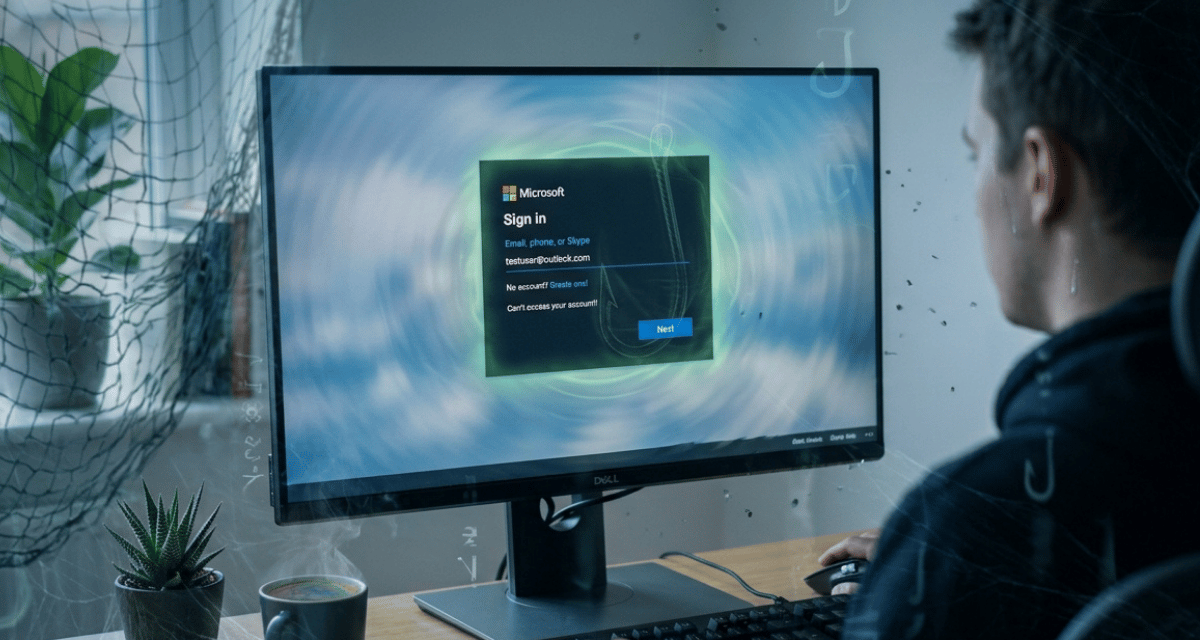
The second campaign, observed since May 2026, targeted Microsoft cloud identities. Attackers contacted employees through calls or text messages, posing as IT help-desk staff and claiming that users needed to update passkey, multifactor authentication or single sign-on settings to prevent service interruptions.

Victims were directed to counterfeit Microsoft sign-in pages and pushed through adversary-in-the-middle or device-code authentication flows. These methods could capture credentials or persuade users to authorize access without realizing it. The attackers also conducted extensive reconnaissance before targeting victims, using public information about employees and organizational structures. In some cases, compromised accounts were used to distribute similar messages through Microsoft Teams.

Threat groups linked to the heist

The threat actors registered domains themed around passkeys, identity verification and SSO enrollment, including:

  • passkeyhelpdesk[.]com]
  • [secure-passkey[.]com]
  • [setupmypasskey[.]com]
  • [add-passkey[.]com]
  • [integratedsso[.]com]
  • [oktasession[.]com]
  • [syncmykey[.]com]
  • [portalsetuphub[.]com]

Target-specific subdomains were used to make the sites appear more credible.

Microsoft has linked the activity to several threat groups, including Storm-3121 and Storm-3032, and said it overlaps with infrastructure associated with Cordial Spider, O-UNC-045, PREY-0058 and UNC6671.

After gaining access, attackers had attempted to establish persistence by registering their own phone number, authenticator app or software-based one-time-password token. They then used Microsoft Graph to map users, groups, permissions and services; searched mailboxes and attachments; downloaded data from SharePoint, OneDrive and Exchange; and maintained exfiltration for hours or days.

The attackers rotated infrastructure and IP addresses between authentication, reconnaissance and theft, making isolated indicators less useful.


Share:

PreviousFujitsu launches made-in-Japan next-generation CPU FUJITSU-MONAKA and Fujitsu MONAKA Server for sovereign AI infrastructure

Related Posts

Massive surge in cyberthreats in H1 2020 foreshadow worse threats to come

Massive surge in cyberthreats in H1 2020 foreshadow worse threats to come

Thursday, September 17, 2020

The cyber threat landscape continued growing in Q2 this year

The cyber threat landscape continued growing in Q2 this year

Thursday, July 27, 2023

Bangladesh LGED modernizes communication while addressing data security concerns

Bangladesh LGED modernizes communication while addressing data security concerns

Friday, December 5, 2025

How can APAC unlock AI potential without vulnerability to adoption pitfalls?

How can APAC unlock AI potential without vulnerability to adoption pitfalls?

Wednesday, March 4, 2026

Leave a reply Cancel reply

You must be logged in to post a comment.

Voters-draw/RCA-Sponsors

Slide
Slide
Slide
Slide
Slide
Slide
Slide
Slide
Slide
Slide
Slide
Slide
Slide
Slide
Slide
Slide
Slide
Slide
Slide
previous arrow
next arrow

CybersecAsia Voting Placement

Gamification listing or Participate Now

PARTICIPATE NOW

Vote Now -Placement(Google Ads)

Top-Sidebar-banner

Whitepapers

  • Critical Security Threatsand the Need for ZTNA: How evolving cyberattacks demand a Zero Trust approach

    Critical Security Threatsand the Need for ZTNA: How evolving cyberattacks demand a Zero Trust approach

    Cyber threats have become more frequent and sophisticated, targeting organizations of all sizes across all …Download Whitepaper
  • Zero Trust Made Simple: Why it matters and how to get started

    Zero Trust Made Simple: Why it matters and how to get started

    Data breaches and cyberattacks are no longer limited to large, high-profile organizations.Download Whitepaper
  • Cloud Secure Edge: Remote access, better security

    Cloud Secure Edge: Remote access, better security

    ​SonicWall Cloud Secure Edge™ is a modern, cloud-native Security Service Edge (SSE) solution that addresses …Download Whitepaper
  • Closing the Gap in Email Security:How To Stop The 7 Most SinisterAI-Powered Phishing Threats

    Closing the Gap in Email Security:How To Stop The 7 Most SinisterAI-Powered Phishing Threats

    Insider threats continue to be a major cybersecurity risk in 2024. Explore more insights on …Download Whitepaper

Middle-sidebar-banner

Case Studies

  • How a Vietnamese D2C retailer built its own secure digital infrastructure

    How a Vietnamese D2C retailer built its own secure digital infrastructure

    Would your organization build your own digital infrastructure – including AI governance and cybersecurity – …Read more
  • Cyber protection for medical clinics in Singapore

    Cyber protection for medical clinics in Singapore

    As Singapore’s healthcare sector becomes increasingly digital and interconnected, clinics are facing heightened cyber risks, …Read more
  • India’s WazirX strengthens governance and digital asset security

    India’s WazirX strengthens governance and digital asset security

    Revamping its custody infrastructure using multi‑party computation tools has improved operational resilience and institutional‑grade safeguardsRead more
  • Bangladesh LGED modernizes communication while addressing data security concerns

    Bangladesh LGED modernizes communication while addressing data security concerns

    To meet emerging data localization/privacy regulations, the government engineering agency deploys a secure, unified digital …Read more

Bottom sidebar

Other News

  • Fujitsu launches made-in-Japan next-generation CPU FUJITSU-MONAKA and Fujitsu MONAKA Server for sovereign AI infrastructure

    Monday, September 14, 2026
    Achieving world-class AI inference performance …Read More »
  • Aitech Introduces New C165 Rugged Single Board Computer to Help Defense Programs Build and Modernize Fielded VME Systems

    Monday, September 14, 2026
    New 6U VME SBC Delivers …Read More »
  • CyberDSA 2026 Draws Global Cyber Leaders for High-Level Talks on AI, Digital Trust and Critical Infrastructure

    Friday, September 11, 2026
    Minister of Digital Malaysia YB …Read More »
  • The 3rd GTI Forum on Digital Intelligence, Hong Kong Advances Global Inclusive AI Development

    Thursday, September 10, 2026
    HONG KONG, Sept. 10, 2026 …Read More »
  • Nearly Half of Reported Scam Incidents Go Unresolved Across Southeast Asia, Undermining Digital Trust, New GSMA Findings Reveal

    Wednesday, September 9, 2026
    Two new GSMA reports launched …Read More »
  • Our Brands
  • DigiconAsia
  • MartechAsia
  • Home
  • About Us
  • Contact Us
  • Sitemap
  • Privacy & Cookies
  • Terms of Use
  • Advertising & Reprint Policy
  • Media Kit
  • Subscribe
  • Manage Subscriptions
  • Newsletter

Copyright © 2026 CybersecAsia All Rights Reserved.