


Cybersecurity News in Asia

RECENT STORIES:

SEGA moves faster with flow-based network monitoring
AI an existential risk – and what to do about it today
ASOCIO Digital & AI Summit 2026
Hackers phish for cloud accounts and payment passkeys using executive ...
Fujitsu launches made-in-Japan next-generation CPU FUJITSU-MONAKA and ...
European Commission scrutinizing AI firm’s delayed incident report aft...
LOGIN REGISTER
CybersecAsia
  • Features
    • Featured

      The recovery-first approach to data resilience

      The recovery-first approach to data resilience

      Monday, September 7, 2026, 4:21 PM Asia/Singapore | Features
    • Featured

      Dealing with agentic AI governance and resilience challenges

      Dealing with agentic AI governance and resilience challenges

      Tuesday, September 1, 2026, 11:51 AM Asia/Singapore | Features
    • Featured

      How well do you know your agent?

      How well do you know your agent?

      Thursday, August 20, 2026, 3:21 PM Asia/Singapore | Features
  • Opinions
  • Tips
  • Whitepapers
  • AWARDS 2026
  • Directory
  • E-Learning

Select Page

News

Chinese state-linked groups more than doubled cyberattacks using inexpensive open-source AI: research

By CybersecAsia editors | Wednesday, August 26, 2026, 11:42 AM Asia/Singapore

Chinese state-linked groups more than doubled cyberattacks using inexpensive open-source AI: research

Investigators say experienced operators rely on certain China AI models with limited safeguards to automate reconnaissance and craft sophisticated malicious software

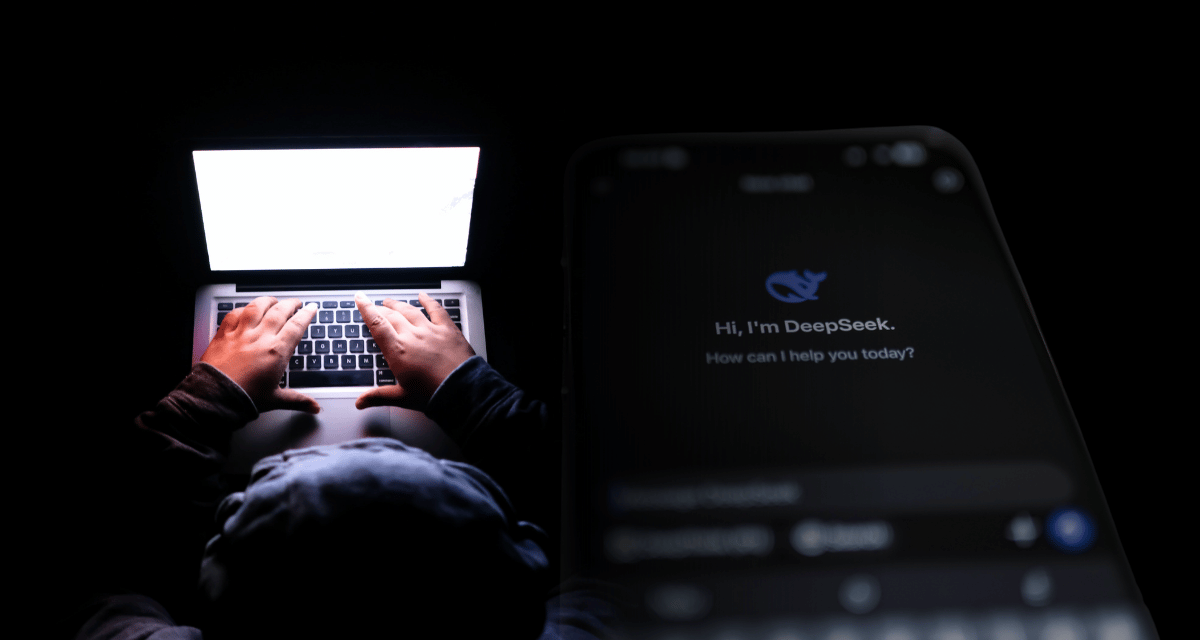
According to new research from cybersecurity firm TeamT5, Chinese state-affiliated hacking groups have more than doubled the volume of their cyberattacks since integrating DeepSeek and other open-source AI models into their operations.

The findings, reported by Yahoo and other outlets, show that experienced threat actors are now using relatively inexpensive AI tools with limited safety restrictions to handle routine reconnaissance work and even develop more sophisticated malicious software.

TeamT5 noted that while Western AI models remain highly sought after, their stricter safety measures require considerably more effort to bypass, making them less attractive for large-scale malicious campaigns. Although other Chinese models such as Kimi K3 offer greater capabilities, they remain too costly for hackers to deploy broadly, leaving DeepSeek as the preferred option for its combination of performance, affordability, and customizability.

The research identified several specific groups leveraging the technology.

  • A group called Grimfengxi had used DeepSeek to generate exploit code
  • Another group known as Huapi had employed a Chinese AI model believed to be DeepSeek in an attack targeting a Taiwanese company’s email system. 
  • A third group, Teleboyi, had used the platform to gather approximately 1,000 IP addresses and map corporate domains as part of its reconnaissance efforts. 
  • Threat group Slime22 had used Claude Code after breaching a Taiwanese technology firm, posing as cybersecurity engineers to circumvent the model’s safeguards.
  • A threat actor tracked under the aliases knaithe and KnYuan had used DeepSeek through the open-source Hermes Agent framework to target more than 460 systems, successfully breaching at least three organisations by exploiting a Citrix NetScaler vulnerability. The operator had also attempted to use Claude Code and OpenAI’s models, but safety measures had blocked the malicious requests and ultimately led to the account being disabled. DeepSeek, accessed through an open-source framework without client-side restrictions, had proceeded without hindrance, autonomously conducting vulnerability enumeration, downloading public exploit code, and launching attacks with minimal human intervention.

Researchers have cautioned that, while not every intrusion could be tied to a specific AI system, DeepSeek’s offerings have become especially popular among hackers in the region.

Not just Chinese AI models involved

Other researchers warn that large language models can accelerate vulnerability research, target prioritization, and exploitation workflows, underscoring the growing threat posed by AI-assisted cyberattacks.

Share:

PreviousWhen “digital sovereignty” becomes cybersecurity’s new sales language
NextSU Group Wins US$2.4 Million Follow-on Award, Expanding Landmark Smart-Hospital Project to US$13.7 Million

Related Posts

How to rein-in AI agents with a privacy-centric data management approach

How to rein-in AI agents with a privacy-centric data management approach

Wednesday, February 12, 2025

Learn the indicators of insider threats

Learn the indicators of insider threats

Thursday, April 28, 2022

Trend Micro predicts cloud security will be consumed by the SOC by 2026

Trend Micro predicts cloud security will be consumed by the SOC by 2026

Wednesday, June 14, 2023

Reddit breached. Now what?

Reddit breached. Now what?

Tuesday, February 14, 2023

Leave a reply Cancel reply

You must be logged in to post a comment.

Voters-draw/RCA-Sponsors

Slide
Slide
Slide
Slide
Slide
Slide
Slide
Slide
Slide
Slide
Slide
Slide
Slide
Slide
Slide
Slide
Slide
Slide
Slide
previous arrow
next arrow

CybersecAsia Voting Placement

Gamification listing or Participate Now

PARTICIPATE NOW

Vote Now -Placement(Google Ads)

Top-Sidebar-banner

Whitepapers

  • Critical Security Threatsand the Need for ZTNA: How evolving cyberattacks demand a Zero Trust approach

    Critical Security Threatsand the Need for ZTNA: How evolving cyberattacks demand a Zero Trust approach

    Cyber threats have become more frequent and sophisticated, targeting organizations of all sizes across all …Download Whitepaper
  • Zero Trust Made Simple: Why it matters and how to get started

    Zero Trust Made Simple: Why it matters and how to get started

    Data breaches and cyberattacks are no longer limited to large, high-profile organizations.Download Whitepaper
  • Cloud Secure Edge: Remote access, better security

    Cloud Secure Edge: Remote access, better security

    ​SonicWall Cloud Secure Edge™ is a modern, cloud-native Security Service Edge (SSE) solution that addresses …Download Whitepaper
  • Closing the Gap in Email Security:How To Stop The 7 Most SinisterAI-Powered Phishing Threats

    Closing the Gap in Email Security:How To Stop The 7 Most SinisterAI-Powered Phishing Threats

    Insider threats continue to be a major cybersecurity risk in 2024. Explore more insights on …Download Whitepaper

Middle-sidebar-banner

Case Studies

  • How a Vietnamese D2C retailer built its own secure digital infrastructure

    How a Vietnamese D2C retailer built its own secure digital infrastructure

    Would your organization build your own digital infrastructure – including AI governance and cybersecurity – …Read more
  • Cyber protection for medical clinics in Singapore

    Cyber protection for medical clinics in Singapore

    As Singapore’s healthcare sector becomes increasingly digital and interconnected, clinics are facing heightened cyber risks, …Read more
  • India’s WazirX strengthens governance and digital asset security

    India’s WazirX strengthens governance and digital asset security

    Revamping its custody infrastructure using multi‑party computation tools has improved operational resilience and institutional‑grade safeguardsRead more
  • Bangladesh LGED modernizes communication while addressing data security concerns

    Bangladesh LGED modernizes communication while addressing data security concerns

    To meet emerging data localization/privacy regulations, the government engineering agency deploys a secure, unified digital …Read more

Bottom sidebar

Other News

  • Fujitsu launches made-in-Japan next-generation CPU FUJITSU-MONAKA and Fujitsu MONAKA Server for sovereign AI infrastructure

    Monday, September 14, 2026
    Achieving world-class AI inference performance …Read More »
  • Aitech Introduces New C165 Rugged Single Board Computer to Help Defense Programs Build and Modernize Fielded VME Systems

    Monday, September 14, 2026
    New 6U VME SBC Delivers …Read More »
  • CyberDSA 2026 Draws Global Cyber Leaders for High-Level Talks on AI, Digital Trust and Critical Infrastructure

    Friday, September 11, 2026
    Minister of Digital Malaysia YB …Read More »
  • The 3rd GTI Forum on Digital Intelligence, Hong Kong Advances Global Inclusive AI Development

    Thursday, September 10, 2026
    HONG KONG, Sept. 10, 2026 …Read More »
  • Nearly Half of Reported Scam Incidents Go Unresolved Across Southeast Asia, Undermining Digital Trust, New GSMA Findings Reveal

    Wednesday, September 9, 2026
    Two new GSMA reports launched …Read More »
  • Our Brands
  • DigiconAsia
  • MartechAsia
  • Home
  • About Us
  • Contact Us
  • Sitemap
  • Privacy & Cookies
  • Terms of Use
  • Advertising & Reprint Policy
  • Media Kit
  • Subscribe
  • Manage Subscriptions
  • Newsletter

Copyright © 2026 CybersecAsia All Rights Reserved.