
Cybersecurity News in Asia

RECENT STORIES:

SEGA moves faster with flow-based network monitoring
How SMEs can turn cyber “sins” into NIST-aligned best practices
How AI is supercharging insider threats
NEC Asia Pacific to Showcase Trusted Public Safety and Digital Identit...
Sprinto Expands to Australia with New Data Center to Power Localized, ...
Three strategies for closing the gap between backup and real recovery ...
LOGIN REGISTER
CybersecAsia
  • Features
    • Featured

      How AI is supercharging insider threats

      How AI is supercharging insider threats

      Wednesday, April 15, 2026, 12:29 PM Asia/Singapore | Features
    • Featured

      Q-Day is coming. Are you ready?

      Q-Day is coming. Are you ready?

      Tuesday, April 14, 2026, 12:40 PM Asia/Singapore | Features
    • Featured

      How lean defence teams turn endpoint insights into measurable risk reduction

      How lean defence teams turn endpoint insights into measurable risk reduction

      Monday, April 13, 2026, 3:15 PM Asia/Singapore | Features
  • Opinions
  • Tips
  • Whitepapers
  • Awards 2025
  • Directory
  • E-Learning

Select Page

Features

Will your organization’s defenses be breached due to your suppliers’ weak cybersecurity?

By L L Seow | Thursday, May 29, 2025, 5:04 PM Asia/Singapore

Will your organization’s defenses be breached due to your suppliers’ weak cybersecurity?

Supply chain vulnerabilities can quickly cascade across borders, sectors, and corporate ecosystems, underscoring the need for stronger visibility and control over third-party access. One growing risk lies in visibility gaps: many organizations lack insight into what third parties are doing, once the latter are allowed inside the network. Attackers exploit this by operating quietly within encrypted traffic and moving laterally: they “live off the land” using native tools to avoid detection.

To identify vulnerable links, organizations need to conduct continuous risk assessments of their third-party ecosystem: evaluating access levels, security posture, and real-world behavior.

Crucially, they should leverage telemetry from network traffic — not just logs — to monitor for anomalies that signal a third-party compromise. True supply chain security starts with knowing exactly who has access, what they are doing, and when that behavior changes.

CybersecAsia: Can you share practical strategies or frameworks that organizations can adopt to extend their cybersecurity beyond their own network perimeter to include vendor and partner ecosystems?

IF: Securing extended ecosystems demands a layered strategy anchored in Zero Trust Architecture (ZTA). This involves treating all users as potentially-compromised, and enforcing strict identity checks, access controls, and continuous monitoring. This will enable greater system observability and proactive perimiterless security.

A key tactic is network segmentation: restricting external-partner access to only essential resources and isolating critical assets. Security data lakes can enhance visibility by integrating network-derived telemetry across the environment, enabling real-time insights into third-party traffic, encrypted flows, and lateral movement.

Beyond the technology aspect, organizations must hold vendors to enforceable security standards: mandating diligence in their patching, incident reporting, and access controls. Bolstered observability ensures vendors stay within agreed parameters, and will enable rapid response when they do not.

Ultimately, securing the supply chain requires architectural discipline, unified visibility, and shared responsibility across the entire ecosystem.

CybersecAsia: Given the critical nature of infrastructure and financial institutions, what role should leadership play in fostering a culture of security awareness and accountability across all tiers of the supply chain?

IF: Leadership sets the tone for organizational resilience. For critical sectors such as infrastructure and finance, executives need to drive security from the top: embedding cybersecurity into business strategy and supply chain governance.

This means making cybersecurity a board-level issue — with clear key performance indicators, funding, and oversight — not just a technical concern delegated to IT.

The establishment of  strong observability will need to be discussed at the Board level to improve an organizations digital infrastructure — signaling growing recognition that visibility and accountability are strategic imperatives across the supply chain.

Furthermore, the updated role of leadership in cyber resilience includes enforcing accountability across vendors; investing in technologies that provide visibility beyond the organizational boundary; and ensuring that security metrics are part of board-level discussions.

Leadership should champion a “trust nothing, verify everything” approach, while fostering a culture of shared responsibility. Security is not just IT’s job, but everyone’s business, including partners and suppliers.

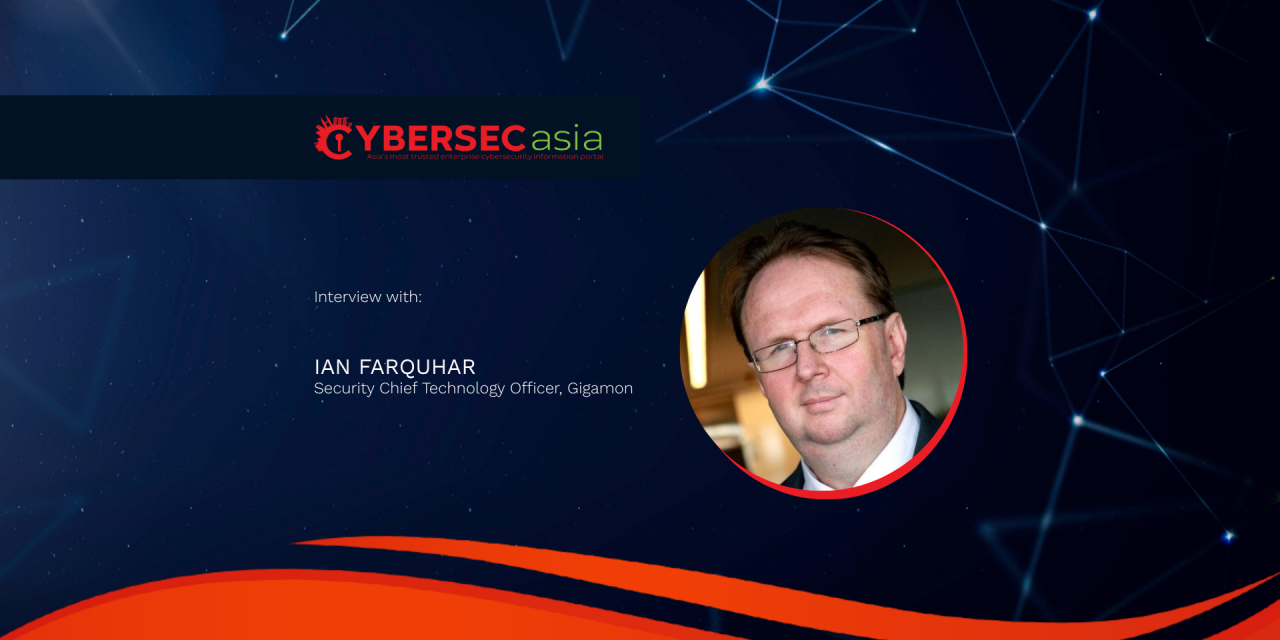
CybersecAsia thanks Ian Farquhar for sharing his professional insights with readers.

Pages: 1 2

Share:

PreviousRansonware attack cripples computational software at the worst possible time: exams!
NextATxEnterprise 2025 Boosts Global Participation, Reinforces Singapore’s Responsible AI and Innovation Leadership

Related Posts

Hong Kong and Thailand ranked top 10 in Cloud security incidents for H2 2020

Hong Kong and Thailand ranked top 10 in Cloud security incidents for H2 2020

Friday, April 16, 2021

Keeping up with data privacy regulations in Asia Pacific

Keeping up with data protection and privacy regulations in Asia Pacific

Monday, May 10, 2021

Know the three P’s of contextual cybersecurity vigilance

Know the three P’s of contextual cybersecurity vigilance

Monday, July 4, 2022

The impact of APAC’s AI buildout on cybersecurity in 2026

The impact of APAC’s AI buildout on cybersecurity in 2026

Tuesday, December 9, 2025

Leave a reply Cancel reply

You must be logged in to post a comment.

Voters-draw/RCA-Sponsors

Slide
Slide
Slide
Slide
Slide
Slide
Slide
Slide
Slide
Slide
Slide
Slide
Slide
Slide
previous arrow
next arrow

CybersecAsia Voting Placement

Gamification listing or Participate Now

PARTICIPATE NOW

Vote Now -Placement(Google Ads)

Top-Sidebar-banner

Whitepapers

  • Closing the Gap in Email Security:How To Stop The 7 Most SinisterAI-Powered Phishing Threats

    Closing the Gap in Email Security:How To Stop The 7 Most SinisterAI-Powered Phishing Threats

    Insider threats continue to be a major cybersecurity risk in 2024. Explore more insights on …Download Whitepaper
  • 2024 Insider Threat Report: Trends, Challenges, and Solutions

    2024 Insider Threat Report: Trends, Challenges, and Solutions

    Insider threats continue to be a major cybersecurity risk in 2024. Explore more insights on …Download Whitepaper
  • AI-Powered Cyber Ops: Redefining Cloud Security for 2025

    AI-Powered Cyber Ops: Redefining Cloud Security for 2025

    The future of cybersecurity is a perfect storm: AI-driven attacks, cloud expansion, and the convergence …Download Whitepaper
  • Data Management in the Age of Cloud and AI

    Data Management in the Age of Cloud and AI

    In today’s Asia Pacific business environment, organizations are leaning on hybrid multi-cloud infrastructures and advanced …Download Whitepaper

Middle-sidebar-banner

Case Studies

  • Cyber protection for medical clinics in Singapore

    Cyber protection for medical clinics in Singapore

    As Singapore’s healthcare sector becomes increasingly digital and interconnected, clinics are facing heightened cyber risks, …Read more
  • India’s WazirX strengthens governance and digital asset security

    India’s WazirX strengthens governance and digital asset security

    Revamping its custody infrastructure using multi‑party computation tools has improved operational resilience and institutional‑grade safeguardsRead more
  • Bangladesh LGED modernizes communication while addressing data security concerns

    Bangladesh LGED modernizes communication while addressing data security concerns

    To meet emerging data localization/privacy regulations, the government engineering agency deploys a secure, unified digital …Read more
  • What AI worries keep members of the Association of Certified Fraud Examiners sleepless?

    What AI worries keep members of the Association of Certified Fraud Examiners sleepless?

    This case study examines how many anti-fraud professionals reported feeling underprepared to counter rising AI-driven …Read more

Bottom sidebar

Other News

  • NEC Asia Pacific to Showcase Trusted Public Safety and Digital Identity Innovations at Milipol TechX 2026

    Wednesday, April 15, 2026
    SINGAPORE, April 14, 2026 /PRNewswire/ …Read More »
  • Sprinto Expands to Australia with New Data Center to Power Localized, Audit-Ready Compliance

    Wednesday, April 15, 2026
    Sprinto combines local infrastructure with …Read More »
  • Hong Kong Anti-graft Watchdog: Clean Governance and Ethical Business is Key to Hong Kong’s Sustainable Business Development

    Thursday, April 9, 2026
    HONG KONG, April 9, 2026 …Read More »
  • Goodix Launches the World’s First eSE Solution Designed for AI Agents

    Thursday, April 9, 2026
    SHENZHEN, China, April 8, 2026 …Read More »
  • LRQA Amplifies Industrial and Cyber Resilience in APAC at CS4CA Summit 2026

    Thursday, April 9, 2026
    SINGAPORE, April 8, 2026 /PRNewswire/ …Read More »
  • Our Brands
  • DigiconAsia
  • MartechAsia
  • Home
  • About Us
  • Contact Us
  • Sitemap
  • Privacy & Cookies
  • Terms of Use
  • Advertising & Reprint Policy
  • Media Kit
  • Subscribe
  • Manage Subscriptions
  • Newsletter

Copyright © 2026 CybersecAsia All Rights Reserved.