Cybersecurity News in Asia

RECENT STORIES:

SEGA moves faster with flow-based network monitoring
China-linked cyber espionage group shifts focus to another brand of ro...
Cohesity Delivers New Managed Clean Room Capability to Enhance HCLTech...
Visa Launches Enhanced A2A Protect Innovations to Help Financial Insti...
Malaysia’s Cybersecurity Leaders to Convene at the 34th Edition ...
ICAC Commissioner in Vienna to meet new UNODC Chief to foster anti-cor...
LOGIN REGISTER
CybersecAsia
  • Features
    • Featured

      How well do you know your agent?

      How well do you know your agent?

      Thursday, August 20, 2026, 3:21 PM Asia/Singapore | Features
    • Featured

      Bringing proof of identity to the digital economy

      Bringing proof of identity to the digital economy

      Wednesday, August 19, 2026, 10:50 AM Asia/Singapore | Features
    • Featured

      Insider risks – when AI agents go rogue

      Insider risks – when AI agents go rogue

      Monday, August 17, 2026, 5:12 PM Asia/Singapore | Features, Newsletter
  • Opinions
  • Tips
  • Whitepapers
  • AWARDS 2026
  • Directory
  • E-Learning

Select Page

Features

Cybersecurity tool sprawl: when too many cooks spoil the soup!

By L L Seow | Monday, September 22, 2025, 5:16 PM Asia/Singapore

Cybersecurity tool sprawl: when too many cooks spoil the soup!

Too many disconnected cybersecurity tools (cooks) create blind spots and overwhelm teams, increasing risk (spoilt soup). What are the mitigative approaches?

Amid increasingly sophisticated cyber threats, some organizations may have added disparate addition cybersecurity tools to their infrastructure to cope.

However, if not properly managed, the growing number of cybersecurity tools in an organization, called “tool sprawl”, may cause hidden risks. Multiple disconnected products can create blind spots, or overwhelm smaller teams with too many alerts and maintenance calls, reducing overall security effectiveness.

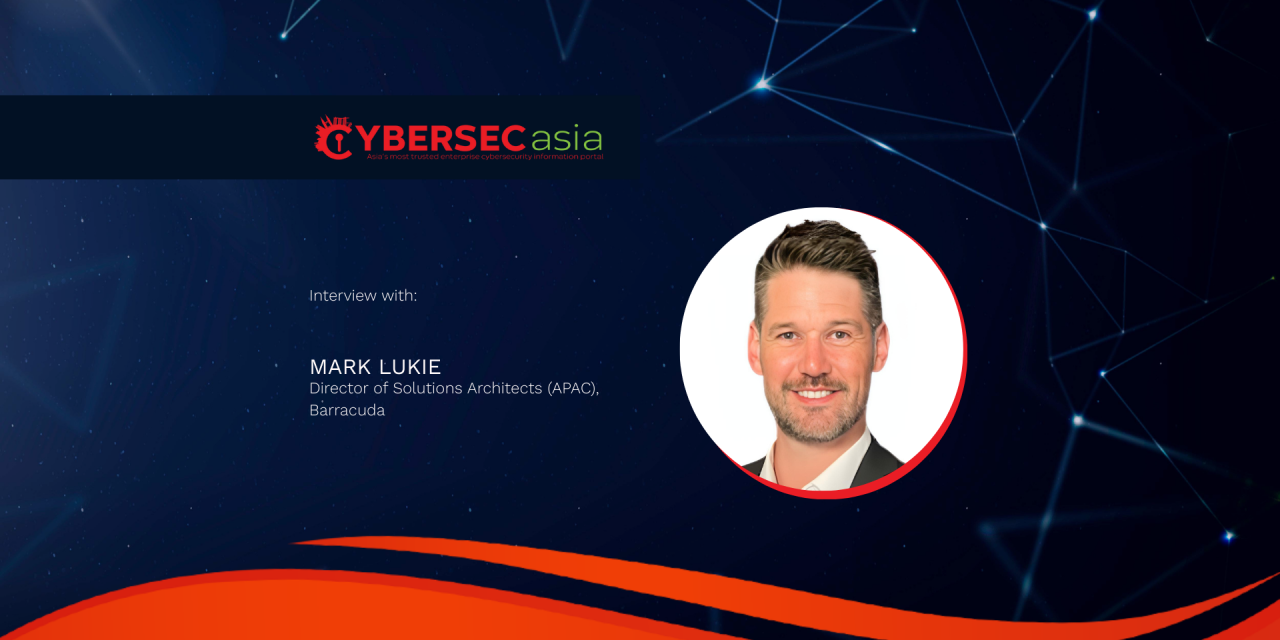
What are some practical ways to address tool sprawl without compromising organizations’ cybersecurity posture. In this Q&A with CybersecAsia.net, Mark Lukie, Director of Solutions Architects (APAC), Barracuda offers some practical insights.

CybersecAsia: In your work, why are complexity and misconfiguration some of the biggest hidden risks today?

Mark Lukie (ML): Complexity and misconfiguration of security stacks are things I see all the time. The issue is that the risk builds quietly. One tool here, another there, and before you know it, your security stack includes dozens of tools, each with its own dashboard, alert system and update cycle.

Each tool could be great on its own, but together? They can create blind spots. In our own research, we found that only about a third of respondents had felt completely confident their tools were properly configured. For the remaining two thirds, the sentiment was that “it’s like locking every door in your house but forgetting a window.”

Working with mid-sized organizations it is not uncommon to find that organizations may have invested in multiple solutions, but a simple misconfigured firewall rule had left them exposed. Attackers only need to successfully exploit one security gap, once.

CybersecAsia: How can IT and security teams, especially in smaller or resource-constrained organizations, reduce risk?

ML: With cybersecurity threats constantly evolving and escalating, IT and security teams may start to feel like they are juggling too many tools. Smaller teams do not have the luxury of dedicated specialists for every tool. An organization may have six different security solutions in efforts to cover their bases, but they will be drowning in alerts with little to no visibility.

When these tools and vendors cannot integrate, a fragmented environment is created, which is difficult to manage and secure — only adding to the risk.

The unsung hero in such scenarios may be simplification: The key is to focus on what truly matters. Map your tools to your top risks. If a tool does not help mitigate a priority threat or integrate well with other tools, it is probably adding noise; and further assessment is needed.

CybersecAsia: What are the ways to solve the problem of tool sprawl when external help is needed?

ML: Cyberattackers only need to get it right once; defenders need to get it right every time.

When an organization wants to solve tool sprawl problems, there are two approaches:

  1. Integrated platforms help level the playing field: They give organizations greater visibility across an environment, reduce the risk of misconfiguration, and streamline responses. I have seen this in action. Overwhelmed by siloed tools and constant false positives, organizations switching to an integrated platform with the optimal support can find that they not only reduce incident volume but also catch misconfigured tools before they become problems.
  2. Managed service providers (MSPs) are equally vital, especially in regions where talent shortages are real: MSPs bring scale, expertise, and 24/7 coverage. They are expected to provide not just solution but to work as strategic partners to help organizations move from reactive firefighting to proactive defense.

CybersecAsia: What are you seeing regionally in the Asia Pacific region: How are organizations coping with these challenges?

The region is incredibly diverse, but the challenges across international markets are strikingly similar. Whether it is a country with advanced infrastructure or a less-advanced one with fast-growing enterprises, organizations are grappling with security tool sprawl.

However, in the grand scheme, simplification is not just about cutting tools; it is about cutting complexity.

What I am seeing in the region is that more organizations are realizing that complexity reduces cyber resilience. They may then consolidate cybersecurity tools, prioritize observability, and seek external consultancy to tackle the problem. That mindset change is encouraging. It shows that APAC organizations are not just reacting to threats, they are meeting them head-on. And that is where real cyber resilience begins.


Share:

PreviousSasken Partners with VicOne to Deliver End-to-End Automotive Cybersecurity Solutions
NextAV-Comparatives Publishes 2025 Endpoint Prevention & Response (EPR) Test – The Most Comprehensive Enterprise Cybersecurity Evaluation to Date

Related Posts

Bridging today’s gaps in risk management

Bridging today’s gaps in risk management

Wednesday, July 20, 2022

Securing the edge

Securing the edge

Wednesday, December 13, 2023

Fighting AI with AI in banking and finance

Fighting AI with AI in banking and finance

Tuesday, August 27, 2024

A life of cybercrime: an inside story

A life of cybercrime: an inside story

Thursday, March 19, 2020

Leave a reply Cancel reply

You must be logged in to post a comment.

Voters-draw/RCA-Sponsors

Slide
Slide
Slide
Slide
Slide
Slide
Slide
Slide
Slide
Slide
Slide
Slide
Slide
Slide
Slide
Slide
Slide
Slide
Slide
previous arrow
next arrow

CybersecAsia Voting Placement

Gamification listing or Participate Now

PARTICIPATE NOW

Vote Now -Placement(Google Ads)

Top-Sidebar-banner

Whitepapers

  • Critical Security Threatsand the Need for ZTNA: How evolving cyberattacks demand a Zero Trust approach

    Critical Security Threatsand the Need for ZTNA: How evolving cyberattacks demand a Zero Trust approach

    Cyber threats have become more frequent and sophisticated, targeting organizations of all sizes across all …Download Whitepaper
  • Zero Trust Made Simple: Why it matters and how to get started

    Zero Trust Made Simple: Why it matters and how to get started

    Data breaches and cyberattacks are no longer limited to large, high-profile organizations.Download Whitepaper
  • Cloud Secure Edge: Remote access, better security

    Cloud Secure Edge: Remote access, better security

    ​SonicWall Cloud Secure Edge™ is a modern, cloud-native Security Service Edge (SSE) solution that addresses …Download Whitepaper
  • Closing the Gap in Email Security:How To Stop The 7 Most SinisterAI-Powered Phishing Threats

    Closing the Gap in Email Security:How To Stop The 7 Most SinisterAI-Powered Phishing Threats

    Insider threats continue to be a major cybersecurity risk in 2024. Explore more insights on …Download Whitepaper

Middle-sidebar-banner

Case Studies

  • How a Vietnamese D2C retailer built its own secure digital infrastructure

    How a Vietnamese D2C retailer built its own secure digital infrastructure

    Would your organization build your own digital infrastructure – including AI governance and cybersecurity – …Read more
  • Cyber protection for medical clinics in Singapore

    Cyber protection for medical clinics in Singapore

    As Singapore’s healthcare sector becomes increasingly digital and interconnected, clinics are facing heightened cyber risks, …Read more
  • India’s WazirX strengthens governance and digital asset security

    India’s WazirX strengthens governance and digital asset security

    Revamping its custody infrastructure using multi‑party computation tools has improved operational resilience and institutional‑grade safeguardsRead more
  • Bangladesh LGED modernizes communication while addressing data security concerns

    Bangladesh LGED modernizes communication while addressing data security concerns

    To meet emerging data localization/privacy regulations, the government engineering agency deploys a secure, unified digital …Read more

Bottom sidebar

Other News

  • Cohesity Delivers New Managed Clean Room Capability to Enhance HCLTech VaultNXT

    Wednesday, September 2, 2026
    Cohesity Clean Room solution and …Read More »
  • Visa Launches Enhanced A2A Protect Innovations to Help Financial Institutions Stop Fraud Before Money Leaves Accounts

    Wednesday, September 2, 2026
    New unified fraud score is …Read More »
  • Malaysia’s Cybersecurity Leaders to Convene at the 34th Edition Cyber Security Summit Malaysia 2026

    Tuesday, September 1, 2026
    Summit to Bring Together More …Read More »
  • ICAC Commissioner in Vienna to meet new UNODC Chief to foster anti-corruption strategic collaboration and unveil ICAC’s AI enforcement system “Tianma” at UNODC’s anti-graft conference

    Tuesday, September 1, 2026
    VIENNA, Sept. 1, 2026 /PRNewswire/ …Read More »
  • Visa Expands Support for its Clients and the Industry as Organisations Navigate New AI Era of Cybersecurity

    Friday, August 28, 2026
    Latest Visa Vulnerability Agentic Harness release …Read More »
  • Our Brands
  • DigiconAsia
  • MartechAsia
  • Home
  • About Us
  • Contact Us
  • Sitemap
  • Privacy & Cookies
  • Terms of Use
  • Advertising & Reprint Policy
  • Media Kit
  • Subscribe
  • Manage Subscriptions
  • Newsletter

Copyright © 2026 CybersecAsia All Rights Reserved.