Excessive trust and stale authentication leading to an expanded attack surface have become a critical challenge for traditional VPNs.
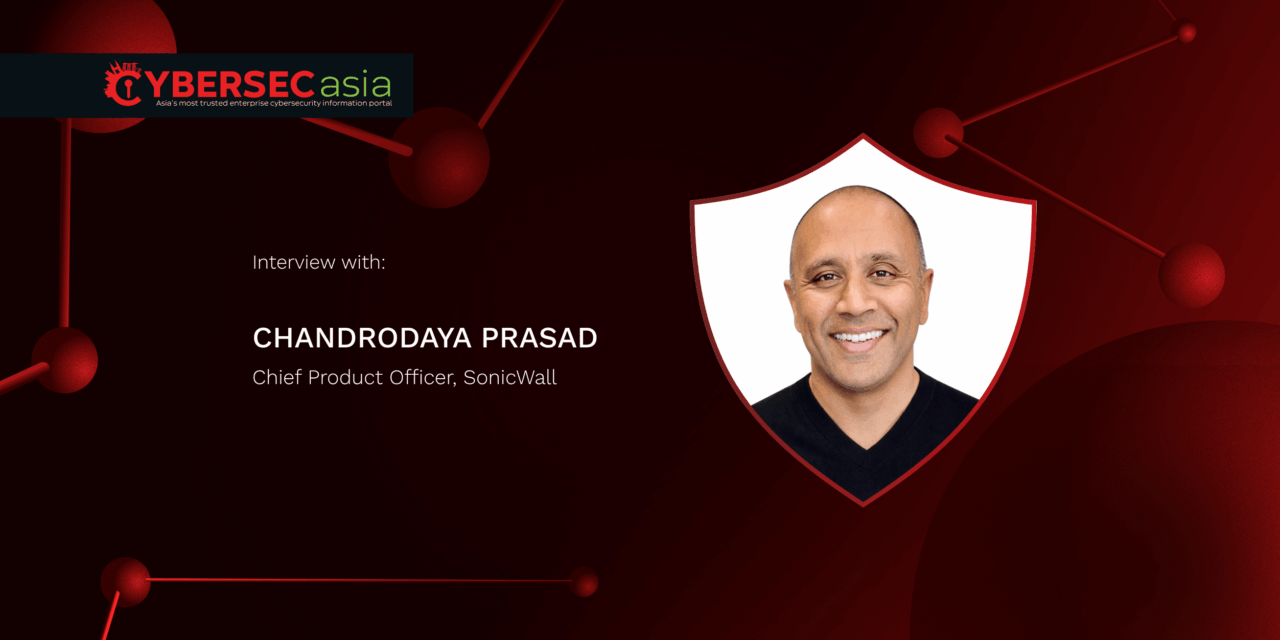
In an interview with CybersecAsia, Chandrodaya Prasad, SonicWall’s Chief Product Officer, discussed why traditional VPNs are increasingly mismatched with the modern workplace.
He also provided insights into how cloud-delivered zero-trust access can be made practical, and how AI is changing both cyber-attacks and cyber-defenses.
“Traditional VPNs were designed around a trust model that no longer reflects how businesses operate,” said Prasad. “For decades, the assumption was that there was a trusted network inside the organisation and an untrusted world outside it. Once you authenticated, you established an encrypted tunnel and effectively became part of the corporate network, with access to every application exposed there.”
That model made sense when applications were housed in corporate data centers and employees mainly worked in offices. Today, applications are distributed across private infrastructure, private clouds, and SaaS, while employees, contractors, partners, vendors, devices, and automated systems connect from many locations.
“The traditional perimeter has dissolved,” he said.
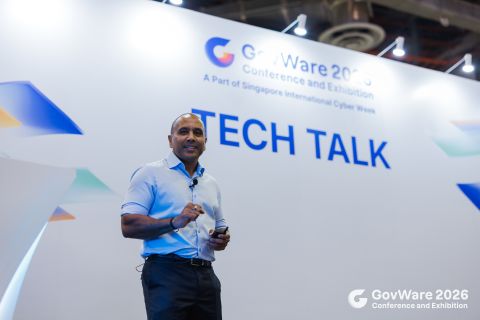
Chandrodaya Prasad, Chief Product Officer, SonicWall
Speaker at GovWare 2026, Sands Expo and Convention Centre, Singapore
Why VPN-based access has become a weakness in today’s work environment
Prasad identified three key areas of weakness:
- Excessive trust: “Traditional VPNs commonly provided network-level connectivity when the user may have needed access to only one application. We’re effectively giving access to every application when they need just one.”
- Expanded attack surface: “Internet-facing VPN infrastructure becomes a high-value target.” Attackers seek vulnerabilities, stolen credentials, and weaknesses in remote-access gateways; AI is accelerating those efforts.
- Trust that goes stale: “Authenticating someone at nine o’clock in the morning doesn’t necessarily mean their device remains secure at four o’clock in the afternoon.” A device’s security posture can change during an active session.
The way forward, he said, is “from connecting users to networks to connecting identities and agents to authorised applications, and continuously validating that access.”
A practical approach to deploying zero trust
The challenge with zero trust is no longer convincing customers that they need it; it is making it easy to deploy, manage, and afford. “Security architectures succeed only when customers can actually operationalise them.”
If a framework requires a large, highly specialized security team, many SMB and mid-market organisations will struggle to adopt it and realise its benefits.
SonicWall’s Cloud Secure Edge (CSE) approach applies zero trust through application-level access, continuous evaluation, and consistent security regardless of where someone works. Rather than giving a contractor broad network access and relying on additional controls to limit it, zero-trust network access grants access only to the application or resource authorised by policy.
“Identity is important, but identity alone is insufficient,” Prasad said. Policies can also evaluate a device’s security posture, the context of the access request, time, location, and whether the user is authorised for a particular resource. Security should follow the user: “Whether it’s from home, the corporate office, or a hotel, the security policy should remain consistent.”
CSE brings together zero-trust network access, secure internet access, web security, and SaaS application controls. Prasad added that SonicWall has integrated CSE capabilities with its firewall to help customers transition from traditional deployments more seamlessly.
How does platformization help?
Platformization addresses customers’ desire for coordinated security outcomes rather than more isolated products and dashboards. He said: “Customers don’t want another isolated security product or another dashboard. They want the endpoint, network security, endpoint protection, cloud-delivered security, and managed detection working together with a consistent management experience.”
The goal is for policies to remain consistent across endpoints, network devices, and cloud services. That matters particularly for MSPs managing thousands of customers: “Scale is extremely important to us. Multitenancy is important to us. Integrating with third-party capabilities that exist in an MSP system is very important.”
Prasad described platformization as a way to make sophisticated security more accessible to organizations of all sizes, rather than reserving zero trust for large enterprises with specialist teams.
He also called observability a baseline for bringing the architecture together: teams need visibility from an endpoint or agent through to an application to see what path a user took and where something went wrong.
Role of AI in cyber-attacks and cyber-defenses
Prasad sees AI changing the economics of attacks, the demands on defenders, and the security challenges created by AI agents:
- AI lowers the cost and skill barrier for attackers. Generative AI can help produce convincing, personalized phishing messages in multiple languages, generate malicious scripts, and automate parts of attack workflows. “AI compresses the time and resources needed to execute attacks,” Prasad said.
- Defenders need to operate at machine speed. “We cannot continue to rely exclusively on human analysts reviewing thousands of alerts and manually correlating those signals.” Intelligent automation can help teams detect threats and understand signals faster, as attackers increasingly automate their operations.
- AI itself creates a new attack surface. Organizations need to ask what identity an AI agent operates under, which systems it can access, what data it can retrieve, and what happens when one agent invokes another. As software agents act on behalf of people and execute actions across systems, Prasad said, security teams face new challenges around identity, authorization, visibility, and governance.
Integrating AI-driven threat detection into cybersecurity
SonicWall combines threat research with multiple detection techniques. Its Capture Labs researchers study emerging malware, vulnerabilities, attacker techniques, and threat patterns; that intelligence informs protections delivered through the company’s products.
Prasad highlighted Real-Time Deep Memory Inspection (RTDMI), part of the Capture Advanced Threat Protection suite, as a capability that uses memory-based analysis to help detect unknown and evasive malware. SonicWall also combines sandboxing, behavioral analysis, machine learning, and real-time threat intelligence.
“The objective is to identify threats not only based on whether we’ve seen a particular file before, but on evidence of malicious characteristics and behaviors,” he said.
Prasad described AI capabilities across SonicWall’s endpoint, network, and cloud portfolio, as well as AI-based automation in its SOC. The company’s AI-powered assistant SAMI is designed to help administrators and MSPs use natural language to understand their security environment, identify areas needing attention, and simplify routine workflows. The broader goal is to help teams make better decisions faster and prevent problems — not simply generate more alerts.