Cybersecurity News in Asia

RECENT STORIES:

SEGA moves faster with flow-based network monitoring
The new cybersecurity imperative is continuous resilience
Autonomous AI agents now exploit software vulnerabilities with little ...
Malicious JavaScript hits visitors to 178 websites through Web Experim...
Will your AI agents always do only what you want them to?
LOGIN REGISTER
CybersecAsia
  • Features
    • Featured

      Will your AI agents always do only what you want them to?

      Will your AI agents always do only what you want them to?

      Thursday, November 19, 2026, 10:09 AM Asia/Singapore | Features
    • Featured

      Curbing S E Asia’s tsunami of gaming scams and payment fraud

      Curbing S E Asia’s tsunami of gaming scams and payment fraud

      Wednesday, November 18, 2026, 12:24 PM Asia/Singapore | Features, Newsletter
    • Featured

      From VPNs to zero-trust access

      From VPNs to zero-trust access

      Tuesday, November 17, 2026, 1:00 PM Asia/Singapore | Features, Newsletter, Sponsored
  • Opinions
  • Tips
  • Whitepapers
  • AWARDS 2026
  • Directory
  • E-Learning

Select Page

News

Survey finds 57% of respondents had experienced ransomware attacks in past year

By CybersecAsia editors | Tuesday, August 12, 2025, 3:49 PM Asia/Singapore

Survey finds 57% of respondents had experienced ransomware attacks in past year

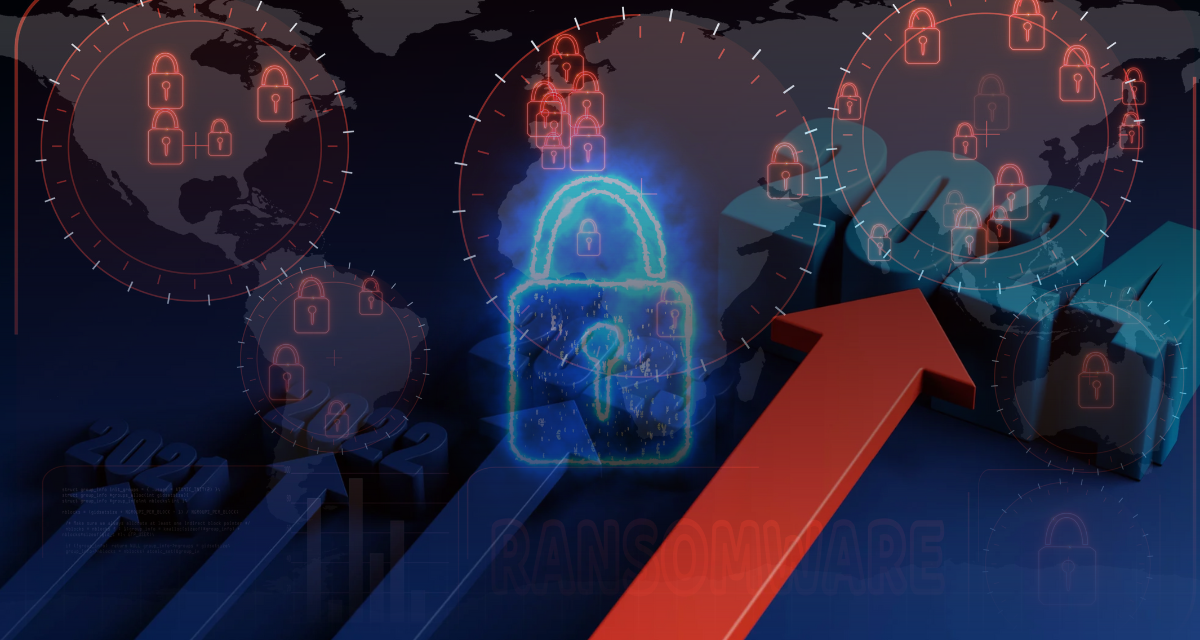
2,000 IT and security decision-makers were polled to revealed ransomware attack rates, repeat victim impact, and data recovery challenges experienced.

Based on a April – May 2025 survey of 2,000 IT and security decision-makers* across North America, Europe, and Asia-Pacific on the experience and impact of ransomware incidents in the prior 12 months, a cybersecurity firm has shared some data trends findings on attack prevalence, patterns, and organizational responses  with the media.

First, 57% of surveyed organizations had indicated that they had experienced at least one successful ransomware attack in the past year. Of these, 38% had indicated being affected twice or more. Sector data showed that 67% of healthcare respondents and 65% of local government respondents had indicated being affected.

Second, 71% of respondents who had experienced an email breach in the same period had also indicated that they had been hit by ransomware.

Other findings

Third, 69% of respondents that were repeat victims had indicated that they were juggling too many different security tools, and 62% of these victims had indicated that their security tools could not integrate with one another. Also:

  • 32% of all ransomware victims in the survey had indicated that they had paid a ransom to recover or restore data. This proportion was 37% among those that had been affected twice or more. Within the Asia-Pacific data subset, 34% of respondents had indicated paying a ransom.
  • 34% of ransom-paying respondents had indicated that they did not recover all their data paying up. 65% of those affected had indicated that they had restored their data from backups.
  • 24% of ransomware incidents (according to activity-based responses, had involved data encryption; 27% involved data theft; and 29% involved installation of additional malicious payloads. Other cited attacker activities included infecting multiple endpoints (26%), lateral movement across networks (25%), embedding backdoors or persistence mechanisms (21%), wiping backups (19%), and deleting shadow copies of files (19%).
  • 27% of respondents that were victims had indicated that attackers had exposed or published stolen data. Pressure tactics reported by respondents included threats to partners, shareholders, or customers (22%), threats to alert authorities or the press (21%), and threats to staff (16%).
  • The most frequently cited business impact was brand and company reputation damage (41%), followed by downtime and operational disruption (38%), recovery costs (36%), and loss of sensitive data (34%). One in four respondents in the victims group had indicated losing existing customers (25%) and an equal proportion had indicated losing new business opportunities (25%).

According to Mark Lukie, Director of Solution Architects (Asia-Pacific), Barracuda, the firm that shared its survey findings, respondents in that region had indicated that “fragmented security environments and complex IT infrastructures” had contributed to “blind spots for attackers to exploit”. He also noted that organizations need to “prioritize visibility, integration, and proactive defense measures — including strong backup strategies.”

*senior IT and security decision‑makers in organizations with 50 to 2,000 employees spanning multiple industries in the U.S., UK, France, Germany, Austria, Switzerland, Belgium, the Netherlands, Luxembourg, Denmark, Finland, Norway, Sweden, Australia, India, and Japan. No other critical methodological details were supplied.


Share:

PreviousSurveyed IT professionals report 78% ransomware targeting: highest ransom payments paid by APAC
NextCritical zero-day exploits dormant WinRAR vulnerability to target global Windows systems

Related Posts

2019 United Nations server breaches were not disclosed promptly: “Troubling”

2019 United Nations server breaches were not disclosed promptly: “Troubling”

Monday, February 3, 2020

Remote-working vulnerabilities: patching up cognitive biases and familiarity heuristics

Remote-working vulnerabilities: patching up cognitive biases and familiarity heuristics

Tuesday, November 17, 2020

2021 DX and cloud computing trends viewed through legal lenses

2021 DX and cloud computing trends viewed through legal lenses

Monday, January 17, 2022

Ransomware attackers don’t take holidays!

Ransomware attackers don’t take holidays!

Friday, November 19, 2021

Leave a reply Cancel reply

You must be logged in to post a comment.

Voters-draw/RCA-Sponsors

Slide
Slide
Slide
Slide
Slide
Slide
Slide
Slide
Slide
Slide
Slide
Slide
Slide
Slide
Slide
Slide
Slide
Slide
Slide
previous arrow
next arrow

CybersecAsia Voting Placement

Gamification listing or Participate Now

LEARN MORE

Vote Now -Placement(Google Ads)

Top-Sidebar-banner

Whitepapers

  • Critical Security Threatsand the Need for ZTNA: How evolving cyberattacks demand a Zero Trust approach

    Critical Security Threatsand the Need for ZTNA: How evolving cyberattacks demand a Zero Trust approach

    Cyber threats have become more frequent and sophisticated, targeting organizations of all sizes across all …Download Whitepaper
  • Zero Trust Made Simple: Why it matters and how to get started

    Zero Trust Made Simple: Why it matters and how to get started

    Data breaches and cyberattacks are no longer limited to large, high-profile organizations.Download Whitepaper
  • Cloud Secure Edge: Remote access, better security

    Cloud Secure Edge: Remote access, better security

    ​SonicWall Cloud Secure Edge™ is a modern, cloud-native Security Service Edge (SSE) solution that addresses …Download Whitepaper
  • Closing the Gap in Email Security:How To Stop The 7 Most SinisterAI-Powered Phishing Threats

    Closing the Gap in Email Security:How To Stop The 7 Most SinisterAI-Powered Phishing Threats

    Insider threats continue to be a major cybersecurity risk in 2024. Explore more insights on …Download Whitepaper

Middle-sidebar-banner

Case Studies

  • FOMO Pay expands cross-border compliance infrastructure amid rising fraud risks

    FOMO Pay expands cross-border compliance infrastructure amid rising fraud risks

    To unify onboarding and ongoing reviews the payment firm adds identity, liveness, business-ownership, sanctions screening …Read more
  • How a Vietnamese D2C retailer built its own secure digital infrastructure

    How a Vietnamese D2C retailer built its own secure digital infrastructure

    Would your organization build your own digital infrastructure – including AI governance and cybersecurity – …Read more
  • Cyber protection for medical clinics in Singapore

    Cyber protection for medical clinics in Singapore

    As Singapore’s healthcare sector becomes increasingly digital and interconnected, clinics are facing heightened cyber risks, …Read more
  • India’s WazirX strengthens governance and digital asset security

    India’s WazirX strengthens governance and digital asset security

    Revamping its custody infrastructure using multi‑party computation tools has improved operational resilience and institutional‑grade safeguardsRead more

Bottom sidebar

Other News

  • GovWare 2026 closes with a clear focus on securing AI that can act

    Thursday, November 19, 2026
    Across the conference and exhibition, …Read More »
  • Visa Launches Threat Intelligence Platform to Strengthen Cyber and Fraud Defense

    Wednesday, November 18, 2026
    New research commissioned by Visa …Read More »
  • As Hijacked Billboards Make Headlines, CAYIN SMP Players Keep Screens in Owners’ Hands

    Monday, November 16, 2026
    After a run of hijacked …Read More »
  • Cohesity Expands Cyber Resilience and AI Data Capabilities for Microsoft Environments

    Friday, November 13, 2026
    Recent innovations strengthen data security …Read More »
  • Cequence Security and KPMG Collaborate on Joint Report Examining how Organisations can Govern and Secure Agentic AI

    Wednesday, November 11, 2026
    New Cequence data in the …Read More »
  • Our Brands
  • DigiconAsia
  • MartechAsia
  • Home
  • About Us
  • Contact Us
  • Sitemap
  • Privacy & Cookies
  • Terms of Use
  • Advertising & Reprint Policy
  • Media Kit
  • Subscribe
  • Manage Subscriptions
  • Newsletter

Copyright © 2026 CybersecAsia All Rights Reserved.