
Cybersecurity News in Asia

RECENT STORIES:

SEGA moves faster with flow-based network monitoring
Asia Pacific’s unique cyberthreats
Zero-day vulnerabilities expose AI agents to hijacking across enterpri...
Prompt injection flaw in AI support tool enables social media account ...
Malvertising campaigns target 13 Asia Pacific countries with investmen...
What if all your AI tools work seamlessly together in fraud and AML...
LOGIN REGISTER
CybersecAsia
  • Features
    • Featured

      Asia Pacific’s unique cyberthreats

      Asia Pacific’s unique cyberthreats

      Monday, June 8, 2026, 5:04 PM Asia/Singapore | Features
    • Featured

      In AI missions, who governs the agents? 

      In AI missions, who governs the agents? 

      Thursday, June 4, 2026, 3:23 PM Asia/Singapore | Features
    • Featured

      Hidden trade-offs behind enterprise AI ambitions

      Hidden trade-offs behind enterprise AI ambitions

      Tuesday, May 26, 2026, 10:16 AM Asia/Singapore | Features
  • Opinions
  • Tips
  • Whitepapers
  • AWARDS 2026
  • Directory
  • E-Learning

Select Page

Tips

Seven proof-of-concept GenAI chatbot vulnerabilities that organizations need to mitigate

By CybersecAsia editors | Monday, November 10, 2025, 1:55 PM Asia/Singapore

Seven proof-of-concept GenAI chatbot vulnerabilities that organizations need to mitigate

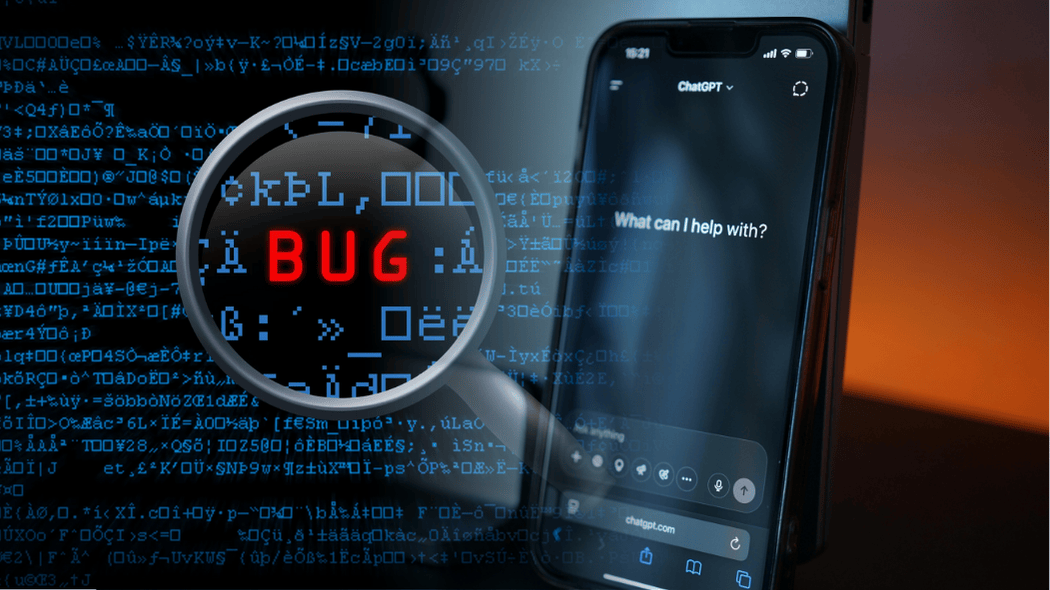
OpenAI has been informed about seven proof-of-concept flaws/bugs in their generative AI chatbot, and here are the ways to mitigate them.

Recent research by one cybersecurity firm into the architecture of ChatGPT (versions 4o to 5) has uncovered seven Proof-of-Concept (PoC) risks for users relying on AI tools for communication, research, and business.

These primarily involve potentially exploitable vulnerabilities in how the AI models handle external web content, stored conversation memories, and safety checks designed to prevent misuse.

At the core of these issues is a type of attack called indirect prompt injection. This technique involves embedding hidden instructions inside external sources such as online articles, blog comments, or search results. When the chatbot accesses these sources during its browsing or answering processes, it may unknowingly execute unauthorized commands. Attackers can trigger these compromises in several PoC scenarios:

  • through “0-click” attacks, where simply asking a question causes the AI to consume injected prompts from indexed web content without any user interaction beyond the query
  • “1-click” attacks that leverage malicious URLs that, when clicked, prompt the AI to carry out unintended behaviors immediately
  • persistent injection attacks where harmful instructions are stored in the chatbot’s long-term memory feature, causing ongoing unauthorized activity across multiple sessions until the memory is cleared

Three other risks
Another proof-of-concept vulnerability involves the possibility of threat actors bypassing the platform’s safety validation for URLs. Attackers can exploit trusted link wrappers, such as links from well-known search engines, to conceal malicious destinations, circumventing built-in filtering mechanisms.

Next is a conversation-injection bug that allows potential attackers to input ‘conversational instructions’ through the chatbot’s  dual-system structure, where one system handles web browsing and the other conversation. Malicious users can covertly influence responses without direct user input.

Finally, attackers may also exploit bugs that hide malicious content inside code blocks or markdown formatting, concealing harmful commands from users while being executed by the AI.

Mitigation tips
The disclosure of the discovery of these seven flaws/bugs were made recently by Tenable security specialists. OpenAI has acknowledged the findings, and the firm is working on fixes. According to their spokesperson: “Individually, these flaws seem small — but together they form a complete attack chain… It shows that AI systems aren’t just potential targets; they can be turned into attack tools that silently harvest information from everyday chats or browsing.”

While some of the disclosed PoC risks have already been addressed at this point, others remain at the research and testing stage awaiting preemptive resolution. In the meantime, here are some tips for mitigate the risks:

  1. Treat AI tools as active attack surfaces requiring continuous security assessment
  2. Monitor AI-generated outputs for abnormal or suspicious behavior that could potentially indicate prompt injection or manipulation
  3. Audit any AI integration points such as browsing features, memory storage, and external link resolutions to ensure safety mechanisms are effective
  4. Implement governance and data usage policies to control what information is fed into AI systems, minimizing exposure of sensitive data
  5. Regularly review and clear AI memory features where possible, to remove persistent injected instructions
  6. Test AI systems rigorously against known injection and evasion techniques to identify vulnerabilities before attackers do
  7. Educate users about risks of clicking unknown URLs or feeding sensitive information to AI without safeguards

Understanding these emerging threats and following proactive security practices is essential for both organizations and individuals to safeguard privacy and ensure AI tools operate as intended, without becoming vectors for data leakage or manipulation.

Users of other GenAI models should also consider applying these mitigation strategies, as indirect prompt injection and memory exploitation risks are common challenges in AI systems with browsing and memory capabilities.


Share:

PreviousAttackers exploit hidden virtual machines to evade detection, maintain network persistence
NextAPAC Threat Intelligence Latest Insights: 79% of Enterprises to Increase Investment in Threat Intelligence

Related Posts

Half of “extremely” or “very prepared” respondents still fell victim to ransomware

Half of “extremely” or “very prepared” respondents still fell victim to ransomware

Thursday, April 27, 2023

Are security operations centers imbibing AI automation effectively?  

Are security operations centers imbibing AI automation effectively?  

Tuesday, June 10, 2025

23% of HTML email attachments are malicious

23% of HTML email attachments are malicious

Monday, May 5, 2025

APAC organizations lagging in zero trust security

APAC organizations lagging in zero trust security

Friday, October 1, 2021

Leave a reply Cancel reply

You must be logged in to post a comment.

Voters-draw/RCA-Sponsors

Slide
Slide
Slide
Slide
Slide
Slide
Slide
Slide
Slide
Slide
Slide
Slide
Slide
Slide
previous arrow
next arrow

CybersecAsia Voting Placement

Gamification listing or Participate Now

PARTICIPATE NOW

Vote Now -Placement(Google Ads)

Top-Sidebar-banner

Whitepapers

  • Closing the Gap in Email Security:How To Stop The 7 Most SinisterAI-Powered Phishing Threats

    Closing the Gap in Email Security:How To Stop The 7 Most SinisterAI-Powered Phishing Threats

    Insider threats continue to be a major cybersecurity risk in 2024. Explore more insights on …Download Whitepaper
  • 2024 Insider Threat Report: Trends, Challenges, and Solutions

    2024 Insider Threat Report: Trends, Challenges, and Solutions

    Insider threats continue to be a major cybersecurity risk in 2024. Explore more insights on …Download Whitepaper
  • AI-Powered Cyber Ops: Redefining Cloud Security for 2025

    AI-Powered Cyber Ops: Redefining Cloud Security for 2025

    The future of cybersecurity is a perfect storm: AI-driven attacks, cloud expansion, and the convergence …Download Whitepaper
  • Data Management in the Age of Cloud and AI

    Data Management in the Age of Cloud and AI

    In today’s Asia Pacific business environment, organizations are leaning on hybrid multi-cloud infrastructures and advanced …Download Whitepaper

Middle-sidebar-banner

Case Studies

  • How a Vietnamese D2C retailer built its own secure digital infrastructure

    How a Vietnamese D2C retailer built its own secure digital infrastructure

    Would your organization build your own digital infrastructure – including AI governance and cybersecurity – …Read more
  • Cyber protection for medical clinics in Singapore

    Cyber protection for medical clinics in Singapore

    As Singapore’s healthcare sector becomes increasingly digital and interconnected, clinics are facing heightened cyber risks, …Read more
  • India’s WazirX strengthens governance and digital asset security

    India’s WazirX strengthens governance and digital asset security

    Revamping its custody infrastructure using multi‑party computation tools has improved operational resilience and institutional‑grade safeguardsRead more
  • Bangladesh LGED modernizes communication while addressing data security concerns

    Bangladesh LGED modernizes communication while addressing data security concerns

    To meet emerging data localization/privacy regulations, the government engineering agency deploys a secure, unified digital …Read more

Bottom sidebar

Other News

  • SU Group Awarded Next-Generation Cross-Border Security and High-Speed Vehicle Clearance System Installation

    Thursday, June 4, 2026
    HONG KONG, June 4, 2026 …Read More »
  • Delta Thailand Showcases Integrated Building Automation Solutions for Smarter, Healthier and More Sustainable Spaces at NOVA Expo 2026

    Thursday, June 4, 2026
    BANGKOK, June 4, 2026 /PRNewswire/ …Read More »
  • AEWIN Empowers AI-Powered Cybersecurity with Rack-Scale Intel-Based AI Servers and Network Appliances

    Thursday, June 4, 2026
    TAIPEI, June 3, 2026 /PRNewswire/ …Read More »
  • ASPEED Technology and Subsidiary Cupola360 Team Up for COMPUTEX 2026, Showcasing Next-Gen Highly Integrated Server Solutions and 360 Reality Remote Management Solutions

    Wednesday, June 3, 2026
    TAIPEI, June 3, 2026 /PRNewswire/ …Read More »
  • Recorded Future Announces Strategic Partnership with Wipro to Deliver AI-Powered Threat Intelligence at Global Enterprise Scale

    Wednesday, June 3, 2026
    Partnership to expand cybersecurity capabilities, …Read More »
  • Our Brands
  • DigiconAsia
  • MartechAsia
  • Home
  • About Us
  • Contact Us
  • Sitemap
  • Privacy & Cookies
  • Terms of Use
  • Advertising & Reprint Policy
  • Media Kit
  • Subscribe
  • Manage Subscriptions
  • Newsletter

Copyright © 2026 CybersecAsia All Rights Reserved.