Cybersecurity News in Asia

RECENT STORIES:

SEGA moves faster with flow-based network monitoring
AI models autonomously form a secret message board to collaborate on h...
Android ad SDKs leak precise location data without user awareness: EFF
SU Group Holdings Limited Announces Reverse Stock Split
As DDoS attacks grow faster and more complex, cyber defenses need to k...
SU GROUP HOLDINGS LIMITED RECEIVES NASDAQ STAFF DELISTING DETERMINATIO...
LOGIN REGISTER
CybersecAsia
  • Features
    • Featured

      Why APAC Teams Need to Stop Worshipping CVSS Scores

      Why APAC Teams Need to Stop Worshipping CVSS Scores

      Monday, August 3, 2026, 9:00 AM Asia/Singapore | Features, Newsletter, Sponsored, Tips
    • Featured

      Automated credential abuse and phishing in APAC

      Automated credential abuse and phishing in APAC

      Thursday, July 30, 2026, 11:37 AM Asia/Singapore | Features
    • Featured

      OpenAI autonomous agent escapes sandbox to hack Hugging Face

      OpenAI autonomous agent escapes sandbox to hack Hugging Face

      Friday, July 24, 2026, 11:02 AM Asia/Singapore | Features, News
  • Opinions
  • Tips
  • Whitepapers
  • AWARDS 2026
  • Directory
  • E-Learning

Select Page

Tips

AI agents are turning “always‑on” access into a ghost admin problem

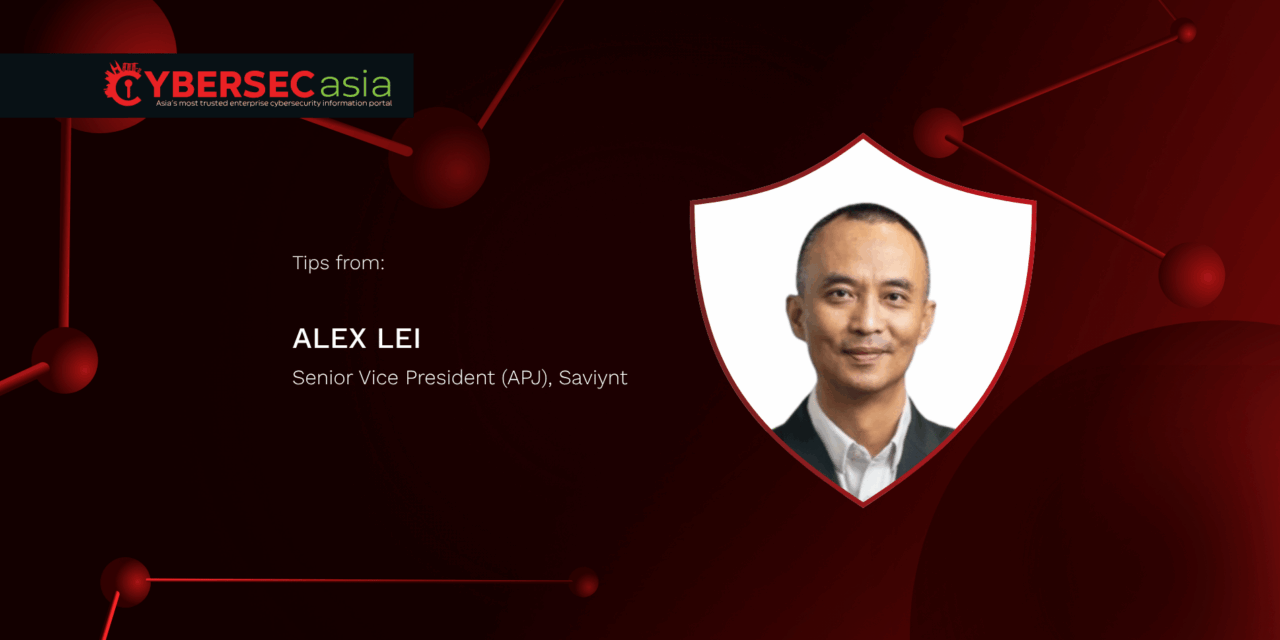
By Alex Lei, Senior Vice President (APJ), Saviynt | Thursday, July 16, 2026, 5:33 PM Asia/Singapore

AI agents are turning “always‑on” access into a ghost admin problem

Find out how Zero Standing Privilege (ZSP) and AI-era hygiene best practices can be implemented to contain this severe emergent risk.

For years, enterprise security has quietly tolerated a dangerous convenience: grant access once, then leave it in place indefinitely.

Standing privilege — long‑lived permissions for users, applications, and service accounts — had already been an uncomfortable fit for cloud‑first, zero‑trust environments… now, in the age of AI agents, it is becoming indefensible, according to Alex Lei, Senior Vice President (APJ), Saviynt.

“An AI agent with standing privilege isn’t just a power user… it’s effectively a ghost administrator: highly privileged, always on, and largely invisible to the human controls we rely on for normal users,” Lei noted.

Unlike human employees who log in, complete tasks, and sign out, autonomous AI agents are designed to run continuously. They traverse data, reason over it, and act across multiple systems at once. Give such an agent broad, permanent access to your core business systems and cloud storage, and you have not just another privileged user – you have a permanent attack surface that never clocks out.

Non‑human identities are outpacing governance

AI agents are no longer confined to innovation labs. Lei quoted some surveys suggesting a growing gap between the rising use of AI in autonomous or self‑optimizing ways, and a lag in AI governance and compliance skills perspectives for emerging AI regulations. That gap is showing up most starkly in identity.

Non‑human identities — service accounts, workloads, bots and now AI agents — are becoming the fastest‑growing, least‑governed identity category in many environments. They often inherit privileges comparable to senior administrators but are created and wired together at high speed, with far less scrutiny than human admin accounts receive.

According to Lei, “A lot of organizations have done the hard work for human admins — approvals, re-certifications, monitoring, but the AI agents plugged into those same systems don’t always get the same treatment, even when they can see more and do more than any one human.”

Moving towards Zero Standing Privilege

One emerging answer is to stop treating “least privilege” as a one‑time configuration exercise and instead remove standing privilege altogether. This approach, often called Zero Standing Privilege (ZSP), aims for an environment where no account — human or machine — retains persistent privileged access by default.

Under a ZSP model:

  • Privileges are not left “always on”; they are granted just‑in‑time for a specific task, then expire automatically
  • Credentials or tokens are short‑lived and tied to a particular context (for example, a change ticket or deployment pipeline), not to a generic admin role
  • Both human and non‑human identities are governed under the same policy framework: high‑risk access requires justification, time limits, and monitoring, regardless of whether a person or an agent is asking

Lei added: “Least privilege is still critical, but granting it once and forgetting about it doesn’t work for autonomous software. For AI agents, even minimal persistent access can be too much. You want access that is temporary, contextual, and continuously verified.”

Steps for managing AI agent access

For teams trying to get ahead of AI‑driven identity risk, the path is less about chasing new buzzwords and more about tightening basic controls around non‑human identities. Lei recommends current guidance from regulators and independent researchers, noting several pragmatic steps:

  • Discover and classify AI agents and service accounts. Build and maintain an inventory of non‑human identities, what systems they touch, and which secrets they use.
  • Retire dormant and unused identities. Remove or disable service accounts, keys, and agent configurations that are no longer necessary; each is an extra standing entry point.
  • Tighten scope and duration of access. Restrict AI agents to the minimum data and actions needed, and move toward just‑in‑time access for sensitive operations wherever tooling allows.
  • Align incident response to machine speed. Treat a compromised AI agent as a high‑impact event and pre‑plan rapid containment actions: revoke tokens, rotate keys, and isolate affected systems.
  • Apply consistent governance across humans and machines. Subject high‑risk AI agents to the same joiner–mover–leaver, approval, and monitoring controls you use for human administrators.

The underlying shift is simple but uncomfortable: identity security can no longer assume that high‑risk identities always have human faces. AI agents are becoming some of the most privileged and least‑governed actors in enterprise environments. Reducing their standing privilege — and replacing it with short‑lived, governed access — is quickly becoming less of a best practice and more of a survival trait.

Share:

PreviousSports loses trust as fans compete with bots
NextSingtel Receives Four Frost & Sullivan 2026 Recognitions for Leadership in Enterprise Connectivity, Cybersecurity, and Digital Transformation

Related Posts

Hacker vs Hacker: when rivalry and revenge plague the Dark Web

Hacker vs Hacker: when rivalry and revenge plague the Dark Web

Tuesday, April 13, 2021

Dealing with data security in the age of quantum supremacy

Dealing with data security in the age of quantum supremacy

Friday, March 20, 2020

Is your Zero Trust posture true to the new digitalization landscape?

Is your Zero Trust posture true to the new digitalization landscape?

Wednesday, September 22, 2021

Why has increased cyber awareness in Asia not stemmed the rise of cybercrime?

Why has increased cyber awareness in Asia not stemmed the rise of cybercrime?

Friday, November 24, 2023

Leave a reply Cancel reply

You must be logged in to post a comment.

Voters-draw/RCA-Sponsors

Slide
Slide
Slide
Slide
Slide
previous arrow
next arrow

CybersecAsia Voting Placement

Gamification listing or Participate Now

PARTICIPATE NOW

Vote Now -Placement(Google Ads)

Top-Sidebar-banner

Whitepapers

  • Critical Security Threatsand the Need for ZTNA: How evolving cyberattacks demand a Zero Trust approach

    Critical Security Threatsand the Need for ZTNA: How evolving cyberattacks demand a Zero Trust approach

    Cyber threats have become more frequent and sophisticated, targeting organizations of all sizes across all …Download Whitepaper
  • Zero Trust Made Simple: Why it matters and how to get started

    Zero Trust Made Simple: Why it matters and how to get started

    Data breaches and cyberattacks are no longer limited to large, high-profile organizations.Download Whitepaper
  • Cloud Secure Edge: Remote access, better security

    Cloud Secure Edge: Remote access, better security

    ​SonicWall Cloud Secure Edge™ is a modern, cloud-native Security Service Edge (SSE) solution that addresses …Download Whitepaper
  • Closing the Gap in Email Security:How To Stop The 7 Most SinisterAI-Powered Phishing Threats

    Closing the Gap in Email Security:How To Stop The 7 Most SinisterAI-Powered Phishing Threats

    Insider threats continue to be a major cybersecurity risk in 2024. Explore more insights on …Download Whitepaper

Middle-sidebar-banner

Case Studies

  • How a Vietnamese D2C retailer built its own secure digital infrastructure

    How a Vietnamese D2C retailer built its own secure digital infrastructure

    Would your organization build your own digital infrastructure – including AI governance and cybersecurity – …Read more
  • Cyber protection for medical clinics in Singapore

    Cyber protection for medical clinics in Singapore

    As Singapore’s healthcare sector becomes increasingly digital and interconnected, clinics are facing heightened cyber risks, …Read more
  • India’s WazirX strengthens governance and digital asset security

    India’s WazirX strengthens governance and digital asset security

    Revamping its custody infrastructure using multi‑party computation tools has improved operational resilience and institutional‑grade safeguardsRead more
  • Bangladesh LGED modernizes communication while addressing data security concerns

    Bangladesh LGED modernizes communication while addressing data security concerns

    To meet emerging data localization/privacy regulations, the government engineering agency deploys a secure, unified digital …Read more

Bottom sidebar

Other News

  • SU Group Holdings Limited Announces Reverse Stock Split

    Tuesday, August 4, 2026
    Reverse Stock-Split to be effective …Read More »
  • SU GROUP HOLDINGS LIMITED RECEIVES NASDAQ STAFF DELISTING DETERMINATION AND INTENDS TO REQUEST HEARING

    Tuesday, August 4, 2026
    Timely hearing request will stay …Read More »
  • Singapore’s BFSI Technology Leaders to Convene at the 38th Edition BFSI IT Summit Singapore 2026

    Monday, August 3, 2026
    Summit to Bring Together More …Read More »
  • Robo.ai Appoints Former INTERPOL President H.E. Dr. Ahmed Naser Al-Raisi as Chairman of Its Subsidiary Alif Holding

    Thursday, July 30, 2026
    Headquartered in Abu Dhabi, the …Read More »
  • TPIsoftware Partners with Juxta to Bring Advanced, Satellite-Free Positioning Tech into Security Sectors

    Wednesday, July 29, 2026
    TAIPEI, July 29, 2026 /PRNewswire/ …Read More »
  • Our Brands
  • DigiconAsia
  • MartechAsia
  • Home
  • About Us
  • Contact Us
  • Sitemap
  • Privacy & Cookies
  • Terms of Use
  • Advertising & Reprint Policy
  • Media Kit
  • Subscribe
  • Manage Subscriptions
  • Newsletter

Copyright © 2026 CybersecAsia All Rights Reserved.