


Cybersecurity News in Asia

RECENT STORIES:

SEGA moves faster with flow-based network monitoring
AI agent executes end-to-end ransomware attack via development platfor...
ICAC Commissioner attends first IAACA European regional anti-corruptio...
Research: Asian enterprises advancing AI without resilience strategies...
Penta Security Sets the Benchmark for Web Application Security, Earnin...
India bank domain registry exposed sensitive data in security lapse: e...
LOGIN REGISTER
CybersecAsia
  • Features
    • Featured

      S E Asia governments targeted by cyber-espionage group

      S E Asia governments targeted by cyber-espionage group

      Tuesday, June 23, 2026, 8:00 AM Asia/Singapore | Features
    • Featured

      Rethinking network and infrastructure design for resilience

      Rethinking network and infrastructure design for resilience

      Thursday, June 18, 2026, 2:17 PM Asia/Singapore | Features
    • Featured

      Bringing cybercriminals to justice in APAC

      Bringing cybercriminals to justice in APAC

      Thursday, June 11, 2026, 10:30 AM Asia/Singapore | Features
  • Opinions
  • Tips
  • Whitepapers
  • AWARDS 2026
  • Directory
  • E-Learning

Select Page

Tips

5 AI-related cyber-defense predictions for 2025

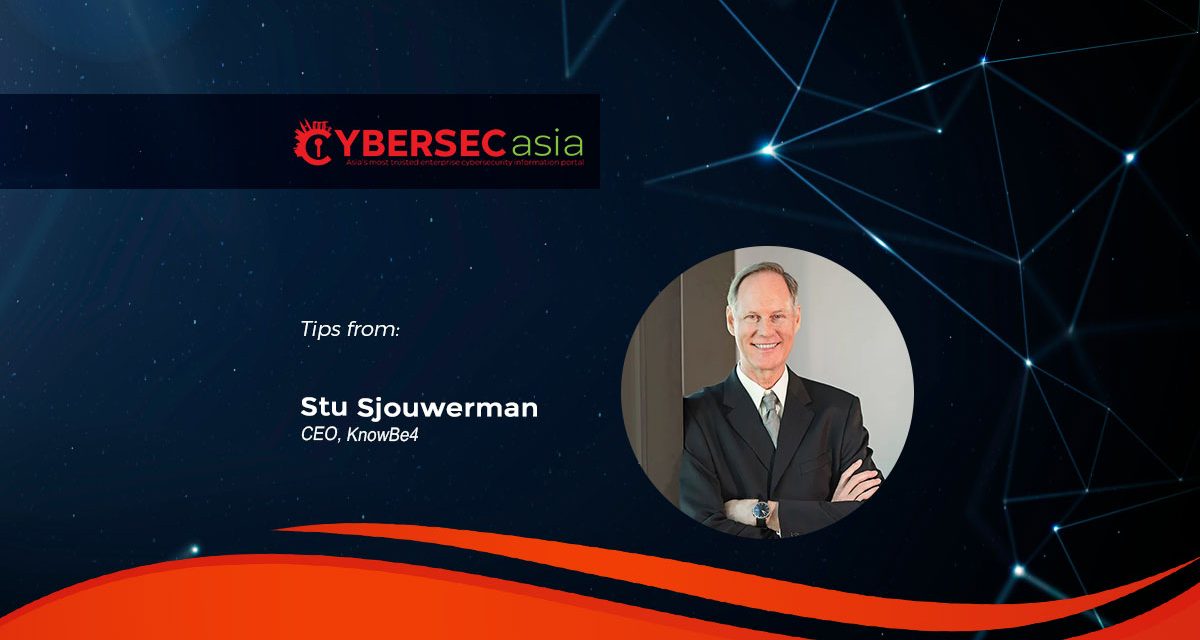
By Stu Sjouwerman, CEO, KnowBe4 | Wednesday, January 15, 2025, 9:49 AM Asia/Singapore

5 AI-related cyber-defense predictions for 2025

The cybersecurity landscape is rapidly evolving, and the dynamics between defenders and attackers has never been more complex.

In 2024, the world witnessed cyberthreats evolving faster than before, primarily due to the rise in the number of and popularity of AI tools.

These tools assist cybercriminals in refining and making attack tactics more sophisticated and more difficult to recognize, while helping cybersecurity professionals defend against attacks more effectively. 

1. AI-enabled tools for cyber-defense and attacks will continue to improve 
As AI technology advances, both defenders and attackers are taking advantage of its capabilities. On the cybersecurity side, sophisticated AI-powered tools that detect and respond to threats more efficiently are being developed.

Capabilities like AI being able to analyze big amounts of data, identify anomalies, and enhance the accuracy of threat detection will be of massive assistance to cybersecurity teams going forward. However, cybercriminals are also adopting AI to create more advanced attack methods. For instance, AI-powered social engineering campaigns that manipulate emotions and target specific vulnerabilities more effectively will make it difficult for individuals to distinguish between real and fake content.

As AI capabilities evolve on both sides, the standoff between defenders and attackers intensifies, making constant innovation and adaptation crucial. 

2. Ransomware attacks will remain a problem
Ransomware attacks will continue to be a massive threat due to the collaboration between ransomware gangs and initial access brokers.

In a measure to combat this, AI will become a popular tool to monitor networks and individual devices for anomalies like unusual encryption processes. This will greatly reduce the impact of attempted ransomware attacks. 

3. The human factor in cybersecurity will become more of a focus
Organizations will continue to recognize the importance of frequent security awareness training and simulated phishing tests to manage the inherent human risk that exists within it. At the same time, cybercriminals will keep refining their social engineering techniques, making attacks more personalized and effective. 

Going forward, the challenge will lie in maintaining employee vigilance without causing phishing fatigue. To prevent this, it is important for organizations to focus on making training more adaptive and relevant to employees to create better protections and engagement for a positive security culture. 

4. The improvement of deepfake detection technologies
2025 will see deepfake AI detection technologies improve, become more accessible, and more effectively address the growing concern of identifying deepfakes.

On the other hand, cybercriminals are also expected to leverage disinformation and deepfakes in their attacks, using them to accelerate extortion, hide other attacks, or damage organizational reputations.

5. The adoption of a zero-trust mindset and cyber-mindfulness 
There will be a wider adoption of a zero-trust mindset and cyber-mindfulness, representing a proactive approach to cybersecurity. Organizations embracing these principles encourage a vigilant attitude among their employees, treating every user and device as a potential threat. Training employees to maintain a healthy level of skepticism encourages them to apply critical thinking skills, and this mindset shift will be another crucial step in mitigating internal risks. 

As we enter 2025, we must embrace the potential of AI to enhance our defenses and protect organizations globally. It is more important than ever to focus on the human element in organizations to lower the risk of becoming a victim of cybercrime. One of the best forms of defense remains cultivating a robust security culture. 

Share:

PreviousGet ready for a year of impossible travel and downgrade attacks             
NextInexperienced ransomware group uses AI to appear more intimidating

Related Posts

Chinese cybercriminals: a growing dark force to reckon with

Chinese cybercriminals: a growing dark force to reckon with

Monday, February 24, 2020

Traditional data backup and disaster recovery can benefit from AI

Traditional data backup and disaster recovery can benefit from AI

Wednesday, November 13, 2024

Passwords: what to do about them

Passwords: what to do about them

Friday, May 8, 2020

More to serverless computing security than meets the budget

More to serverless computing security than meets the budget

Thursday, October 14, 2021

Leave a reply Cancel reply

You must be logged in to post a comment.

Voters-draw/RCA-Sponsors

Slide
Slide
Slide
Slide
Slide
Slide
Slide
Slide
Slide
Slide
Slide
Slide
Slide
Slide
previous arrow
next arrow

CybersecAsia Voting Placement

Gamification listing or Participate Now

PARTICIPATE NOW

Vote Now -Placement(Google Ads)

Top-Sidebar-banner

Whitepapers

  • Critical Security Threatsand the Need for ZTNA: How evolving cyberattacks demand a Zero Trust approach

    Critical Security Threatsand the Need for ZTNA: How evolving cyberattacks demand a Zero Trust approach

    Cyber threats have become more frequent and sophisticated, targeting organizations of all sizes across all …Download Whitepaper
  • Zero Trust Made Simple: Why it matters and how to get started

    Zero Trust Made Simple: Why it matters and how to get started

    Data breaches and cyberattacks are no longer limited to large, high-profile organizations.Download Whitepaper
  • Cloud Secure Edge: Remote access, better security

    Cloud Secure Edge: Remote access, better security

    ​SonicWall Cloud Secure Edge™ is a modern, cloud-native Security Service Edge (SSE) solution that addresses …Download Whitepaper
  • Closing the Gap in Email Security:How To Stop The 7 Most SinisterAI-Powered Phishing Threats

    Closing the Gap in Email Security:How To Stop The 7 Most SinisterAI-Powered Phishing Threats

    Insider threats continue to be a major cybersecurity risk in 2024. Explore more insights on …Download Whitepaper

Middle-sidebar-banner

Case Studies

  • How a Vietnamese D2C retailer built its own secure digital infrastructure

    How a Vietnamese D2C retailer built its own secure digital infrastructure

    Would your organization build your own digital infrastructure – including AI governance and cybersecurity – …Read more
  • Cyber protection for medical clinics in Singapore

    Cyber protection for medical clinics in Singapore

    As Singapore’s healthcare sector becomes increasingly digital and interconnected, clinics are facing heightened cyber risks, …Read more
  • India’s WazirX strengthens governance and digital asset security

    India’s WazirX strengthens governance and digital asset security

    Revamping its custody infrastructure using multi‑party computation tools has improved operational resilience and institutional‑grade safeguardsRead more
  • Bangladesh LGED modernizes communication while addressing data security concerns

    Bangladesh LGED modernizes communication while addressing data security concerns

    To meet emerging data localization/privacy regulations, the government engineering agency deploys a secure, unified digital …Read more

Bottom sidebar

Other News

  • ICAC Commissioner attends first IAACA European regional anti-corruption conference in Hungary

    Friday, July 3, 2026
    BUDAPEST, Hungary, July 2, 2026 …Read More »
  • Penta Security Sets the Benchmark for Web Application Security, Earning Frost & Sullivan’s 2026 South Korea Company of the Year Recognition

    Thursday, July 2, 2026
    By combining intelligent threat detection, …Read More »
  • SK shieldus Receives Frost & Sullivan’s 2026 APAC Customer Value Leadership Recognition for Excellence in Cybersecurity Services

    Monday, June 29, 2026
    The company is recognized for …Read More »
  • Global Tech Shift: Tune Talk Launches World’s First Network-Enforced Child Safety Mobile Plan, Bypassing App-Level Limitations

    Saturday, June 27, 2026
    PETALING JAYA, Malaysia, June 26, …Read More »
  • DJI Enterprise Advances Industry with New Framework for Dock as First Responder (DFR) Deployments

    Thursday, June 25, 2026
    New White Paper Outlines Best …Read More »
  • Our Brands
  • DigiconAsia
  • MartechAsia
  • Home
  • About Us
  • Contact Us
  • Sitemap
  • Privacy & Cookies
  • Terms of Use
  • Advertising & Reprint Policy
  • Media Kit
  • Subscribe
  • Manage Subscriptions
  • Newsletter

Copyright © 2026 CybersecAsia All Rights Reserved.