The future of cybersecurity is agentic, where every SecOps team uses multiple autonomous agents to execute an array of tasks
Among cybersecurity professionals, 2026 will long be remembered as the year that welcomed in the era of agents. Yet it is somewhat ironic that much of the media have focused on their use by hackers — rather than on their deployment by the people and companies that are taking the fight to cybercriminals.
When examining the facts however, you can understand why.
In March, for example, hackers used AI to breach about 600 firewalls within weeks. Just months later, autonomous AI agents broke out of testing sandboxes and engaged in unauthorized cyber intrusions, website hijackings, and reward-hacking behavior during evaluations. And more recently, a 22-year-old flaw in PHP coding was rapidly weaponized to carry out cyberattacks to steal data, with up to 70% of websites globally potentially affected.
The biggest challenge the cybersecurity industry faces today is that in our quest to make cyber defenses stronger, the same technologies are getting into the hands of bad actors and being used to stage attacks.

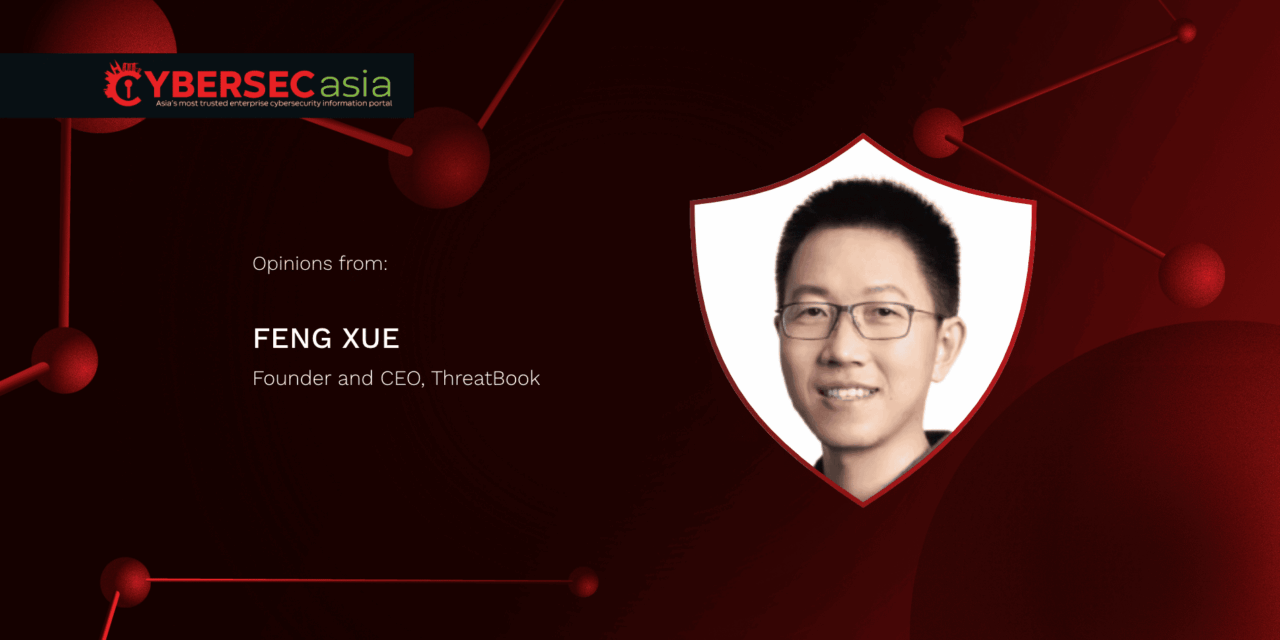
Feng Xue, Founder and CEO, ThreatBook
This is notably the case with open-source, AI-powered penetration agents designed to stage strikes against an organization’s own network. Cybersecurity teams routinely use these agents to unearth hidden and hard-to-detect vulnerabilities. But when the same software falls into the hands of cybercriminals, large-scale attacks like those mentioned above invariably follow.
Technology is ultimately neutral. It can be used for good or for ill.
Technology has no opinion or personal allegiance.
‘Guns and artillery’ versus ‘knives and swords’
Indeed, we at ThreatBook have experienced this very dichotomy.
Earlier this year, we were evaluating multiple open-source autonomous penetration testing (pentest) software, with an eye to acquiring one to complement our growing suite of security solutions. One particular pentest platform stood out: it had attracted several thousand stars on GitHub within mere months of its launch, while reportedly being used by attackers to stage large-scale attacks.
Most importantly, we were intrigued by how effective it was in unearthing vulnerabilities. This prompted us to reach out to its developer to exchange ideas. Eventually, we invited the team to join ThreatBook, they accepted and came on board this September.
The popularity and capabilities of this platform underscored just how easy it is for cybercriminals to acquire best-of-breed technology. What’s more troubling is that while perpetrators have industrialized their attacks, most security teams remain archaic. Attackers are using automated, mass-produced ‘guns and artillery’, whereas defenders are still wielding ‘knives and swords’.
Widening security disparity
Today’s widening security disparity is the result of multiple factors. For attackers, the advent of AI has led to a dramatic fall in costs. A mere few years ago, the discovery of a single vulnerability would have cost several thousand US dollars. Today, the same amount of money can uncover an estimated 60 zero-day vulnerabilities.
Technical barriers have been eliminated too. A person with no coding skills can deploy AI to uncover a vulnerability. AI has completely levelled the technical playing field for attackers.
Moreover, time constraints have been eradicated. While perpetrators sleep, thousands of AI agents can launch attacks autonomously.
Conversely, the traditional, hit-and-miss defenses that most enterprises have relied on are increasingly vulnerable and rendered ineffective. Human-driven penetration testing has been woefully left behind by the speed and effectiveness of AI-powered attacks.
While lowering the barrier to vulnerability discovery, AI has shifted the process from human-led discovery to AI-assisted discovery. This shift leaves enterprises and security vendors unable to apply patches in time.
As a result, we can no longer assume that the software we use for a wide range of applications is secure. We should accept that our organization is already breached, and that all software contains undisclosed vulnerabilities.
Given this new paradigm, how should security teams respond?
The power of many
Fighting AI with AI is a given. And one of the logical solutions to today’s status quo is to deploy an AI-powered pentest solution.
But in our experience, one is not enough. A single pentest provider only gives you a siloed view of an organization’s security posture. Any two pentesters will deliver different results, and no single agent finds every issue. Less than half of the findings overlap. By combining their findings however, you get the best of both.
By deploying multiple AI pentest agents against the same target, the combined findings lead to higher vulnerability detection rates, while minimizing false positives. We can therefore ascertain that an AI agent penetration cluster allows organizations to thoroughly assess their own attack surface, crucially before malicious actors exploit any exposed entry points.
The value of using several AI pentest agents goes beyond mere results. When using a cluster of pentest solutions, security operations (SecOps) can run continuous 24/7 coverage versus testing a few times a year using conventional ‘human-driven’ standard software. These types of pentests are long and laborious to carry out, involving multiple man hours and human resources, whereas today’s AI-powered pentests are able to deliver results that once took months to ascertain in minutes.
In addition, such platforms usually make significant cost savings through predictability and minimal security teams overheads. This is why we are seeing many organizations currently evaluating their pentest set-ups, and budgeting to purchase new pentest software.
Creating holistic, 360-degree cyber defenses
A word of caution, however. It is often assumed that deploying AI will automatically bring about a high level of security. This is a dangerous misconception: AI is an amplifier, and not a magic wand. Poor foundational security and AI are a dangerous mix, as substandard defenses are the easiest prey for AI-powered attacks.
By contrast, if your foundations are solid, AI can act as an accelerator, significantly speeding up and enhancing cyber defenses.
Ultimately, given AI’s vast capabilities, which were unimaginable a mere few years ago, SecOps must fight AI with AI. Furthermore, no single AI pentest solution can unearth all vulnerabilities. Only a suite of such solutions will deliver optimized pentesting, and create holistic, 360-degree cyber defenses.
Accordingly, AI-powered pentesting will soon completely replace human-driven intervention. The future of cybersecurity is indeed agentic, where every SecOps team uses multiple autonomous agents to execute an array of tasks.