
Cybersecurity News in Asia

RECENT STORIES:

SEGA moves faster with flow-based network monitoring
Singtel Receives Four Frost & Sullivan 2026 Recognitions for Leade...
AI agents are turning “always‑on” access into a ghost admin problem...
Sports loses trust as fans compete with bots
US Treasury sanctions VPN provider accused of supporting ransomware op...
US CISA advisory highlights ongoing state-sponsored attacks on routers...
LOGIN REGISTER
CybersecAsia
  • Features
    • Featured

      S E Asia governments targeted by cyber-espionage group

      S E Asia governments targeted by cyber-espionage group

      Tuesday, June 23, 2026, 8:00 AM Asia/Singapore | Features
    • Featured

      Rethinking network and infrastructure design for resilience

      Rethinking network and infrastructure design for resilience

      Thursday, June 18, 2026, 2:17 PM Asia/Singapore | Features
    • Featured

      Bringing cybercriminals to justice in APAC

      Bringing cybercriminals to justice in APAC

      Thursday, June 11, 2026, 10:30 AM Asia/Singapore | Features
  • Opinions
  • Tips
  • Whitepapers
  • AWARDS 2026
  • Directory
  • E-Learning

Select Page

Cyber WarfareNewsOpinionsTips

How escalating geopolitical tensions are expanding the cybersecurity frontline

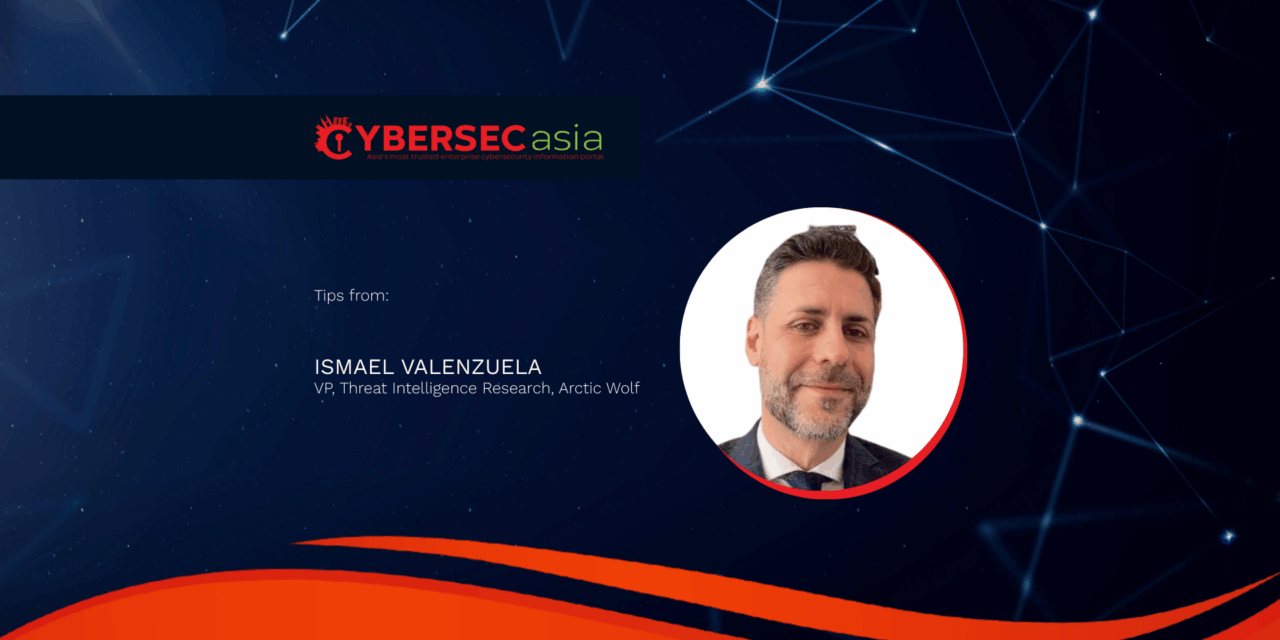
By Ismael Valenzuela, VP, Threat Intelligence Research, Arctic Wolf | Thursday, March 5, 2026, 2:04 PM Asia/Singapore

How escalating geopolitical tensions are expanding the cybersecurity frontline

As geopolitical tensions rise and conflicts increasingly play out both on the ground and online, the line between national security and business risk is quickly fading.

What we are watching now is hybrid warfare at scale: coordinated kinetic operations against Iran, pre‑emptive cyber activity, and an expected wave of Iranian and proxy influence campaigns that blur the line between battlefield and home front.

Organizations worldwide must assume that their operational technology, data centers, AI integration layers, and information ecosystems are part of this contested terrain, whether they see themselves as “targets” or not.

The use of AI in warfare is no longer speculative; when geopolitical tension rises, digital control planes, especially those tied to automation and decision support, become strategic terrain, and the integration layers that connect AI agents to internal systems, APIs, and external data now function as critical infrastructure.

As automation layers gain persistent context and direct access to operational systems, they effectively become a new targetable control plane, where subtle manipulation of inputs or workflows can have outsized impact on procurement, logistics, and response.

The real risk is not which AI framework or vendor your organization favors, but whether these integrated decision‑support systems are being instrumented, monitored, and stress‑tested with the same rigor as the networks and environments they now influence.

If your organization depends on federal systems, global suppliers, or automation‑driven decision workflows, those dependencies must be mapped, continuously reassessed, and explicitly included in crisis simulations, because influence operations will increasingly target the systems that inform people, not just the people themselves.

This shift will be felt most acutely in supply chains. Export controls are tightening, rare earth restrictions are expanding, and supplier landscapes are fragmenting, which means the attack surface now includes not just code and hardware, but also the data and AI‑driven processes that decide which components you buy, from whom, and under what constraints.

In that context, supply‑chain compromise can mean trojanized firmware and software updates, manipulated supplier intelligence, or AI‑distorted risk scores that quietly steer critical dependencies toward adversary‑influenced ecosystems.

Share:

PreviousHackers breach customer service provider, exposing millions of personal records
Next2026 State of Security and Identity Report

Related Posts

Researchers prove physical attacks expose weaknesses in CPU “trusted execution environments”

Researchers prove physical attacks expose weaknesses in CPU “trusted execution environments”

Tuesday, October 7, 2025

Why human mistakes remain critical weak points amid the rise of AI-powered attacks

Why human mistakes remain critical weak points amid the rise of AI-powered attacks

Tuesday, August 26, 2025

Democratization of celebrity deepfake scams hits major social platforms

Democratization of celebrity deepfake scams hits major social platforms

Tuesday, May 5, 2026

Have humans (Qu)bit off more than we can chew from quantum computing exploration?

Have humans (Qu)bit off more than we can chew from quantum computing exploration?

Tuesday, February 18, 2025

Leave a reply Cancel reply

You must be logged in to post a comment.

Voters-draw/RCA-Sponsors

Slide

CybersecAsia Voting Placement

Gamification listing or Participate Now

PARTICIPATE NOW

Vote Now -Placement(Google Ads)

Top-Sidebar-banner

Whitepapers

  • Critical Security Threatsand the Need for ZTNA: How evolving cyberattacks demand a Zero Trust approach

    Critical Security Threatsand the Need for ZTNA: How evolving cyberattacks demand a Zero Trust approach

    Cyber threats have become more frequent and sophisticated, targeting organizations of all sizes across all …Download Whitepaper
  • Zero Trust Made Simple: Why it matters and how to get started

    Zero Trust Made Simple: Why it matters and how to get started

    Data breaches and cyberattacks are no longer limited to large, high-profile organizations.Download Whitepaper
  • Cloud Secure Edge: Remote access, better security

    Cloud Secure Edge: Remote access, better security

    ​SonicWall Cloud Secure Edge™ is a modern, cloud-native Security Service Edge (SSE) solution that addresses …Download Whitepaper
  • Closing the Gap in Email Security:How To Stop The 7 Most SinisterAI-Powered Phishing Threats

    Closing the Gap in Email Security:How To Stop The 7 Most SinisterAI-Powered Phishing Threats

    Insider threats continue to be a major cybersecurity risk in 2024. Explore more insights on …Download Whitepaper

Middle-sidebar-banner

Case Studies

  • How a Vietnamese D2C retailer built its own secure digital infrastructure

    How a Vietnamese D2C retailer built its own secure digital infrastructure

    Would your organization build your own digital infrastructure – including AI governance and cybersecurity – …Read more
  • Cyber protection for medical clinics in Singapore

    Cyber protection for medical clinics in Singapore

    As Singapore’s healthcare sector becomes increasingly digital and interconnected, clinics are facing heightened cyber risks, …Read more
  • India’s WazirX strengthens governance and digital asset security

    India’s WazirX strengthens governance and digital asset security

    Revamping its custody infrastructure using multi‑party computation tools has improved operational resilience and institutional‑grade safeguardsRead more
  • Bangladesh LGED modernizes communication while addressing data security concerns

    Bangladesh LGED modernizes communication while addressing data security concerns

    To meet emerging data localization/privacy regulations, the government engineering agency deploys a secure, unified digital …Read more

Bottom sidebar

Other News

  • Singtel Receives Four Frost & Sullivan 2026 Recognitions for Leadership in Enterprise Connectivity, Cybersecurity, and Digital Transformation

    Sunday, July 19, 2026
    The recognitions highlight Singtel’s leadership …Read More »
  • CloudMile and Tookitaki Sign MoU to Strengthen AI-Driven Financial Crime Prevention in Malaysia

    Wednesday, July 15, 2026
    KUALA LUMPUR, Malaysia, July 15, …Read More »
  • VIDA Demonstrates How Passwordless Authentication Can Break the Scam Chain

    Monday, July 13, 2026
    KUALA LUMPUR, Malaysia, July 13, …Read More »
  • Sparsa AI Launches Sovereign Enterprise AI Platform with Global Deployment at QNET

    Wednesday, July 8, 2026
    The Sparsa AI Enterprise Operating …Read More »
  • Conifers AI Opens Singapore Data Region, Bringing Local Data Residency to Asia-Pacific Security Teams

    Wednesday, July 8, 2026
    With data regions now spanning …Read More »
  • Our Brands
  • DigiconAsia
  • MartechAsia
  • Home
  • About Us
  • Contact Us
  • Sitemap
  • Privacy & Cookies
  • Terms of Use
  • Advertising & Reprint Policy
  • Media Kit
  • Subscribe
  • Manage Subscriptions
  • Newsletter

Copyright © 2026 CybersecAsia All Rights Reserved.