
Cybersecurity News in Asia

RECENT STORIES:

SEGA moves faster with flow-based network monitoring
Akuvox X910 Claims Red Dot Award 2026: the World’s First AI-powe...
Exein establishes APAC headquarters and Taipei office
DNS‑record analysis shows uneven DMARC enforcement among FIFA World Cu...
Highlights of Asia’s 2026 premier integrated security event
Study: Cyber resilience in APAC foundational but not future-ready
LOGIN REGISTER
CybersecAsia
  • Features
    • Featured

      How AI is supercharging insider threats

      How AI is supercharging insider threats

      Wednesday, April 15, 2026, 12:29 PM Asia/Singapore | Features
    • Featured

      Q-Day is coming. Are you ready?

      Q-Day is coming. Are you ready?

      Tuesday, April 14, 2026, 12:40 PM Asia/Singapore | Features
    • Featured

      How lean defence teams turn endpoint insights into measurable risk reduction

      How lean defence teams turn endpoint insights into measurable risk reduction

      Monday, April 13, 2026, 3:15 PM Asia/Singapore | Features
  • Opinions
  • Tips
  • Whitepapers
  • Awards 2025
  • Directory
  • E-Learning

Select Page

Features

Unlocking cybersecurity’s hidden defenders to preempt cyber vulnerabilities

By Balasubramanian Swaminathan, IMAWS | Saturday, November 22, 2025, 8:17 AM Asia/Singapore

Unlocking cybersecurity’s hidden defenders to preempt cyber vulnerabilities

Ethical hackers, legitimized by evolving regulations, now play a central role in proactive cybersecurity defenses and AI ecosystem protection.

Cybercriminal syndicates, state-sponsored hackers and mercenary scammers alike have been outsmarting even some government cyber initiatives, raking-in billions in illicit gains over the years.

With governments and enterprises alike reassessing their approaches to digital security amid surging scam activity, one strategy gaining traction is the integration of ethical hackers into mainstream cybersecurity frameworks — through coordinated disclosure programs and bug bounty platforms.

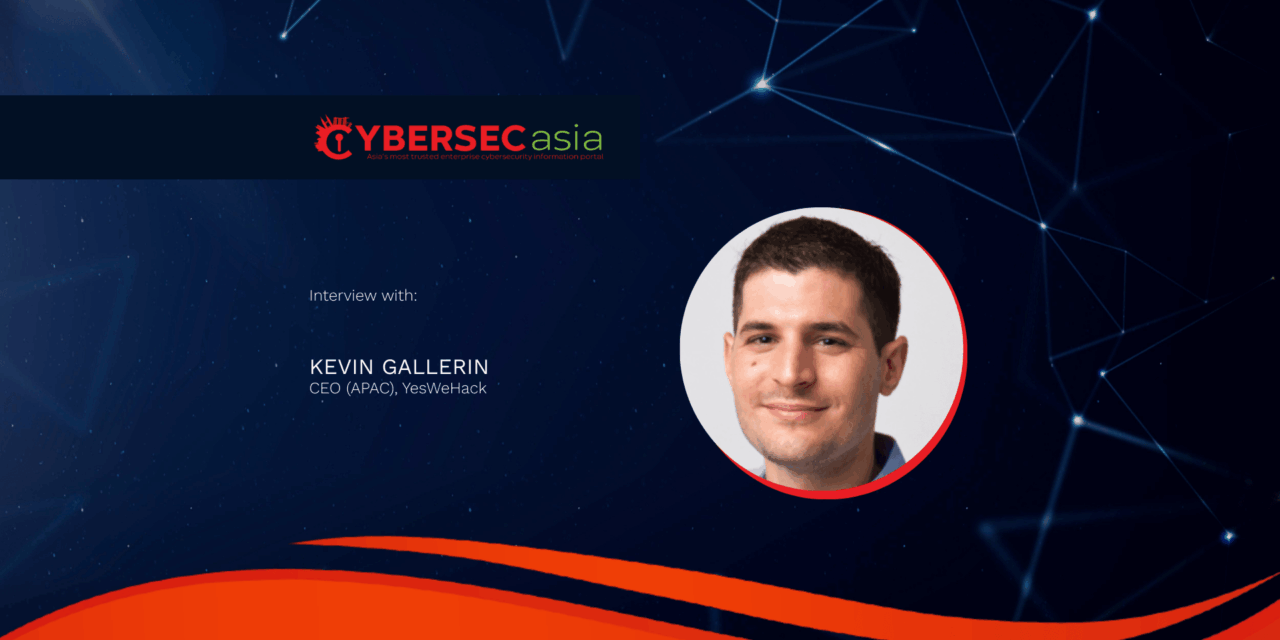
To get a better picture of thisonce-niche and contentious approach, CybersecAsia.net interviewed Kevin Gallerin, CEO (APAC), YesWeHack for updates on how structured partnerships with ethical hackers can forge resilient defenses in both public and private sectors.

CybersecAsia: Ethical hackers were once viewed with suspicion by governments and corporations. What key regulatory and cultural changes have enabled their collaboration, and how has this shaped cybersecurity?

KG: The most critical factors are clarity, trust, and mindset.

  • Organizations must clearly define the scope of testing, rules of engagement, and legal protections.
  • A well-crafted Vulnerability Disclosure Policy (VDP) is essential, outlining what systems can be tested, how they will be tested, and who is authorized to conduct the testing.
  • Explicit permissions and safe harbor clauses protect good-faith researchers from legal liability, while clear communication channels ensure transparency.
  • Trust is equally important. Vetting ethical hackers for credibility and experience is crucial, especially when working with sensitive government infrastructure or regulated industries.
  • Organizations must also adopt the right mindset: vulnerabilities will be found during bug bounty programs, and this is the point. The value comes from treating each finding as an opportunity to learn and improve, rather than as a reason to assign blame.
  • Partnerships work best when ethical hackers are treated as part of the team, not just external testers. This includes structured feedback loops, recognition, and open communication that keeps researchers and internal teams aligned at every step.

When organizations foster a collaborative environment, they maximize the benefits of ethical hacking.​

CybersecAsia: How should legal and ethical challenges be addressed to ensure all parties are protected?

KG: Partnering with ethical hackers requires careful preparation, especially when sensitive systems are involved.

The most important step is to be explicit about scope and authorization: what systems can be tested, what methods are off-limits, and who is allowed to participate.

Even if opening to an external community feels risky, the reality is that not doing so is far riskier. Vulnerabilities exist whether organizations invite hackers in or not; the real question is who finds them first. Without a structured channel, it will be malicious actors exploiting weaknesses in exposed systems.

Engaging with vetted researchers under clear rules transforms that risk into an opportunity for improvement.

  • Legal protections, such as safe harbor clauses, shield researchers from liability when acting in good faith.
  • Ethical considerations include ensuring that researchers do not overstep boundaries or access unauthorized data.
  • Transparency is maintained through clear communication, regular updates, and documented processes.

By addressing these challenges proactively, organizations can build trust and ensure that ethical hacking collaborations are both effective and secure.​

CybersecAsia: How do you see the role of ethical hackers evolving in the next five to 10 years?

KG: As AI systems become central to both attack and defense roles in cybersecurity, the landscape for ethical hackers is shifting from finding traditional bugs to addressing AI-specific weaknesses.

With AI embedded everywhere — from chatbots and autonomous decision engines to IoT devices powered by edge AI — ethical hackers will no longer just test applications but entire ecosystems, including model supply chains, inference APIs, and prompt workflows.

Applications will be built faster, cheaper, and by a wider pool of developers, which inevitably introduces more vulnerabilities. However, while automation can clear out basic issues, it can also accelerate complexity and scale.

In the next decade, ethical hackers will play a critical role in keeping AI itself resilient and trustworthy. They will need to understand not only traditional security flaws but also the unique risks posed by AI systems, such as adversarial attacks, data poisoning, and model manipulation.

The ethical hacker of the future will be a key defender of both digital infrastructure and the integrity of AI-driven technologies.

CybersecAsia thanks Kevin Gallerin for sharing his professional insights with readers.

Share:

PreviousHave cybercriminals been increasingly targeting human touchpoints from every angle?
NextShadow AI – the hidden risk in APAC organizations

Related Posts

How one ransomware group caused data breaches for three Bs in the UK

How one ransomware group caused data breaches for three Bs in the UK

Friday, June 9, 2023

New ransomware group detected: this one is really sneaky

New ransomware group detected: this one is really sneaky

Monday, October 11, 2021

Security upkeep lagging in almost half of APAC organizations surveyed

Security upkeep lagging in almost half of APAC organizations surveyed

Friday, September 25, 2020

MSPs the first line of defense for APAC SMEs

MSPs the first line of defense for APAC SMEs

Tuesday, April 15, 2025

Leave a reply Cancel reply

You must be logged in to post a comment.

Voters-draw/RCA-Sponsors

Slide
Slide
Slide
Slide
Slide
Slide
Slide
Slide
Slide
Slide
Slide
Slide
Slide
Slide
previous arrow
next arrow

CybersecAsia Voting Placement

Gamification listing or Participate Now

PARTICIPATE NOW

Vote Now -Placement(Google Ads)

Top-Sidebar-banner

Whitepapers

  • Closing the Gap in Email Security:How To Stop The 7 Most SinisterAI-Powered Phishing Threats

    Closing the Gap in Email Security:How To Stop The 7 Most SinisterAI-Powered Phishing Threats

    Insider threats continue to be a major cybersecurity risk in 2024. Explore more insights on …Download Whitepaper
  • 2024 Insider Threat Report: Trends, Challenges, and Solutions

    2024 Insider Threat Report: Trends, Challenges, and Solutions

    Insider threats continue to be a major cybersecurity risk in 2024. Explore more insights on …Download Whitepaper
  • AI-Powered Cyber Ops: Redefining Cloud Security for 2025

    AI-Powered Cyber Ops: Redefining Cloud Security for 2025

    The future of cybersecurity is a perfect storm: AI-driven attacks, cloud expansion, and the convergence …Download Whitepaper
  • Data Management in the Age of Cloud and AI

    Data Management in the Age of Cloud and AI

    In today’s Asia Pacific business environment, organizations are leaning on hybrid multi-cloud infrastructures and advanced …Download Whitepaper

Middle-sidebar-banner

Case Studies

  • Cyber protection for medical clinics in Singapore

    Cyber protection for medical clinics in Singapore

    As Singapore’s healthcare sector becomes increasingly digital and interconnected, clinics are facing heightened cyber risks, …Read more
  • India’s WazirX strengthens governance and digital asset security

    India’s WazirX strengthens governance and digital asset security

    Revamping its custody infrastructure using multi‑party computation tools has improved operational resilience and institutional‑grade safeguardsRead more
  • Bangladesh LGED modernizes communication while addressing data security concerns

    Bangladesh LGED modernizes communication while addressing data security concerns

    To meet emerging data localization/privacy regulations, the government engineering agency deploys a secure, unified digital …Read more
  • What AI worries keep members of the Association of Certified Fraud Examiners sleepless?

    What AI worries keep members of the Association of Certified Fraud Examiners sleepless?

    This case study examines how many anti-fraud professionals reported feeling underprepared to counter rising AI-driven …Read more

Bottom sidebar

Other News

  • Akuvox X910 Claims Red Dot Award 2026: the World’s First AI-powered Parcel Detection Smart Intercom Revolutionizes Luxury Home Access

    Saturday, April 18, 2026
    XIAMEN, China, April 17, 2026 …Read More »
  • Exein establishes APAC headquarters and Taipei office

    Saturday, April 18, 2026
    Partnering with Taiwan’s ecosystem to …Read More »
  • Tsingke Unveils ‘Zero-Contact’ Gene Synthesis to Safeguard Core Genetic Sequences

    Wednesday, April 15, 2026
    BEIJING, April 15, 2026 /PRNewswire/ …Read More »
  • NEC Asia Pacific to Showcase Trusted Public Safety and Digital Identity Innovations at Milipol TechX 2026

    Wednesday, April 15, 2026
    SINGAPORE, April 14, 2026 /PRNewswire/ …Read More »
  • Sprinto Expands to Australia with New Data Center to Power Localized, Audit-Ready Compliance

    Wednesday, April 15, 2026
    Sprinto combines local infrastructure with …Read More »
  • Our Brands
  • DigiconAsia
  • MartechAsia
  • Home
  • About Us
  • Contact Us
  • Sitemap
  • Privacy & Cookies
  • Terms of Use
  • Advertising & Reprint Policy
  • Media Kit
  • Subscribe
  • Manage Subscriptions
  • Newsletter

Copyright © 2026 CybersecAsia All Rights Reserved.