
Cybersecurity News in Asia

RECENT STORIES:

SEGA moves faster with flow-based network monitoring
How the financial services sector struggles with AI maturity despite d...
Digital Identity Co. Modernizes Thailand Immigration Bureau Services w...
VIVOTEK VORTEX Powers AI Cloud Security in Denmark’s Kongens Ege...
DJI Releases Findings of the Most Comprehensive Independent Security A...
Ransomware activity stays high, new threat groups emerge
LOGIN REGISTER
CybersecAsia
  • Features
    • Featured

      Hidden trade-offs behind enterprise AI ambitions

      Hidden trade-offs behind enterprise AI ambitions

      Tuesday, May 26, 2026, 10:16 AM Asia/Singapore | Features
    • Featured

      Is secure issuance a solved problem, or is the debate more complex?

      Is secure issuance a solved problem, or is the debate more complex?

      Thursday, May 21, 2026, 3:11 PM Asia/Singapore | Features
    • Featured

      Cyber risk, fraud, and CX: Why banks can’t treat them separately anymore

      Cyber risk, fraud, and CX: Why banks can’t treat them separately anymore

      Wednesday, May 20, 2026, 9:34 AM Asia/Singapore | Features
  • Opinions
  • Tips
  • Whitepapers
  • AWARDS 2026
  • Directory
  • E-Learning

Select Page

Features

MSPs the first line of defense for APAC SMEs

By Victor Ng | Tuesday, April 15, 2025, 1:30 PM Asia/Singapore

MSPs the first line of defense for APAC SMEs

Small and medium-sized enterprises (SMEs) make up 97% of all businesses in Asia Pacific, and are more easily targeted by bad actors for various reasons. How do Managed Service Providers (MSPs) help?

A cyber-attack on a single SME might seem like an isolated incident, but its repercussions can ripple throughout the entire economy. This is especially so for Asia Pacific markets, where SMEs form the backbone of the economy, making up to 97% of all businesses.

With tech adoption comes risk, and SMEs need to ensure that their business and customers are protected. Fortunately, or otherwise, most SMEs depend on third parties for some or all of their digital infrastructure needs.

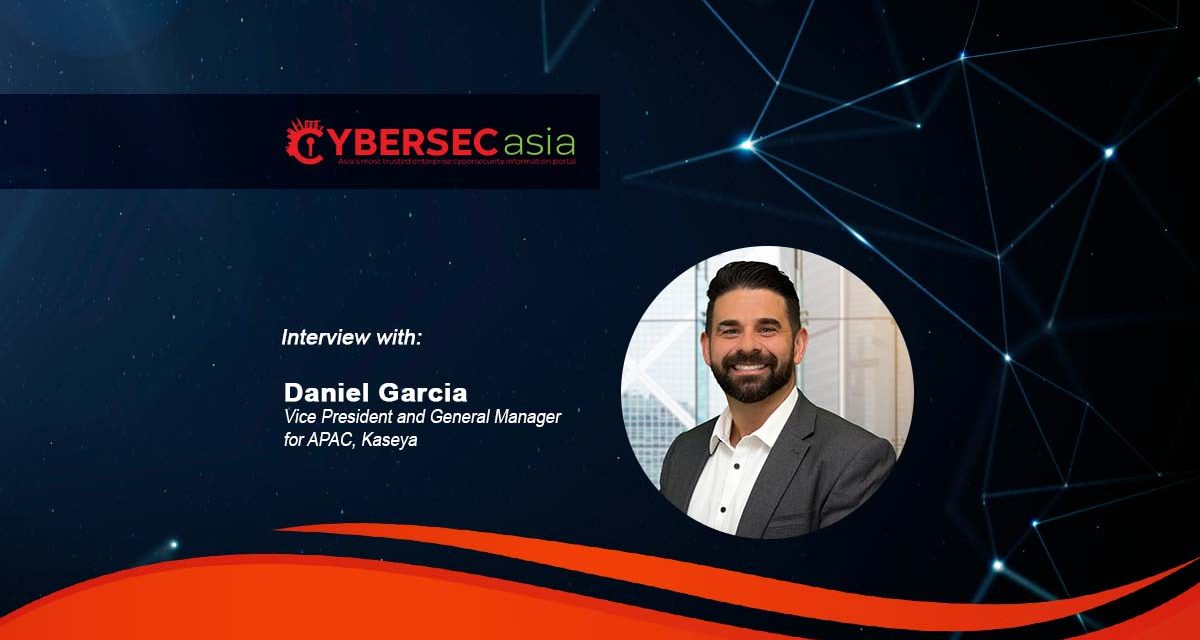
We find out from Daniel Garcia, Vice President and General Manager, APAC, Kaseya, about the risks and challenges SMEs face, and how MSPs can help mitigate them.

What are some latest technology trends shaping Asia Pacific’s SME landscape?

Daniel Garcia (DG): Some key trends observed include:

  1. AI and automation
    Asia Pacific’s SMEs are riding a new wave of innovation, with generative AI (Gen AI), cloud computing, and automation standing out as top priorities. A recent DBS survey highlights this surge, revealing that 73% of SMEs plan to invest in GenAI, while 32% are already experimenting with its applications in marketing and communications. This technological drive mirrors the positive trends seen in the OCBC SME Index, which reported three consecutive quarters of SME growth, fueled by rebounding global electronics demand and strong consumer sectors.
  2. Cloud computing
    Beyond AI, cloud computing is reshaping how SMEs scale and collaborate. Cloud technology allows organisations to transcend physical barriers and access computing resources on a scale.
  3. Rising focus on cybersecurity and data recovery
    In today’s threat landscape, cybersecurity is no longer optional — it’s essential. According to Kaseya’s Backup and Recover 2025 report, 8% of businesses don’t back up their cloud data at all, assuming that cloud providers automatically protect their data. More than 50% of organisations are planning to switch their primary backup solution in 2025 due to dissatisfaction with cost, usability, and recovery speed. IT teams are also reportedly overwhelmed by backup management, with more than half of businesses spending 10+ hours per week on backup-related tasks instead of focusing on strategic initiatives. This reflects a growing sense of vulnerability among SMEs in the Asia Pacific region, where many organisations operate with lean IT teams and limited cybersecurity expertise.

How is the increasing sophistication of AI-powered cyber-attacks impacting the region’s cyberthreat and data protection landscape, and which industry sectors are most at risk of cyberattacks in 2025?

DG: The rise of AI-driven attacks, particularly through Ransomware-as-a-Service (RaaS), is significantly lowering the barrier to entry for cybercriminals. This enables the rapid deployment of large-scale, disruptive campaigns.  A 2024 Statista survey of CISOs highlights the severity of this threat, with 41% identifying ransomware as a top three cybersecurity concern. Even novice cybercriminals can now leverage open-source malware to execute highly sophisticated ransomware attacks.

Industries handling vast amounts of sensitive data—financial services, healthcare, manufacturing, telecom, and energy—are particularly vulnerable. Ongoing digitisation in these sectors creates an expansive attack surface for AI-powered threats. To counter this, we’ve seen a shift toward automated security. Tools like Kaseya 365 mitigate cyber risks like ransomware through real-time monitoring, patching, and rapid threat response. For many businesses, this automation approach not only counters complexity but also helps avert IT burnout in the face of ever-escalating attacks.

What are the key hurdles and challenges to tech adoption most often faced by SMEs that can impact their cyber risk posture? How does that impact the entire supply chain?

DG: A few critical barriers emerge for SMEs on their tech adoption journeys:

  1. Budget and expertise: DBS highlighted that financial resources remain the top obstacle to adopting new technology solutions, and limited IT expertise compounds the problem, particularly for cybersecurity initiatives. Implementing and maintaining compliance-ready systems (with proper encryption, audit logs, retention policies, etc.) often requires specialised tools and talent, which resource-strapped SMEs may not have on hand.
  2. Global talent shortage: With the World Economic Forum reporting a shortage of over 4 million cybersecurity professionals and 67% of organizations facing a moderate-to-critical skills gap, SMEs are left vulnerable. The gap in manpower makes it exceedingly difficult for these businesses to effectively manage escalating cyber threats.
  3. Compliance Complexity: Smaller businesses face a significant challenge navigating the complex and evolving legal landscape, including increasingly stringent regulations in Asia Pacific such as Australia’s Privacy Act amendments and Indonesia’s data sovereignty regulations. Without dedicated compliance teams, SMEs can feel overwhelmed and delay tech adoption out of fear of missteps, which leaves gaps in cybersecurity coverage.

Pages: 1 2

Share:

PreviousCloud giant’s negligence and botched crisis response amplify monumental data breach fallout
NextHow are geopolitical tensions driving stricter cybersecurity rules and supply chain oversight?

Related Posts

How XDR can help firms combat cyberthreats

How XDR can help firms combat cyberthreats

Tuesday, November 7, 2023

On the prowl for digital love? Pay your way to better privacy!

On the prowl for digital love? Pay your way to better privacy!

Friday, July 2, 2021

Backups are not enough for cyber resilience

Backups are not enough for cyber resilience

Monday, May 5, 2025

Critical security flaw puts hundreds of millions of Apple devices at risk

Critical security flaw puts hundreds of millions of Apple devices at risk

Wednesday, September 15, 2021

Leave a reply Cancel reply

You must be logged in to post a comment.

Voters-draw/RCA-Sponsors

Slide
Slide
Slide
Slide
Slide
Slide
Slide
Slide
Slide
Slide
Slide
Slide
Slide
Slide
previous arrow
next arrow

CybersecAsia Voting Placement

Gamification listing or Participate Now

PARTICIPATE NOW

Vote Now -Placement(Google Ads)

Top-Sidebar-banner

Whitepapers

  • Closing the Gap in Email Security:How To Stop The 7 Most SinisterAI-Powered Phishing Threats

    Closing the Gap in Email Security:How To Stop The 7 Most SinisterAI-Powered Phishing Threats

    Insider threats continue to be a major cybersecurity risk in 2024. Explore more insights on …Download Whitepaper
  • 2024 Insider Threat Report: Trends, Challenges, and Solutions

    2024 Insider Threat Report: Trends, Challenges, and Solutions

    Insider threats continue to be a major cybersecurity risk in 2024. Explore more insights on …Download Whitepaper
  • AI-Powered Cyber Ops: Redefining Cloud Security for 2025

    AI-Powered Cyber Ops: Redefining Cloud Security for 2025

    The future of cybersecurity is a perfect storm: AI-driven attacks, cloud expansion, and the convergence …Download Whitepaper
  • Data Management in the Age of Cloud and AI

    Data Management in the Age of Cloud and AI

    In today’s Asia Pacific business environment, organizations are leaning on hybrid multi-cloud infrastructures and advanced …Download Whitepaper

Middle-sidebar-banner

Case Studies

  • How a Vietnamese D2C retailer built its own secure digital infrastructure

    How a Vietnamese D2C retailer built its own secure digital infrastructure

    Would your organization build your own digital infrastructure – including AI governance and cybersecurity – …Read more
  • Cyber protection for medical clinics in Singapore

    Cyber protection for medical clinics in Singapore

    As Singapore’s healthcare sector becomes increasingly digital and interconnected, clinics are facing heightened cyber risks, …Read more
  • India’s WazirX strengthens governance and digital asset security

    India’s WazirX strengthens governance and digital asset security

    Revamping its custody infrastructure using multi‑party computation tools has improved operational resilience and institutional‑grade safeguardsRead more
  • Bangladesh LGED modernizes communication while addressing data security concerns

    Bangladesh LGED modernizes communication while addressing data security concerns

    To meet emerging data localization/privacy regulations, the government engineering agency deploys a secure, unified digital …Read more

Bottom sidebar

Other News

  • Digital Identity Co. Modernizes Thailand Immigration Bureau Services with AWS

    Friday, May 29, 2026
    Mobile app enables travelers to …Read More »
  • VIVOTEK VORTEX Powers AI Cloud Security in Denmark’s Kongens Ege Mixed-Use Development

    Thursday, May 28, 2026
    TAIPEI, May 28, 2026 /PRNewswire/ …Read More »
  • DJI Releases Findings of the Most Comprehensive Independent Security Assessment of Its Drone Systems to Date

    Thursday, May 28, 2026
    Zero Critical, High, or Medium-Risk …Read More »
  • AUTOCRYPT Achieves WebTrust Accreditation for V2X PKI Infrastructure

    Tuesday, May 26, 2026
    SEOUL, South Korea, May 26, …Read More »
  • CPRO, a Leader in the Physical AI Security Industry, to be Publicly Listed on a U.S. National Securities Exchange Through Business Combination with Lakeshore Acquisition III Corp.

    Tuesday, May 26, 2026
    CPRO is a fast-growing physical …Read More »
  • Our Brands
  • DigiconAsia
  • MartechAsia
  • Home
  • About Us
  • Contact Us
  • Sitemap
  • Privacy & Cookies
  • Terms of Use
  • Advertising & Reprint Policy
  • Media Kit
  • Subscribe
  • Manage Subscriptions
  • Newsletter

Copyright © 2026 CybersecAsia All Rights Reserved.