
Cybersecurity News in Asia

RECENT STORIES:

SEGA moves faster with flow-based network monitoring
CVSS 9.6 vulnerabilities in two major PDF tools exploited since late 2...
Q-Day is coming. Are you ready?
How lean defence teams turn endpoint insights into measurable risk red...
Is your “perfect match” an AI? 
Financial-services data analysis highlights GenAI risks and Shadow AI ...
LOGIN REGISTER
CybersecAsia
  • Features
    • Featured

      Q-Day is coming. Are you ready?

      Q-Day is coming. Are you ready?

      Tuesday, April 14, 2026, 12:40 PM Asia/Singapore | Features
    • Featured

      How lean defence teams turn endpoint insights into measurable risk reduction

      How lean defence teams turn endpoint insights into measurable risk reduction

      Monday, April 13, 2026, 3:15 PM Asia/Singapore | Features
    • Featured

      Physical and digital security converge in APAC

      Physical and digital security converge in APAC

      Monday, April 6, 2026, 2:22 PM Asia/Singapore | Features
  • Opinions
  • Tips
  • Whitepapers
  • Awards 2025
  • Directory
  • E-Learning

Select Page

Features

In a perimeter-less world, identity is the foundation of security

By Victor Ng | Monday, April 7, 2025, 2:19 PM Asia/Singapore

In a perimeter-less world, identity is the foundation of security

Whether it’s phishing, ransomware or insider threats, it usually starts with a compromise in an organization’s identity management system…

In a world of hybrid cloud and hybrid work, managing the identities of users and devices has become much more complex. Threat actors leverage the vulnerabilities found amid this complexity to compromise an organization’s security.

With AI as a new weapon in their arsenal, cyberthreats have become even more intimidating to organizations in APAC.

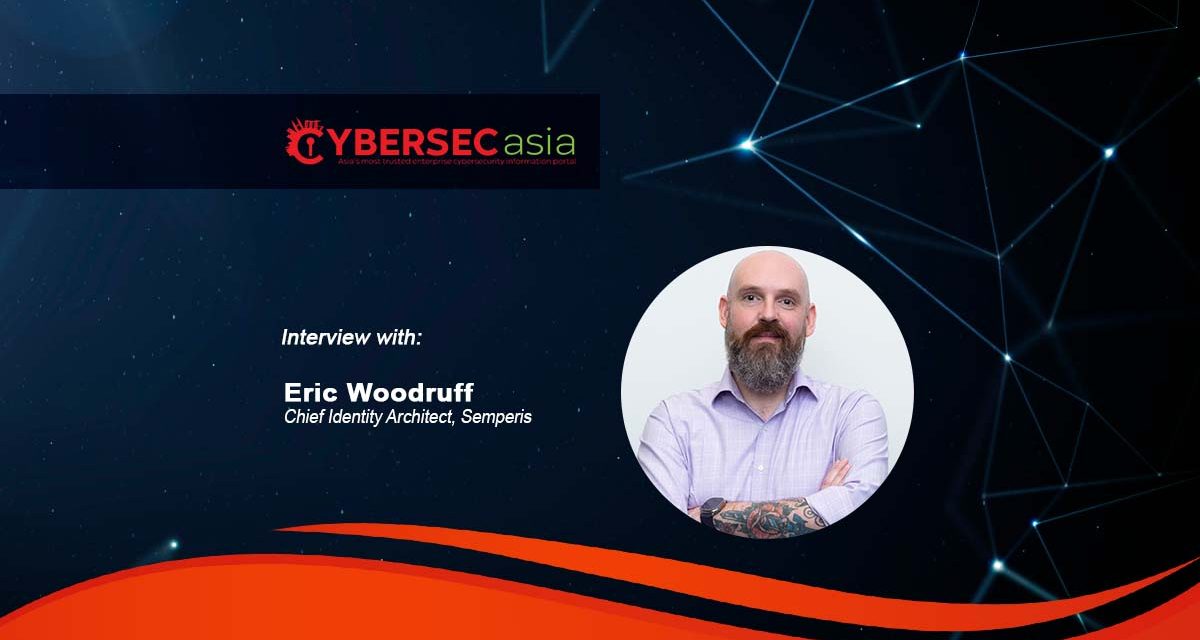
What are the latest and most pressing cybersecurity challenges that the various industry sectors in the region face, how does identity feature in them, and how can we deal with these threats? We find out from Eric Woodruff, Chief Identity Architect, Semperis.

What are the most pressing cybersecurity threats businesses face today?

Eric Woodruff (EW): Phishing attacks, ransomware, and insider threats are some of the most pressing cybersecurity threats faced by businesses today.

Phishing remains a primary entry point for attackers, often leveraging social engineering tactics to exploit human vulnerabilities. Ransomware attacks, which have become increasingly sophisticated, disrupt operations by encrypting critical data and demanding large ransoms. Insider threats, whether malicious or inadvertent, pose a significant risk as they leverage trusted access to breach security protocols.

The Asia-Pacific (APAC) region experienced a significant surge in cyber-attacks targeting organizations in 2024, particularly in email-based attacks stemming from phishing. A 30.5% increase was witnessed, with key financial hubs such as Singapore and Japan seeing an alarming 37% increase in phishing attacks.  

In 90% of ransomware attacks, threat actors compromise an organization’s identity system, most often Active Directory (AD). AD is one of the world’s most popular corporate access management tools. It enables companies to define who can do what in a network, manage users and resources, as well as access to endpoints, tools, and systems. Securing AD is essential to maintaining business continuity and maintaining operational resilience.

Have you observed any new attack trends or techniques emerging recently?

EW: It is both surprising, and not surprising, to see the ways in which attackers leverage AI. One key trend is the rise of AI-powered attacks, where attackers leverage machine learning algorithms to create more convincing phishing emails, automate attacks, and even bypass traditional security systems. These attacks are becoming more personalized and difficult to detect due to the advanced capabilities of AI to mimic legitimate communication styles, with remarkable accuracy.

Recently, the FBI issued a warning to Apple and Android phone users alerting them that AI is fueling an increase of cyberattacks by spoofing victims claiming to be their bank and tricking them into transferring money out of their accounts.

Another notable trend is the growing use of multi-stage attacks, where threat actors first infiltrate a network through a low-level attack, like phishing, and then progressively intensify their efforts, deploying ransomware or stealing data in stages, enabling them to remain undetected for longer periods, making it even more challenging for businesses to mitigate damage.

Which industries are most vulnerable to cyber-attacks right now?

EW: While nobody should consider themselves safe, certain industries are highly vulnerable to cyber-attacks due to their critical nature, valuable data, and varying levels of cybersecurity preparedness. These include:

  • Healthcare: Healthcare organizations remain prime targets for cybercriminals due to the sensitive patient health information they store. Legacy systems, limited cybersecurity budgets, and the need for uninterrupted operations also contribute to their vulnerability.
  • Financial services: The finance sector is another top target, given its high-value data and assets. Attackers often focus on banks, insurance companies and investment firms, looking to exploit vulnerabilities in both their systems and the trust of their clients. The growing prevalence of digital banking and fintech services has expanded the attack surface for cybercriminals.
  • Critical infrastructure: Sectors such as energy, utilities and manufacturing form the backbone of any economy. It ensures essential services function smoothly, supporting economic stability, offering public safety, and national security. A cyberattack on critical infrastructure could have significant economic and social consequences, thereby making them a prime target
  • Retail & e-commerce: APAC is home to one of the largest e-commerce user bases worldwide, with China, South Korea and Indonesia taking lead in terms of market dominance. With the prevalence of e-commerce, comes a corresponding increase in its vulnerability to cyberattacks. Retailers handle vast amounts of customer data, including credit card information, making them prime targets for data breaches and payment fraud. The rapid adoption of online shopping during the pandemic left many businesses vulnerable to supply chain attacks and payment system vulnerabilities.

How has ransomware evolved over the last few years?

EW: Ransomware, once a sporadic menace, has evolved into an unrelenting adversary, with billions in ransom payments made in 2024. Attacks are no longer isolated incidents; they occur incessantly. Criminal groups orchestrate multiple strikes in rapid succession, exploiting vulnerabilities across organizations. Notable evolvements include:

Double and triple extortion: Ransomware attacks represent an evolution in cybercriminal tactics. In a double extortion attack, cybercriminals not only encrypt the victim’s data but also threaten to leak and sell it on the dark web if the ransom is not paid. In triple extortion attacks, threat actors threaten a company’s customers or business partners.

Pages: 1 2

Share:

PreviousCyber threats are getting more coordinated, are your defenses equally holistic?
NextWorkplace phishing vulnerabilities exposed: Essential tips for SMEs and organizations worldwide

Related Posts

Tokyo 2020: Olympics with all the smarts

Tokyo 2020: Olympics with all the smarts

Tuesday, August 27, 2019

From reactive recovery to proactive protection

From reactive recovery to proactive protection

Friday, December 17, 2021

Forcepoint predicts 2020 cybersecurity threats arising from deepfakes, 5G, and adoption of public cloud

Forcepoint predicts 2020 cybersecurity threats arising from deepfakes, 5G, and adoption of public cloud

Wednesday, November 27, 2019

How anyone can become a rich cybercriminal by using generative AI

How anyone can become a rich cybercriminal by using generative AI

Tuesday, July 18, 2023

Leave a reply Cancel reply

You must be logged in to post a comment.

Voters-draw/RCA-Sponsors

Slide
Slide
Slide
Slide
Slide
Slide
Slide
Slide
Slide
Slide
Slide
Slide
Slide
Slide
previous arrow
next arrow

CybersecAsia Voting Placement

Gamification listing or Participate Now

PARTICIPATE NOW

Vote Now -Placement(Google Ads)

Top-Sidebar-banner

Whitepapers

  • Closing the Gap in Email Security:How To Stop The 7 Most SinisterAI-Powered Phishing Threats

    Closing the Gap in Email Security:How To Stop The 7 Most SinisterAI-Powered Phishing Threats

    Insider threats continue to be a major cybersecurity risk in 2024. Explore more insights on …Download Whitepaper
  • 2024 Insider Threat Report: Trends, Challenges, and Solutions

    2024 Insider Threat Report: Trends, Challenges, and Solutions

    Insider threats continue to be a major cybersecurity risk in 2024. Explore more insights on …Download Whitepaper
  • AI-Powered Cyber Ops: Redefining Cloud Security for 2025

    AI-Powered Cyber Ops: Redefining Cloud Security for 2025

    The future of cybersecurity is a perfect storm: AI-driven attacks, cloud expansion, and the convergence …Download Whitepaper
  • Data Management in the Age of Cloud and AI

    Data Management in the Age of Cloud and AI

    In today’s Asia Pacific business environment, organizations are leaning on hybrid multi-cloud infrastructures and advanced …Download Whitepaper

Middle-sidebar-banner

Case Studies

  • Cyber protection for medical clinics in Singapore

    Cyber protection for medical clinics in Singapore

    As Singapore’s healthcare sector becomes increasingly digital and interconnected, clinics are facing heightened cyber risks, …Read more
  • India’s WazirX strengthens governance and digital asset security

    India’s WazirX strengthens governance and digital asset security

    Revamping its custody infrastructure using multi‑party computation tools has improved operational resilience and institutional‑grade safeguardsRead more
  • Bangladesh LGED modernizes communication while addressing data security concerns

    Bangladesh LGED modernizes communication while addressing data security concerns

    To meet emerging data localization/privacy regulations, the government engineering agency deploys a secure, unified digital …Read more
  • What AI worries keep members of the Association of Certified Fraud Examiners sleepless?

    What AI worries keep members of the Association of Certified Fraud Examiners sleepless?

    This case study examines how many anti-fraud professionals reported feeling underprepared to counter rising AI-driven …Read more

Bottom sidebar

Other News

  • Hong Kong Anti-graft Watchdog: Clean Governance and Ethical Business is Key to Hong Kong’s Sustainable Business Development

    Thursday, April 9, 2026
    HONG KONG, April 9, 2026 …Read More »
  • Goodix Launches the World’s First eSE Solution Designed for AI Agents

    Thursday, April 9, 2026
    SHENZHEN, China, April 8, 2026 …Read More »
  • LRQA Amplifies Industrial and Cyber Resilience in APAC at CS4CA Summit 2026

    Thursday, April 9, 2026
    SINGAPORE, April 8, 2026 /PRNewswire/ …Read More »
  • MegazoneCloud Achieves Profitability Turnaround with $1.16 Billion Revenue in 2025

    Thursday, April 9, 2026
    Revenue grows 28% YoY… EBITDA …Read More »
  • Taoping Expands Smart Elevator Services Business with New Orders Exceeding US$3 Million

    Wednesday, April 8, 2026
    TIANJIN, China, April 8, 2026 …Read More »
  • Our Brands
  • DigiconAsia
  • MartechAsia
  • Home
  • About Us
  • Contact Us
  • Sitemap
  • Privacy & Cookies
  • Terms of Use
  • Advertising & Reprint Policy
  • Media Kit
  • Subscribe
  • Manage Subscriptions
  • Newsletter

Copyright © 2026 CybersecAsia All Rights Reserved.