Cybersecurity News in Asia

RECENT STORIES:

SEGA moves faster with flow-based network monitoring
Linux security list being overwhelmed by duplicate AI bug reports
A new resilience model for Asia
Cyber risk, fraud, and CX: Why banks can’t treat them separately anymo...
Aitech Awarded $63M Contract for Avionics Computing Solutions to Power...
Cohesity Earns AWS Resilience Competency, Advancing Enterprise Cyber R...
LOGIN REGISTER
CybersecAsia
  • Features
    • Featured

      Cyber risk, fraud, and CX: Why banks can’t treat them separately anymore

      Cyber risk, fraud, and CX: Why banks can’t treat them separately anymore

      Wednesday, May 20, 2026, 9:34 AM Asia/Singapore | Features
    • Featured

      Agentic RAG: Key to turning APAC’s AI pilots into profits?

      Agentic RAG: Key to turning APAC’s AI pilots into profits?

      Tuesday, May 19, 2026, 2:15 PM Asia/Singapore | Features
    • Featured

      How a Vietnamese D2C retailer built its own secure digital infrastructure

      How a Vietnamese D2C retailer built its own secure digital infrastructure

      Monday, May 18, 2026, 2:21 PM Asia/Singapore | Case Study, Features
  • Opinions
  • Tips
  • Whitepapers
  • AWARDS 2026
  • Directory
  • E-Learning

Select Page

OpinionsTips

A new resilience model for Asia

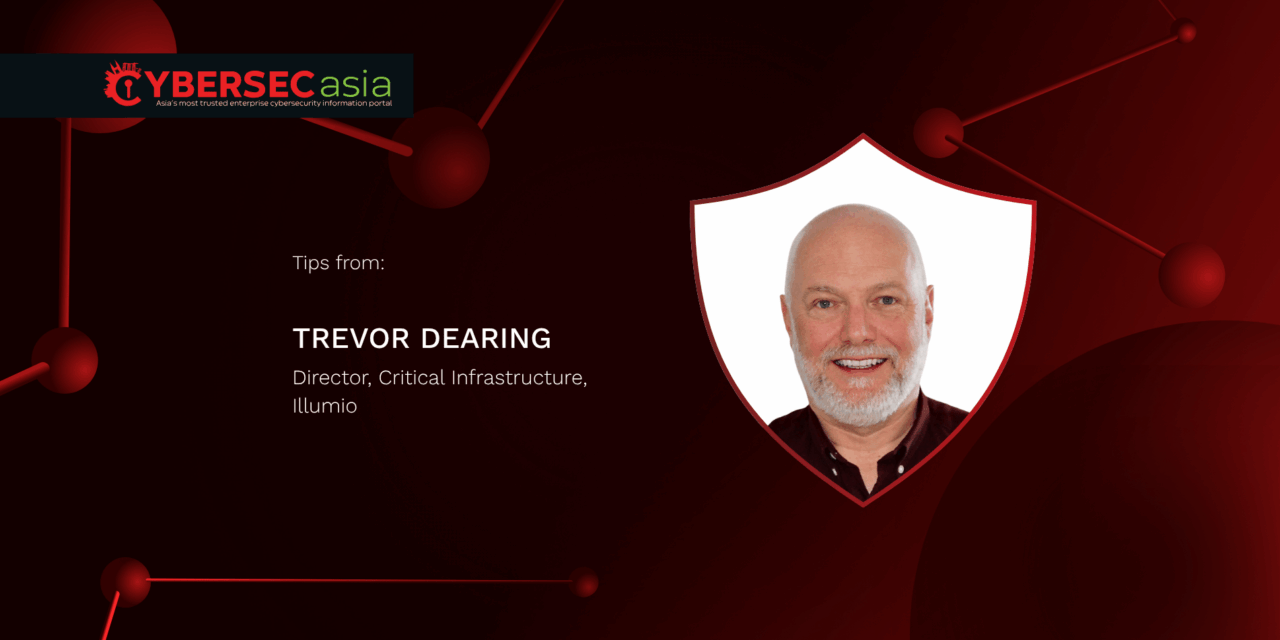
By Trevor Dearing, Director, Critical Infrastructure, Illumio | Wednesday, May 20, 2026, 2:17 PM Asia/Singapore

A new resilience model for Asia

From surviving cyber-attacks to learning from them – to mitigate systemic risks for business resilience.

For years, cybersecurity has been treated largely as a technology issue; something to be solved with better tools or more sophisticated defenses. Increasingly, however, policymakers and business leaders are recognizing it for what it is: an economic issue and a form of systemic risk that can’t be contained within IT alone. 

The impact is especially visible across Asia. Singaporeans lost S$456.4 million to scams in the first half of 2025 alone. In the Philippines, financial losses have reached an astonishing $8.29 billion (₱480 billion) annually, which is 1.9% of the nation’s GDP. 

If global cybercrime were an economy, it would be the world’s third largest, surpassed only by the US and China. 

At that scale, cyber risk can no longer be treated as a technical issue confined to IT teams; it is a systemic economic threat, with direct implications for regional stability, business confidence, and growth across Asia. 

In this context, the moment is critical for businesses across Asia. Now is the time to recognize cyber resilience, anchored in breach containment and continuity, as a fundamental business outcome.  

While the conversation is thankfully moving in the right direction, we’re still not aiming high enough. Withstanding attacks is now table stakes; true resilience is also about limiting impact, sustaining operations, and emerging stronger after a crisis. 

Fragility = failed resilience  

As individuals, we have evolved from a focus on merely surviving to thriving. The same mindset should apply to organisations and cybersecurity. Modern organizations should not aim simply to withstand disruption, but to continually improve and to thrive in the face of it. 

As attackers constantly change tactics and execute increasingly complex supply‑chain attacks, resilience must evolve in tandem, becoming an ongoing process of learning, adaptation, and strengthening over time. 

That is the essence of anti-fragility: systems that do not merely withstand stress, volatility, disorder, and shocks, but improve because of them. A security model designed only to recover remains exposed. An anti‑fragile approach, by contrast, treats every attack as a signal — revealing weaknesses, closing gaps, and adapting continuously. 

Just as there is no guarantee that investing in your health will stop you from getting sick, no company can ever guarantee it will experience zero cyber incidents.

The difference lies in what happens next. By shifting the focus – from extinguishing digital fires as quickly as possible, to understanding why and how they started – organizations can reduce repeat failures and strengthen their ability to respond faster and more effectively over time. 

Too many organizations rely on legislation alone 

While more organizations are beginning to recognize anti‑fragility as a strategic objective, too many still treat regulatory compliance as a proxy for resilience.

That alone is not enough.

Compliance lays an important foundation for cybersecurity, but it is just that: a foundation, not a finished structure. The problem with using compliance as a north star is that legislation almost always lags behind the threat landscape. The gap between a new attack technique emerging and regulation catching up can span years, leaving organizations exposed in the meantime.

Compliance, therefore, does not equate to protection. To reduce real risk, organizations must look beyond regulatory mandates and formalize a post‑incident learning approach, one that treats security as an ongoing process of adaptation and improvement. 

A breach containment strategy should sit at the centre of this effort. By focusing on limiting the spread and impact of an attack through restricted lateral movement, containment helps ensure that inevitable incidents do not escalate into systemic failures. 

Critical success factor: turning data into insight 

At the center of breach containment is microsegmentation and Zero Trust, which focus on reducing the impact through strict access controls.

By proactively segmenting networks, isolating workloads, and limiting unnecessary permissions, critical operations can continue to run even during and after a cyber incident.  

Every attempted breach can be analyzed, providing insights that can help to find weak points, bolster the protection of critical assets, and strengthen defences in a more adaptive, intelligent way.   

For companies, the ability to turn data into insights and act upon it can become a game-changer. Cybersecurity success will be defined not by those who avoid incidents, but by those who learn from them. 

Share:

PreviousCyber risk, fraud, and CX: Why banks can’t treat them separately anymore
NextLinux security list being overwhelmed by duplicate AI bug reports

Related Posts

Are your passwords easy to crack? Read this before it is too late

Are your passwords easy to crack? Read this before it is too late

Wednesday, January 11, 2023

5G + IoT + API + public/mobile internet = CYBER DANGER

5G + IoT + API + public/mobile internet = CYBER DANGER

Wednesday, June 28, 2023

How Alibaba Cloud fights cybercrime with deep learning

How Alibaba Cloud fights cybercrime with deep learning

Tuesday, December 3, 2019

7 ways cyberscammers and malware operators love Google Forms

7 ways cyberscammers and malware operators love Google Forms

Friday, October 1, 2021

Leave a reply Cancel reply

You must be logged in to post a comment.

Voters-draw/RCA-Sponsors

Slide
Slide
Slide
Slide
Slide
Slide
Slide
Slide
Slide
Slide
Slide
Slide
Slide
Slide
previous arrow
next arrow

CybersecAsia Voting Placement

Gamification listing or Participate Now

PARTICIPATE NOW

Vote Now -Placement(Google Ads)

Top-Sidebar-banner

Whitepapers

  • Closing the Gap in Email Security:How To Stop The 7 Most SinisterAI-Powered Phishing Threats

    Closing the Gap in Email Security:How To Stop The 7 Most SinisterAI-Powered Phishing Threats

    Insider threats continue to be a major cybersecurity risk in 2024. Explore more insights on …Download Whitepaper
  • 2024 Insider Threat Report: Trends, Challenges, and Solutions

    2024 Insider Threat Report: Trends, Challenges, and Solutions

    Insider threats continue to be a major cybersecurity risk in 2024. Explore more insights on …Download Whitepaper
  • AI-Powered Cyber Ops: Redefining Cloud Security for 2025

    AI-Powered Cyber Ops: Redefining Cloud Security for 2025

    The future of cybersecurity is a perfect storm: AI-driven attacks, cloud expansion, and the convergence …Download Whitepaper
  • Data Management in the Age of Cloud and AI

    Data Management in the Age of Cloud and AI

    In today’s Asia Pacific business environment, organizations are leaning on hybrid multi-cloud infrastructures and advanced …Download Whitepaper

Middle-sidebar-banner

Case Studies

  • How a Vietnamese D2C retailer built its own secure digital infrastructure

    How a Vietnamese D2C retailer built its own secure digital infrastructure

    Would your organization build your own digital infrastructure – including AI governance and cybersecurity – …Read more
  • Cyber protection for medical clinics in Singapore

    Cyber protection for medical clinics in Singapore

    As Singapore’s healthcare sector becomes increasingly digital and interconnected, clinics are facing heightened cyber risks, …Read more
  • India’s WazirX strengthens governance and digital asset security

    India’s WazirX strengthens governance and digital asset security

    Revamping its custody infrastructure using multi‑party computation tools has improved operational resilience and institutional‑grade safeguardsRead more
  • Bangladesh LGED modernizes communication while addressing data security concerns

    Bangladesh LGED modernizes communication while addressing data security concerns

    To meet emerging data localization/privacy regulations, the government engineering agency deploys a secure, unified digital …Read more

Bottom sidebar

Other News

  • Aitech Awarded $63M Contract for Avionics Computing Solutions to Power India’s Light Combat Helicopter Program

    Wednesday, May 20, 2026
    Hindustan Aeronautics Limited Selected Aitech …Read More »
  • Cohesity Earns AWS Resilience Competency, Advancing Enterprise Cyber Recovery

    Wednesday, May 20, 2026
    Strengthens global cyber resilience and …Read More »
  • Nexusguard Releases 2025 DDoS Threat Analysis and Industry Perspectives Report

    Tuesday, May 19, 2026
    Designed to inform enterprise security …Read More »
  • SU Group Launches Expanded AI Security Offering to Meet Surging Global Demand

    Monday, May 18, 2026
    HONG KONG, May 18, 2026 …Read More »
  • Cohesity Expands Strategic Alliance with HPE to Deliver Industry-Leading Cyber Resilience, Data Protection, and Hybrid Cloud Solutions

    Saturday, May 16, 2026
    SINGAPORE, May 15, 2026 /PRNewswire/ …Read More »
  • Our Brands
  • DigiconAsia
  • MartechAsia
  • Home
  • About Us
  • Contact Us
  • Sitemap
  • Privacy & Cookies
  • Terms of Use
  • Advertising & Reprint Policy
  • Media Kit
  • Subscribe
  • Manage Subscriptions
  • Newsletter

Copyright © 2026 CybersecAsia All Rights Reserved.