
Cybersecurity News in Asia

RECENT STORIES:

SEGA moves faster with flow-based network monitoring
The future of enterprise storage will be built on data trust
Russian intelligence-linked hackers infiltrate organisations across tw...
Leaked exploit details preceded emergency PHP2Shell patches
New GASA Research: 71% of Adults Surveyed Across 13 Asian Markets Enco...
NEXCOM NGFW platforms secure growing traffic across modern academic ne...
LOGIN REGISTER
CybersecAsia
  • Features
    • Featured

      Communications infrastructure – from legacy risk to modern resilience

      Communications infrastructure – from legacy risk to modern resilience

      Thursday, October 15, 2026, 2:08 PM Asia/Singapore | Features
    • Featured

      Advancing OT Cyber Readiness and Resilience in Southeast Asia

      Advancing OT Cyber Readiness and Resilience in Southeast Asia

      Wednesday, October 14, 2026, 10:00 AM Asia/Singapore | Features, News, Sponsored
    • Featured

      How CISOs can set human boundaries for autonomous cybersecurity

      How CISOs can set human boundaries for autonomous cybersecurity

      Wednesday, October 7, 2026, 11:05 AM Asia/Singapore | Features, Newsletter, Tips
  • Opinions
  • Tips
  • Whitepapers
  • AWARDS 2026
  • Directory
  • E-Learning

Select Page

Features

Building trust in Asia’s financial sector with digital identity innovations

By Victor Ng | Monday, March 16, 2026, 9:45 AM Asia/Singapore

Building trust in Asia’s financial sector with digital identity innovations

As fintech innovation accelerates across Asia, digital identity has become the foundation of trust between financial institutions and their customers.

Every digital interaction, whether it is onboarding a new customer, authorizing a transaction, or accessing financial services, ultimately comes down to confidently knowing who is on the other side of the screen.

Financial scams and digital fraud are increasingly impacting financial institutions and their customers. The role of digital identity authentication and protection cannot be overemphasized.

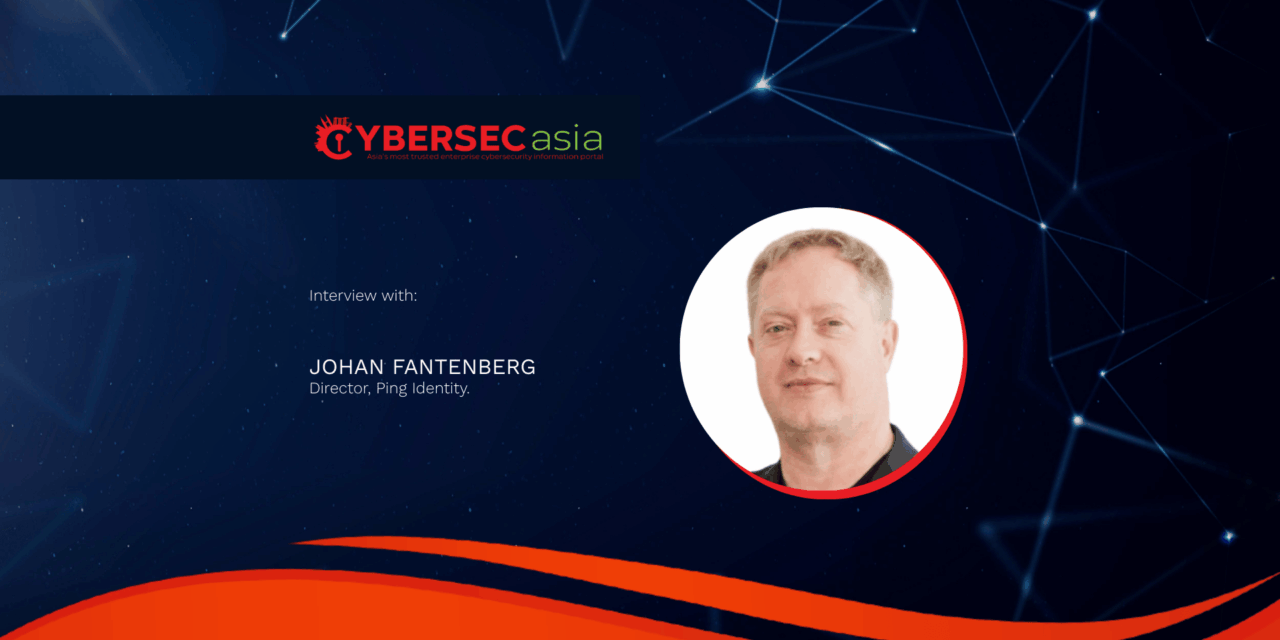
We learn more about digital identity innovations from Johan Fantenberg, Director, Ping Identity.

As fintech disruption accelerates across Asia, trust has become the defining competitive edge for financial institutions. What role does digital identity play in building trust?

Johan Fantenberg (JF): Asia Pacific’s identity verification market is expected to record a CAGR of 15.83% through 2032, reflecting the strong need for digital identity as the new layer of security.

A strong digital identity framework allows banks and fintechs to reduce fraud while delivering seamless customer experiences. It enables institutions to move beyond static credentials like passwords and toward adaptive, risk-based authentication that continuously verifies users without adding friction.

In a region as diverse and fast-moving as Asia, where customers expect speed and convenience, this balance between security and usability is critical.

Ultimately, trust is built when customers feel protected without feeling restricted. Digital identity is what makes that possible, allowing financial institutions to scale securely, comply with regulatory expectations, and differentiate themselves through safer, more intuitive digital experiences.

How is risk-based and contextual authentication reshaping fraud protection without sacrificing user experience?

JF: Risk-based and contextual authentication fundamentally change how organizations think about fraud prevention by shifting security from a one-size-fits-all approach to one that adapts in real time. Instead of forcing every user through the same rigid checks, organizations can assess risk dynamically using signals such as device health, location, behavior, and the context of the transaction.

This allows financial institutions and digital platforms to apply stronger authentication only when something looks unusual, while letting low-risk users move through seamlessly. The result is a significant reduction in fraud without the friction that often frustrates customers and leads to abandoned transactions.

From a user experience perspective, this approach builds trust rather than eroding it. Customers are protected when it matters most, but they are not constantly challenged or interrupted. That balance is critical in today’s digital economy, where security must be both invisible and effective to support growth and loyalty.

What role does digital identity play in expanding financial inclusion, especially for unbanked and underbanked populations in Indonesia, the Philippines, and Vietnam?

JF: Digital identity plays a critical role in expanding financial inclusion by removing many of the traditional barriers that have excluded people from formal financial systems. In markets like Indonesia, the Philippines, and Vietnam, large segments of the population are mobile-first but lack formal documentation, fixed addresses, or credit histories.

Digital identity, specifically decentralized identity frameworks, shifts control of identity credentials to individuals, using alternative signals and trusted digital credentials to verify and authenticate users securely.

By leveraging decentralized identity, which is often mobile-based and possesses adaptive authentication and progressive verification, banks and financial institutions can onboard customers more quickly and safely without requiring extensive paperwork or in-person visits. This lowers the cost of serving underserved communities while still meeting regulatory and fraud prevention requirements.

More importantly, digital identity supports trust at scale. When users can consistently prove who they are across services, they gain access not just to payments, but to savings, credit, insurance, and broader digital ecosystems. That continuity is essential for building long-term inclusion and economic participation across Southeast Asia.

What is the connection between identity and open banking / open finance infrastructure?

JF: Identity is the trust layer that makes open banking and open finance possible. As data is shared across banks, fintechs, and third-party providers through Application Programming Interfaces (APIs), the fundamental question becomes who is accessing the data, with what consent, and for how long. Digital identity ensures that access is authenticated, authorized, and continuously governed across this ecosystem.

By adopting modern, identity-first frameworks, financial institutions can embed security and compliance into the user journey rather than layering them on afterward. This enables consistent policy enforcement, strong authentication, and auditability without slowing down innovation or adding unnecessary friction for customers.

The leaders who succeed will be those who view identity as a strategic enabler, not a control mechanism. When identity is adaptive, interoperable, and designed around user trust, organizations can scale digital services confidently while meeting regulatory obligations and delivering services that customers want to use.


Share:

PreviousVIVOTEK Accelerates AI Innovation Through Network Optix Platform Integration
NextMisconfigured AI: Hype or real threat to APAC Infrastructure?

Related Posts

Straddling the devil and the deep blue cloud: Q&A with Crowdstrike

Straddling the devil and the deep blue cloud: Q&A with Crowdstrike

Thursday, November 21, 2019

Timely tips for healthcare organizations to secure their networks

Timely tips for healthcare organizations to secure their networks

Friday, November 10, 2023

Singapore launches its first floating cybersecure smart fish farm

Singapore launches its first floating cybersecure smart fish farm

Thursday, February 20, 2020

Much room for improvement in India healthcare sector data security

Much room for improvement in India healthcare sector data security

Monday, January 4, 2021

Leave a reply Cancel reply

You must be logged in to post a comment.

Voters-draw/RCA-Sponsors

Slide
Slide
Slide
Slide
Slide
Slide
Slide
Slide
Slide
Slide
Slide
Slide
Slide
Slide
Slide
Slide
Slide
Slide
Slide
previous arrow
next arrow

CybersecAsia Voting Placement

Gamification listing or Participate Now

LEARN MORE

Vote Now -Placement(Google Ads)

Top-Sidebar-banner

Whitepapers

  • Critical Security Threatsand the Need for ZTNA: How evolving cyberattacks demand a Zero Trust approach

    Critical Security Threatsand the Need for ZTNA: How evolving cyberattacks demand a Zero Trust approach

    Cyber threats have become more frequent and sophisticated, targeting organizations of all sizes across all …Download Whitepaper
  • Zero Trust Made Simple: Why it matters and how to get started

    Zero Trust Made Simple: Why it matters and how to get started

    Data breaches and cyberattacks are no longer limited to large, high-profile organizations.Download Whitepaper
  • Cloud Secure Edge: Remote access, better security

    Cloud Secure Edge: Remote access, better security

    ​SonicWall Cloud Secure Edge™ is a modern, cloud-native Security Service Edge (SSE) solution that addresses …Download Whitepaper
  • Closing the Gap in Email Security:How To Stop The 7 Most SinisterAI-Powered Phishing Threats

    Closing the Gap in Email Security:How To Stop The 7 Most SinisterAI-Powered Phishing Threats

    Insider threats continue to be a major cybersecurity risk in 2024. Explore more insights on …Download Whitepaper

Middle-sidebar-banner

Case Studies

  • FOMO Pay expands cross-border compliance infrastructure amid rising fraud risks

    FOMO Pay expands cross-border compliance infrastructure amid rising fraud risks

    To unify onboarding and ongoing reviews the payment firm adds identity, liveness, business-ownership, sanctions screening …Read more
  • How a Vietnamese D2C retailer built its own secure digital infrastructure

    How a Vietnamese D2C retailer built its own secure digital infrastructure

    Would your organization build your own digital infrastructure – including AI governance and cybersecurity – …Read more
  • Cyber protection for medical clinics in Singapore

    Cyber protection for medical clinics in Singapore

    As Singapore’s healthcare sector becomes increasingly digital and interconnected, clinics are facing heightened cyber risks, …Read more
  • India’s WazirX strengthens governance and digital asset security

    India’s WazirX strengthens governance and digital asset security

    Revamping its custody infrastructure using multi‑party computation tools has improved operational resilience and institutional‑grade safeguardsRead more

Bottom sidebar

Other News

  • New GASA Research: 71% of Adults Surveyed Across 13 Asian Markets Encountered Scams, with Estimated Losses of US$136.5 Billion

    Thursday, October 22, 2026
    Research highlights a gap between …Read More »
  • NEXCOM NGFW platforms secure growing traffic across modern academic networks

    Thursday, October 22, 2026
    TAIPEI, Oct. 22, 2026 /PRNewswire/ …Read More »
  • Blackpanda and CyberCube Collaborate to Bring Cyber Risk Analytics to Brokers Across Asia

    Wednesday, October 21, 2026
    Blackpanda will refer brokers to …Read More »
  • Cohesity Announces FY2026 Partner Award Winners

    Wednesday, October 21, 2026
    Recognition highlights top performers across …Read More »
  • Goodix Launches Integrated Fingerprint and Security Solution to Secure On-Device Identity Authentication in IoT and AI Devices

    Monday, October 19, 2026
    SHENZHEN, China, Oct. 19, 2026 …Read More »
  • Our Brands
  • DigiconAsia
  • MartechAsia
  • Home
  • About Us
  • Contact Us
  • Sitemap
  • Privacy & Cookies
  • Terms of Use
  • Advertising & Reprint Policy
  • Media Kit
  • Subscribe
  • Manage Subscriptions
  • Newsletter

Copyright © 2026 CybersecAsia All Rights Reserved.