
Cybersecurity News in Asia

RECENT STORIES:

SEGA moves faster with flow-based network monitoring
Digital trust and continuous cyber defense keys to business resilience...
Cohesity Expands Aspire Global Partner Program with New Specialization...
How well do you know your agent?
Live API keys expose 688,363 Stripe customer records across 42 countri...
Bitazza Thailand implements infrastructure for digital asset Travel Ru...
LOGIN REGISTER
CybersecAsia
  • Features
    • Featured

      How well do you know your agent?

      How well do you know your agent?

      Thursday, August 20, 2026, 3:21 PM Asia/Singapore | Features
    • Featured

      Bringing proof of identity to the digital economy

      Bringing proof of identity to the digital economy

      Thursday, August 20, 2026, 10:50 AM Asia/Singapore | Features
    • Featured

      Why APAC Teams Need to Stop Worshipping CVSS Scores

      Why APAC Teams Need to Stop Worshipping CVSS Scores

      Monday, August 3, 2026, 9:00 AM Asia/Singapore | Features, Newsletter, Sponsored, Tips
  • Opinions
  • Tips
  • Whitepapers
  • AWARDS 2026
  • Directory
  • E-Learning

Select Page

Tips

AI is reshaping cyber risk: Time to rethink cybersecurity regionally

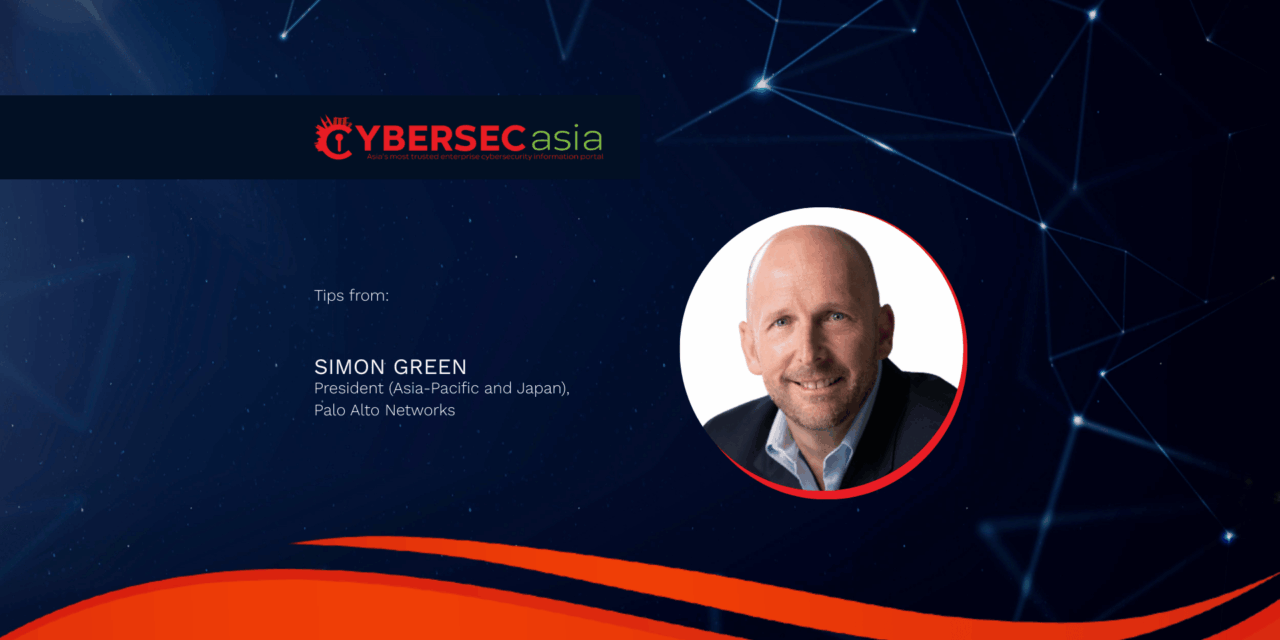
By Simon Green, President (Asia-Pacific and Japan), Palo Alto Networks | Thursday, January 8, 2026, 10:44 AM Asia/Singapore

AI is reshaping cyber risk: Time to rethink cybersecurity regionally

Zero Trust, enhanced public-private partnerships, and employee training can counter the rapidly evolving AI-driven threats.

The rapid adoption of AI is creating hidden security risks, as seen in incidents of a surge in data leaks, intellectual property disputes, and regulatory exposure.

​As cybercriminals leverage AI to enhance the speed and sophistication of attacks, traditional security tools are no longer sufficient. Attackers can now exfiltrate data three times faster, with a quarter of breaches seeing theft within five hours.

The message is clear: organizations need to build resilient security strategies that keep pace with AI-driven threats. Resilience must be prevention-first, ensuring attackers are stopped before breaches occur. By embedding Zero Trust at the heart of their defenses and establishing strong public-private partnerships, organizations can gain greater visibility into evolving cyber threats.

The growing threat of AI-enhanced attacks

Cybersecurity budgets are growing across organizations, with the largest planned increases in data protection, security software, and application security or identity access. Despite these investments, ransomware threats continue to rise, driven by the emergence of AI-enhanced attacks. One of the newest threats to corporate security is AI-generated insider extortion.

The rise of adversarial AI, where attackers deliberately manipulate AI systems, is exemplified by North Korean actors using AI-generated identities to steal proprietary code from companies. This erodes trust in digital systems and drives operational disruptions across finance and supply chains.

As more employees experiment with GenAI tools without IT oversight, Chief Information Security Officers (CISOs) will be unable to detect proprietary or regulated data that is fed into external AI systems. This expands the “AI attack surface” and leaves most AI models vulnerable to jailbreak attacks that generate harmful content.

Large language models (LLMs) embedded in advanced AI models can be exploited to generate harmful outputs such as malicious code or dangerous instructions. Such unauthorized third-party LLMs may inadvertently expose confidential data in organizations.

Strengthening organizational resilience

Organizations need to re-evaluate their cybersecurity strategies and strengthen defenses for proprietary data and critical systems. For many executives, the biggest challenge is complexity. That is the increasing difficulty of managing security across numerous tools, systems, processes, and cyber threats. We need to move beyond a piecemeal approach to security:

  • Governments in the region can try to get ahead of evolving threats by partnering with more local organizations to ensure products are secure-by-design. These public-private partnerships are vital for building a stronger cybersecurity ecosystem.
  • Zero Trust initiatives cannot stop at the organizational perimeter: they must extend inside, to address advanced malware and AI-driven threats. By continuously verifying every user, device, and application, even within the network, organizations can limit lateral movement and protect critical assets.
  • Equally important is ensuring accountability in the age of AI. Defenders will need to combine AI-driven detection with human oversight to strengthen decision-making. Employees must be empowered through education and strong internal safeguards to uphold a culture of security.

AI security is a shared responsibility, requiring a strong mix of technology, people, and partnerships. By uniting Zero Trust principles with responsible AI governance, organizations can build a resilient security posture.

Share:

PreviousCan cyber compliance stop being a cost — and start paying off?
NextUsing AI coding tools may incur hidden technical debt: research

Related Posts

Will penalizing firms for paying ransoms have a reverse effect?

Will penalizing firms for paying ransoms have a reverse effect?

Wednesday, December 21, 2022

Beware of Cloud sprawl and four other risks of cloud deployment

Beware of Cloud sprawl and four other risks of cloud deployment

Tuesday, November 2, 2021

Five tips to integrate DevSecOps holistically

Five tips to integrate DevSecOps holistically

Saturday, March 30, 2024

APT threats: Prevention is better than cure

APT threats: Prevention is better than cure

Wednesday, August 13, 2025

Leave a reply Cancel reply

You must be logged in to post a comment.

Voters-draw/RCA-Sponsors

Slide
Slide
Slide
Slide
Slide
Slide
Slide
Slide
Slide
Slide
Slide
Slide
Slide
Slide
previous arrow
next arrow

CybersecAsia Voting Placement

Gamification listing or Participate Now

PARTICIPATE NOW

Vote Now -Placement(Google Ads)

Top-Sidebar-banner

Whitepapers

  • Critical Security Threatsand the Need for ZTNA: How evolving cyberattacks demand a Zero Trust approach

    Critical Security Threatsand the Need for ZTNA: How evolving cyberattacks demand a Zero Trust approach

    Cyber threats have become more frequent and sophisticated, targeting organizations of all sizes across all …Download Whitepaper
  • Zero Trust Made Simple: Why it matters and how to get started

    Zero Trust Made Simple: Why it matters and how to get started

    Data breaches and cyberattacks are no longer limited to large, high-profile organizations.Download Whitepaper
  • Cloud Secure Edge: Remote access, better security

    Cloud Secure Edge: Remote access, better security

    ​SonicWall Cloud Secure Edge™ is a modern, cloud-native Security Service Edge (SSE) solution that addresses …Download Whitepaper
  • Closing the Gap in Email Security:How To Stop The 7 Most SinisterAI-Powered Phishing Threats

    Closing the Gap in Email Security:How To Stop The 7 Most SinisterAI-Powered Phishing Threats

    Insider threats continue to be a major cybersecurity risk in 2024. Explore more insights on …Download Whitepaper

Middle-sidebar-banner

Case Studies

  • How a Vietnamese D2C retailer built its own secure digital infrastructure

    How a Vietnamese D2C retailer built its own secure digital infrastructure

    Would your organization build your own digital infrastructure – including AI governance and cybersecurity – …Read more
  • Cyber protection for medical clinics in Singapore

    Cyber protection for medical clinics in Singapore

    As Singapore’s healthcare sector becomes increasingly digital and interconnected, clinics are facing heightened cyber risks, …Read more
  • India’s WazirX strengthens governance and digital asset security

    India’s WazirX strengthens governance and digital asset security

    Revamping its custody infrastructure using multi‑party computation tools has improved operational resilience and institutional‑grade safeguardsRead more
  • Bangladesh LGED modernizes communication while addressing data security concerns

    Bangladesh LGED modernizes communication while addressing data security concerns

    To meet emerging data localization/privacy regulations, the government engineering agency deploys a secure, unified digital …Read more

Bottom sidebar

Other News

  • Cohesity Expands Aspire Global Partner Program with New Specializations

    Friday, August 21, 2026
    Updated program broadens earning opportunities, …Read More »
  • As Cyber Risks Grow, Malaysia’s Key Industries Turn Their Attention to CyberDSA 2026

    Wednesday, August 19, 2026
    Oil & gas, banking & …Read More »
  • TestMu AI Launches Agent Assurance to Verify AI Agents Before They Ship

    Tuesday, August 18, 2026
    The new product verifies both …Read More »
  • ICAC Commissioner concludes ASEAN anti-corruption meeting in Malaysia to spearhead regional graft-fighting alliance

    Tuesday, August 18, 2026
    MALACCA CITY, Malaysia, Aug. 18, …Read More »
  • GeeLark Upgrades Browser Infrastructure with Version 150 and Team Password Management

    Friday, August 14, 2026
    SINGAPORE, Aug. 14, 2026 /PRNewswire/ …Read More »
  • Our Brands
  • DigiconAsia
  • MartechAsia
  • Home
  • About Us
  • Contact Us
  • Sitemap
  • Privacy & Cookies
  • Terms of Use
  • Advertising & Reprint Policy
  • Media Kit
  • Subscribe
  • Manage Subscriptions
  • Newsletter

Copyright © 2026 CybersecAsia All Rights Reserved.