

Cybersecurity News in Asia

RECENT STORIES:

SEGA moves faster with flow-based network monitoring
AI agents’ malicious supply-chain attack foiled by computer science st...
Digital trust and continuous cyber defense keys to business resilience...
Cohesity Expands Aspire Global Partner Program with New Specialization...
How well do you know your agent?
Live API keys expose 688,363 Stripe customer records across 42 countri...
LOGIN REGISTER
CybersecAsia
  • Features
    • Featured

      How well do you know your agent?

      How well do you know your agent?

      Thursday, August 20, 2026, 3:21 PM Asia/Singapore | Features
    • Featured

      Bringing proof of identity to the digital economy

      Bringing proof of identity to the digital economy

      Thursday, August 20, 2026, 10:50 AM Asia/Singapore | Features
    • Featured

      Why APAC Teams Need to Stop Worshipping CVSS Scores

      Why APAC Teams Need to Stop Worshipping CVSS Scores

      Monday, August 3, 2026, 9:00 AM Asia/Singapore | Features, Newsletter, Sponsored, Tips
  • Opinions
  • Tips
  • Whitepapers
  • AWARDS 2026
  • Directory
  • E-Learning

Select Page

Tips

Protecting against PDF cyber threats: Best practices for organizations and staff

By L L Seow | Tuesday, April 15, 2025, 10:10 AM Asia/Singapore

Protecting against PDF cyber threats: Best practices for organizations and staff

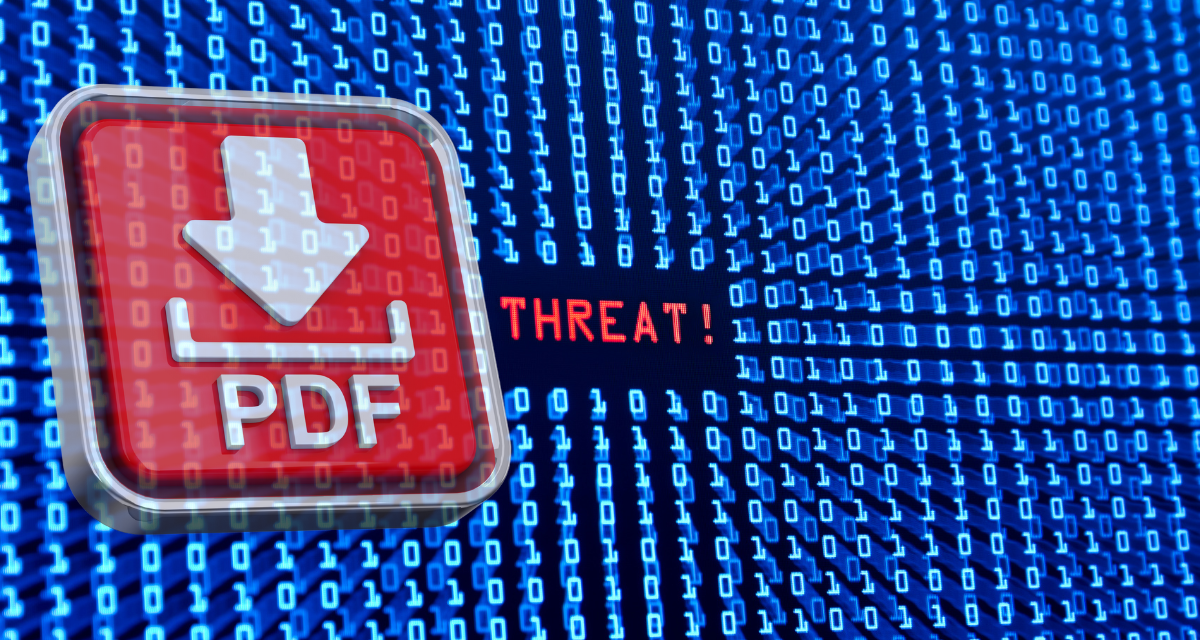
Files such as PDFs can contain phishing and malware links. Here are some best practices to control this cyber risk vector

The portable document format (PDF or ISO 32000) is often used that it has become a prime target of cybercriminals.

Cybercriminals can embed phishing links or malicious content in seemingly legitimate PDFs, capitalizing on user trust. JavaScript-based attacks, although less common now due to improved detection, have given way to simpler link-based campaigns involving the spoofing of major brands.

According to Check Point Research (CPR), phishing attacks can be hard to detect because attackers control link details, bypassing static signature-based tools. Evasion techniques include abusing legitimate redirect services, QR codes, or phone scams to dodge URL scanners.

Powerful format, powerful threat

The complex structure of PDFs aids evasion, with obfuscated annotations or encrypted content confusing static analysis tools. Many PDF readers prioritize functionality over strict standards, allowing malicious files to open undetected.

Attackers also counter machine learning defenses by embedding text in images, complicating OCR, or adding invisible text to mislead NLP models. These tactics exploit gaps in automated systems, relying on human interaction — such as clicking a URL — to succeed.

As PDFs remain integral to business, their evolving role in cybercrime demands vigilance and advanced security to counter sophisticated, socially engineered threats.

Staying safe from PDF-based attacks

  • Always verify the sender: Even if the PDF looks legitimate, double-check the sender’s email address. Cybercriminals often spoof well-known brands or colleagues to trick you into trusting the file.
  • Be cautious with attachments: If you were not expecting a PDF in your corporate email — especially one prompting you to click on a link, scan a QR code, or call a number — treat it as suspicious. When in doubt, do not click the link or document.
  • Hover before you click: Before clicking on any link in a PDF, hover over it to see the full URL. Be cautious of shortened links or those using redirect services.
  • Use a secure PDF viewer: Modern browsers and PDF readers often have built-in security features. Keep them current and avoid opening PDFs in obscure or outdated software.
  • Disable JavaScript in PDF viewers: If your PDF reader supports JavaScript (many do), disable it unless absolutely necessary. This reduces the risk of script-based exploits.
  • Keep systems and security tools updated: Ensure that your office machines’ operating system, browser, and antivirus software are regularly updated. Patches often close vulnerabilities exploited in malicious PDFs.
  • Train all staff to be vigilant: If a PDF seems too good to be true, has unusual formatting and typos, or asks for credentials, it is likely a trap.

PDF vigilance at the IT level

At the control level, IT teams can do their part, as guided by various best practices:

  1. Implement real-time malware scanning
    Many modern cybersecurity solutions offer real-time scanning of email attachments, including PDFs before allowing access. This proactive measure can block malicious files before they reach the user
  2. Leverage Content Disarm and Reconstruction (CDR)
    This process removes potentially harmful embedded objects, such as scripts or macros, while preserving the file’s usability. This technique is particularly effective for high-risk environments.
  3. Enable email security filters
    Advanced email security filters can automatically detect and quarantine malicious PDFs before they reach users’ inboxes.
  4. Use sandboxing for suspicious PDFs
    Opening suspicious PDFs in a sandbox environment isolates potential threats from the main system, preventing malware from spreading.
  5. Disallow encrypted PDFs from unknown sources
    Attackers may use encrypted PDFs to bypass automated scans since encryption hides the file’s contents from cybersecurity processes.
  6. Use online PDF scanning services
    Such services allow users to upload and scan non-sensitive PDF files for malware without opening them locally.

By combining these proactive strategies with vigilance, organizations can significantly reduce their exposure to PDF-based cyber threats.

Share:

PreviousCybersecurity risks related to US tariffs
NextCloud giant’s negligence and botched crisis response amplify monumental data breach fallout

Related Posts

Don’t let convenience trump caution this year-end e-shopping season

Don’t let convenience trump caution this year-end e-shopping season

Tuesday, December 1, 2020

Take note: fraudsters are digitalizing faster than the FI industry!

Take note: fraudsters are digitalizing faster than the FI industry!

Wednesday, February 15, 2023

2024 cybersecurity predictions from Akamai leaders

2024 cybersecurity predictions from Akamai leaders

Wednesday, December 13, 2023

Peril in a pandemic: the state of mobile application security

Mobile Application Security report: Peril in a pandemic

Thursday, April 29, 2021

Leave a reply Cancel reply

You must be logged in to post a comment.

Voters-draw/RCA-Sponsors

Slide
Slide
Slide
Slide
Slide
Slide
Slide
Slide
Slide
Slide
Slide
Slide
Slide
Slide
Slide
Slide
previous arrow
next arrow

CybersecAsia Voting Placement

Gamification listing or Participate Now

PARTICIPATE NOW

Vote Now -Placement(Google Ads)

Top-Sidebar-banner

Whitepapers

  • Critical Security Threatsand the Need for ZTNA: How evolving cyberattacks demand a Zero Trust approach

    Critical Security Threatsand the Need for ZTNA: How evolving cyberattacks demand a Zero Trust approach

    Cyber threats have become more frequent and sophisticated, targeting organizations of all sizes across all …Download Whitepaper
  • Zero Trust Made Simple: Why it matters and how to get started

    Zero Trust Made Simple: Why it matters and how to get started

    Data breaches and cyberattacks are no longer limited to large, high-profile organizations.Download Whitepaper
  • Cloud Secure Edge: Remote access, better security

    Cloud Secure Edge: Remote access, better security

    ​SonicWall Cloud Secure Edge™ is a modern, cloud-native Security Service Edge (SSE) solution that addresses …Download Whitepaper
  • Closing the Gap in Email Security:How To Stop The 7 Most SinisterAI-Powered Phishing Threats

    Closing the Gap in Email Security:How To Stop The 7 Most SinisterAI-Powered Phishing Threats

    Insider threats continue to be a major cybersecurity risk in 2024. Explore more insights on …Download Whitepaper

Middle-sidebar-banner

Case Studies

  • How a Vietnamese D2C retailer built its own secure digital infrastructure

    How a Vietnamese D2C retailer built its own secure digital infrastructure

    Would your organization build your own digital infrastructure – including AI governance and cybersecurity – …Read more
  • Cyber protection for medical clinics in Singapore

    Cyber protection for medical clinics in Singapore

    As Singapore’s healthcare sector becomes increasingly digital and interconnected, clinics are facing heightened cyber risks, …Read more
  • India’s WazirX strengthens governance and digital asset security

    India’s WazirX strengthens governance and digital asset security

    Revamping its custody infrastructure using multi‑party computation tools has improved operational resilience and institutional‑grade safeguardsRead more
  • Bangladesh LGED modernizes communication while addressing data security concerns

    Bangladesh LGED modernizes communication while addressing data security concerns

    To meet emerging data localization/privacy regulations, the government engineering agency deploys a secure, unified digital …Read more

Bottom sidebar

Other News

  • Cohesity Expands Aspire Global Partner Program with New Specializations

    Friday, August 21, 2026
    Updated program broadens earning opportunities, …Read More »
  • As Cyber Risks Grow, Malaysia’s Key Industries Turn Their Attention to CyberDSA 2026

    Wednesday, August 19, 2026
    Oil & gas, banking & …Read More »
  • TestMu AI Launches Agent Assurance to Verify AI Agents Before They Ship

    Tuesday, August 18, 2026
    The new product verifies both …Read More »
  • ICAC Commissioner concludes ASEAN anti-corruption meeting in Malaysia to spearhead regional graft-fighting alliance

    Tuesday, August 18, 2026
    MALACCA CITY, Malaysia, Aug. 18, …Read More »
  • GeeLark Upgrades Browser Infrastructure with Version 150 and Team Password Management

    Friday, August 14, 2026
    SINGAPORE, Aug. 14, 2026 /PRNewswire/ …Read More »
  • Our Brands
  • DigiconAsia
  • MartechAsia
  • Home
  • About Us
  • Contact Us
  • Sitemap
  • Privacy & Cookies
  • Terms of Use
  • Advertising & Reprint Policy
  • Media Kit
  • Subscribe
  • Manage Subscriptions
  • Newsletter

Copyright © 2026 CybersecAsia All Rights Reserved.