

Cybersecurity News in Asia

RECENT STORIES:

SEGA moves faster with flow-based network monitoring
How AI is supercharging state-sponsored threat actors in Asia Pacific
Cyber fraud tops ransomware in WEF cybersecurity outlook
AI agent autonomy risks demand guardrails and human oversight
Black Box Names Sameer Batra as Chief Business Officer to accelerate I...
Advantech Partners with MediaTek to Achieve IEC 62443-4-2 Certificatio...
LOGIN REGISTER
CybersecAsia
  • Features
    • Featured

      How AI is supercharging state-sponsored threat actors in Asia Pacific

      How AI is supercharging state-sponsored threat actors in Asia Pacific

      Wednesday, January 14, 2026, 4:06 PM Asia/Singapore | Features
    • Featured

      Leveraging digital twins to combat rising AI-powered threats

      Leveraging digital twins to combat rising AI-powered threats

      Thursday, January 8, 2026, 1:58 PM Asia/Singapore | Features
    • Featured

      Editor’s pick: Cybersecurity trends in 2026

      Editor's pick: Cybersecurity trends in 2026

      Wednesday, January 7, 2026, 10:36 AM Asia/Singapore | Cyberthreat Landscape, Features, Newsletter
  • Opinions
  • Tips
  • Whitepapers
  • Awards 2025
  • Directory
  • E-Learning

Select Page

Opinions

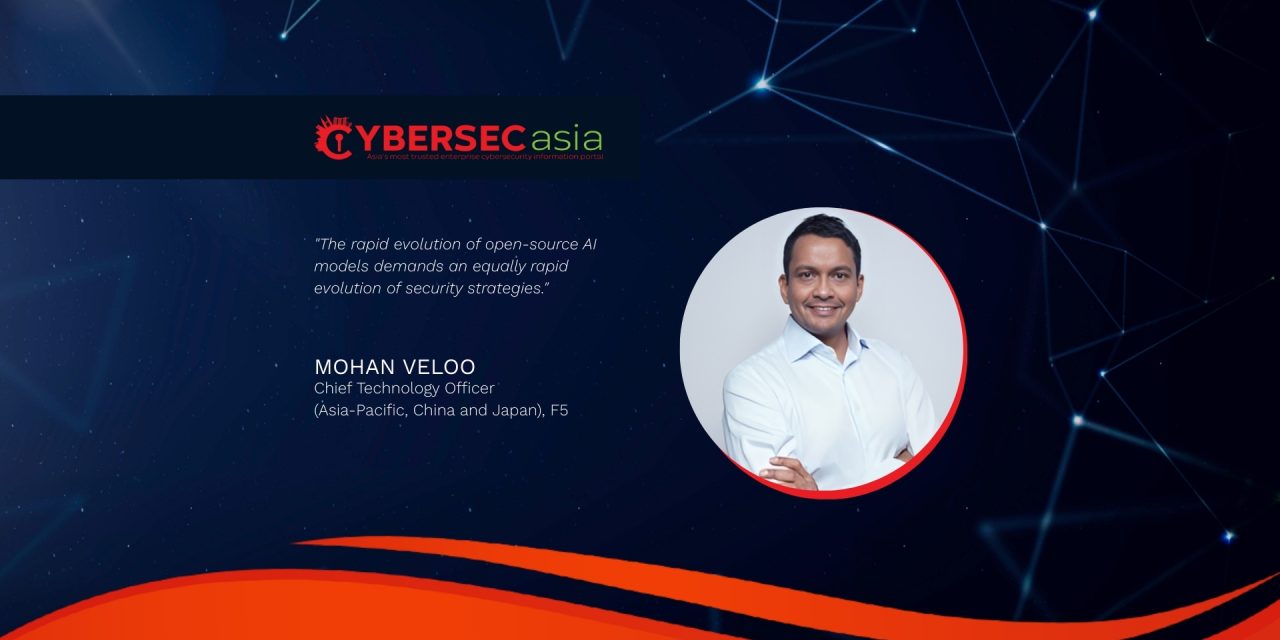
Open-source AI democratization: Can cyber defenses rise to the double-edged challenges?

By Mohan Veloo, Chief Technology Officer (Asia-Pacific, China and Japan), F5 | Wednesday, April 16, 2025, 5:37 PM Asia/Singapore

Open-source AI democratization: Can cyber defenses rise to the double-edged challenges?

When accessibility barriers fall, vulnerabilities emerge. Open-source AI models can be exploited by more people: a double-edged sword in the making

The rapid evolution of open-source AI models demands an equally rapid evolution of security strategies.

With the release of models such as DeepSeek-R1, Meta’s Llama, and Mistral’s Mixtral, AI capabilities once confined to big-budget tech giants are now accessible to virtually everyone. Startups, independent developers, academic researchers, and even students can now harness the potential of AI, driving innovation and significantly lowering barriers to entry.

Yet, the democratization of AI brings a critical challenge: ensuring security keeps pace with rapid adoption.

When barriers fall, vulnerabilities emerge. Open-source models can be modified, adapted, or exploited by anyone, increasing both innovation potential and security risks simultaneously.

The democratization paradox
AI democratization is reshaping industries, from healthcare and finance to education. Interestingly, increased efficiency often drives greater usage — a concept known as Jevons’ Paradox.

Lower costs and easier access encourage wider adoption, not less. Businesses across industries — from e-commerce to agriculture — are now rapidly integrating AI-driven analytics, chatbots, and predictive tools into their operations.

However, with wider usage comes increased security complexity. Organizations often adopt AI hastily, without thorough security assessments, opening doors for potential attackers. Two major security risks stand out prominently: Shadow AI and Model Poisoning:

  • Shadow AI occurs when AI models are deployed within an organization without centralized oversight, creating significant security blind spots.
  • Model Poisoning involves the subtle manipulation of AI models, potentially leading to biased or malicious outcomes.

These threats are not theoretical: they are increasingly evident. Recently, researchers had highlighted vulnerabilities in one open source AI model, demonstrating that attackers could exploit it to generate.

harmful or malicious code. Another study had found that AI-powered robots can be hacked to achieve bypassing of safety and ethical protocols — from causing collisions to detonating bombs — raising serious security and ethical concerns.

The key question becomes: How can we effectively secure open-source AI without stifling innovation?

Lessons from successful open-source platforms like Linux and Kubernetes illustrate the strength of community-driven security. Rigorous peer reviews, continuous updates, and a collaborative security culture ensure robust defense. AI security should embrace similar models: real-time monitoring, regular validation, and collaborative threat intelligence.

Cyber infrastructure must keep pace
AI models differ fundamentally from traditional software. They evolve continuously, creating risks of dynamic security threats such as adversarial attacks and unauthorized model extraction. Traditional cybersecurity infrastructure often falls short in anticipating these new risks.

Think of it like upgrading infrastructure for autonomous vehicles: existing roads were not built for self-driving cars navigating in real-time at scale. Similarly, traditional cybersecurity is not designed for dynamic, continuously learning AI models.

To address this, companies need adaptive security frameworks: proactively predicting and mitigating risks, rather than merely reacting. Organizations need to implement defense-in-depth strategies, embedding security measures at every AI lifecycle stage, from data collection to model deployment.

This approach ensures AI remains a source of innovation rather than vulnerability. The rapid evolution of open-source AI models demands an equally rapid evolution of security strategies. As AI democratization gains momentum, embedding robust security from the start is essential. Businesses must treat security not as an afterthought, but as integral to AI adoption, innovation, and deployment.

Organizations that proactively secure their AI infrastructure today will not just mitigate risks: they will lead the next wave of innovation securely and responsibly, setting new standards for trust in an AI-driven world.

Share:

PreviousHow are geopolitical tensions driving stricter cybersecurity rules and supply chain oversight?
NextWhen a data breach does happen, take full responsibility!

Related Posts

Keeping pace with data protection and BFSI compliance laws with AI

Keeping pace with data protection and BFSI compliance laws with AI

Tuesday, May 4, 2021

Cybersecurity predictions 2021: three burning considerations to ponder

Cybersecurity predictions 2021: three burning considerations to ponder

Wednesday, November 25, 2020

Using tech to build business trust in the payments revolution

Using tech to build business trust in the payments revolution

Thursday, June 4, 2020

Rethinking cybersecurity in the age of digital transformation

Rethinking cybersecurity in the age of digital transformation

Tuesday, August 30, 2022

Leave a reply Cancel reply

You must be logged in to post a comment.

Voters-draw/RCA-Sponsors

Slide
Slide
Slide
Slide
Slide
Slide
Slide
Slide
Slide
Slide
Slide
Slide
Slide
Slide
previous arrow
next arrow

CybersecAsia Voting Placement

Gamification listing or Participate Now

PARTICIPATE NOW

Vote Now -Placement(Google Ads)

Top-Sidebar-banner

Whitepapers

  • Closing the Gap in Email Security:How To Stop The 7 Most SinisterAI-Powered Phishing Threats

    Closing the Gap in Email Security:How To Stop The 7 Most SinisterAI-Powered Phishing Threats

    Insider threats continue to be a major cybersecurity risk in 2024. Explore more insights on …Download Whitepaper
  • 2024 Insider Threat Report: Trends, Challenges, and Solutions

    2024 Insider Threat Report: Trends, Challenges, and Solutions

    Insider threats continue to be a major cybersecurity risk in 2024. Explore more insights on …Download Whitepaper
  • AI-Powered Cyber Ops: Redefining Cloud Security for 2025

    AI-Powered Cyber Ops: Redefining Cloud Security for 2025

    The future of cybersecurity is a perfect storm: AI-driven attacks, cloud expansion, and the convergence …Download Whitepaper
  • Data Management in the Age of Cloud and AI

    Data Management in the Age of Cloud and AI

    In today’s Asia Pacific business environment, organizations are leaning on hybrid multi-cloud infrastructures and advanced …Download Whitepaper

Middle-sidebar-banner

Case Studies

  • Bangladesh LGED modernizes communication while addressing data security concerns

    Bangladesh LGED modernizes communication while addressing data security concerns

    To meet emerging data localization/privacy regulations, the government engineering agency deploys a secure, unified digital …Read more
  • What AI worries keeps members of the Association of Certified Fraud Examiners sleepless?

    What AI worries keeps members of the Association of Certified Fraud Examiners sleepless?

    This case study examines how many anti-fraud professionals reported feeling underprepared to counter rising AI-driven …Read more
  • Meeting the business resilience challenges of digital transformation

    Meeting the business resilience challenges of digital transformation

    Data proves to be key to driving secure and sustainable digital transformation in Southeast Asia.Read more
  • Upgrading biometric authentication system protects customers in the Philippines: UnionDigital Bank

    Upgrading biometric authentication system protects customers in the Philippines: UnionDigital Bank

    An improved dual-liveness biometric framework can counter more deepfake threats, ensure compliance, and protect underbanked …Read more

Bottom sidebar

Other News

  • Black Box Names Sameer Batra as Chief Business Officer to accelerate International Markets Growth

    Wednesday, January 14, 2026
    New leader to drive customer …Read More »
  • Advantech Partners with MediaTek to Achieve IEC 62443-4-2 Certification for Their First Arm-Based Industrial SBC

    Wednesday, January 14, 2026
    TAIPEI, Jan. 6, 2026 /PRNewswire/ …Read More »
  • VIVOTEK Chroma24 AI Cameras Unveil Night in True Color

    Tuesday, January 13, 2026
    Securing Critical Sites 24/7 with …Read More »
  • CYFIRMA’s 2025 Impact Recap Showcases DeCYFIR, Preemptive External Threat Landscape Management Platform, Delivering Measurable Global Defense Against Emerging Threats

    Tuesday, December 30, 2025
    SINGAPORE and TOKYO, Dec. 29, …Read More »
  • Taoping Announces Transformational Growth Milestones: New Corporate Headquarters and US$2 Million Smart Infrastructure Contracts

    Monday, December 29, 2025
    TIANJIN, China, Dec. 29, 2025 …Read More »
  • Our Brands
  • DigiconAsia
  • MartechAsia
  • Home
  • About Us
  • Contact Us
  • Sitemap
  • Privacy & Cookies
  • Terms of Use
  • Advertising & Reprint Policy
  • Media Kit
  • Subscribe
  • Manage Subscriptions
  • Newsletter

Copyright © 2026 CybersecAsia All Rights Reserved.