
Cybersecurity News in Asia

RECENT STORIES:

SEGA moves faster with flow-based network monitoring
Interpol dismantles 45,000 malicious IPs in global cyber operation
AI did it? Nah, just ‘User Error’, swears cloud giant
Misconfigured AI: Hype or real threat to APAC Infrastructure?
Building trust in Asia’s financial sector with digital identity innova...
VIVOTEK Accelerates AI Innovation Through Network Optix Platform Integ...
LOGIN REGISTER
CybersecAsia
  • Features
    • Featured

      Misconfigured AI: Hype or real threat to APAC Infrastructure?

      Misconfigured AI: Hype or real threat to APAC Infrastructure?

      Monday, March 16, 2026, 7:36 PM Asia/Singapore | Features, Tips
    • Featured

      Building trust in Asia’s financial sector with digital identity innovations

      Building trust in Asia’s financial sector with digital identity innovations

      Monday, March 16, 2026, 9:45 AM Asia/Singapore | Features, Newsletter
    • Featured

      IoT trends APAC enterprises cannot ignore in 2026

      IoT trends APAC enterprises cannot ignore in 2026

      Friday, March 13, 2026, 3:08 PM Asia/Singapore | Features
  • Opinions
  • Tips
  • Whitepapers
  • Awards 2025
  • Directory
  • E-Learning

Select Page

How financial institutions and governments can protect aging populations from scams

By Balasubramanian Swaminathan, IMAWS | Friday, November 7, 2025, 1:54 PM Asia/Singapore

How financial institutions and governments can protect aging populations from scams

Large-scale data analytics and anomaly detection systems helps identify the victimized and intervene faster, enabling preemptive rather than reactive protection.

When it comes to the now notorious syndicates orchestrating romance scams, investment fraud, and impersonation schemes worldwide, senior citizens face disproportionate risks.

Research demonstrates that cognitive changes associated with aging, combined with limited exposure to evolving digital threats, create and broaden vulnerability. Additionally, criminals exploit psychological tactics such as authority impersonation and artificial urgency — techniques that affect seniors more effectively than other age groups.

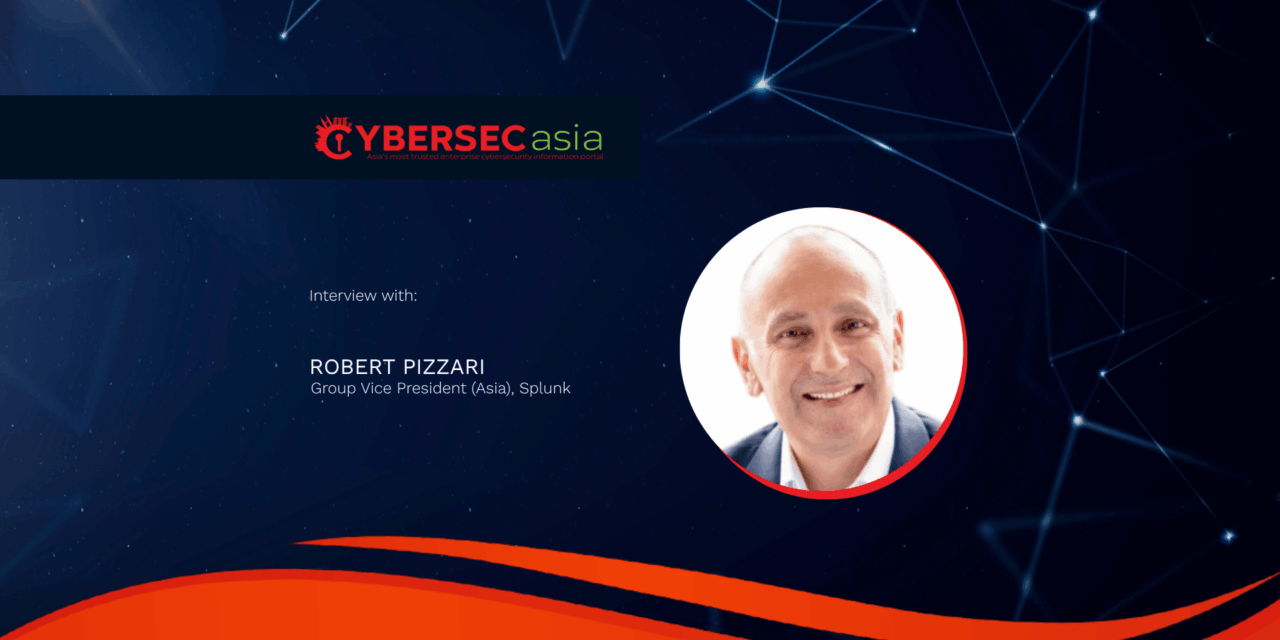
Addressing this vulnerable group requires coordinated defenses across both technology and user education, according to Robert Pizzari, Group Vice President (Asia), Splunk, in this interview with CybersecAsia.net.

CybersecAsia: From what you know in your regional work, what are the threats senior citizens face due to advanced hacks or scams?

Robert Pizzari (RP): To target people, criminals pose as government officials, telecom representatives, or even friends. These scams often start with phishing emails or SMS that trick victims into clicking malicious links or sharing credentials.

What makes these threats more dangerous today is the use of AI. Fraudsters increasingly deploy voice-cloning, deepfake videos, and AI-generated messages to increase credibility, making it harder for seniors to distinguish genuine communication from fake.

However, AI also offers promise when used on the defensive side. Applied correctly, the technology can sift through vast amounts of data to spot subtle anomalies such as unusual login locations or suspicious transaction patterns that would otherwise go unnoticed. When leveraged for fraud detection, this enables earlier intervention and reduces the chances of people — especially seniors — falling prey to scams.

CybersecAsia: With many Asian countries reporting rapidly aging populations, and scams targeting the older age groups getting more sophisticated, what can governments do to protect them better?

RP: A significant portion of Asia’s population is active online, but may not always have the same digital literacy or awareness of evolving cyber threats. This creates a perfect environment for phishing, impersonation, and fraudulent investment schemes to take root.

To counter this, governments and organizations need to build digital services that are not only accessible but also fraud-aware: embedding clear verification prompts, anomaly detection, and user education that can help vulnerable groups pause and verify before acting.

At the same time, seniors are not the only targets. Bad actors will exploit any demographic or sector that promises high returns, which underscores the importance of stronger, AI-enabled defenses — to detect threats/victim activities earlier, improve accuracy, and enable quicker system intervention to prevent successful heists and protect vulnerable groups and critical sectors alike.

CybersecAsia: Sectors such as banking, insurance, retail and government are the places where senior citizens take their transactions digitally. What should the CISOs in such institutions focus on, to protect vulnerable seniors?

RP: My recommendations are:

  • Embed proactive fraud and anomaly detection by leveraging AI. Move beyond static rules to behaviour-based analytics that correlate patterns across transactions, logins, and devices. For organizations serving seniors, this means faster detection of fraudulent patterns, reduced downtime, and more secure online interactions.
  • Strengthen identity and access controls without creating friction. Certain elderly groups often struggle with complex authentication procedures. Adaptive methods such as biometrics or risk-based MFA, triggered only when activity looks suspicious, can balance usability with security and protect seniors in such processes.
  • Invest in cyber awareness and resilience at the edge. As attackers often exploit the human element, technology alone is not sufficient. CISOs can collaborate with industry bodies and regulators to roll out targeted awareness campaigns for seniors, reinforcing practical red-flag checks. At the same time, organizations should prepare their security operations centers with automated playbooks and incident response workflows, so that if a senior has been victimized, teams can intervene and remediate quickly.
  • Inject special rest-and-reflect points that act as a safety net for seniors: Fraudsters rely on creating urgency – pushing victims to act before they think. Offering a visible “I am not sure” button in important online transaction dialog boxes would introduce a pause that elderly users can welcome at a critical moment. For example, if a senior receives an unexpected prompt to transfer funds, noticing and then selecting this option could automatically pause the transaction, trigger an additional verification step, or connect them to a verified helpline. The focus should be on making digital safer and more intuitive and more inclusive for seniors through plain-language prompts, layered verification, and proactive monitoring for anomalies. This not only protects seniors but also builds long-term trust in the system.

CybersecAsia: Beyond helping seniors and vulnerable users, what measures should organizations prioritize to stay resilient themselves in the AI-powered cybercrime landscape?

RP: To stay resilient, governments and organizations need to prioritize three things:

  • Trustworthy guardrails: Ensure human oversight, responsible and transparent decision-making, and sovereignty-aware architectures.
  • Stronger data foundations: AI is only as effective as the data it learns from. Strong data governance, federation, and lifecycle management can provide the right context while maintaining compliance.
  • Shared defenses: No single security ops center can stand alone in the age of autonomous AI. Public-private partnerships and cross-border sharing of insights will be essential to counter increasingly automated threats.

CybersecAsia thanks Robert Pizzari for sharing his organization’s perspectives.
Share:

PreviousScandic Trust Group strengthens sales network with First Idea Consultant
NextInspira Enterprise Recognized as a Leader in the Cybersecurity Services for Mid-Market Enterprises PEAK Matrix® Assessment 2025 by Everest Group

Related Posts

Powerful executive order from Biden administration could compel crisis info sharing

Powerful executive order from Biden administration could compel crisis info sharing

Tuesday, March 30, 2021

Ransomware attacks against South Korea’s financial sector this year were “an anomaly”

Ransomware attacks against South Korea’s financial sector this year were “an anomaly”

Monday, December 8, 2025

Zooming in on safe video conferencing habits

Zooming in on safe video conferencing habits

Wednesday, April 1, 2020

Former-employee data breach exposes nearly 700,000 loan customers’ information

Former-employee data breach exposes nearly 700,000 loan customers’ information

Wednesday, September 17, 2025

Leave a reply Cancel reply

You must be logged in to post a comment.

Voters-draw/RCA-Sponsors

Slide
Slide
Slide
Slide
Slide
Slide
Slide
Slide
Slide
Slide
Slide
Slide
Slide
Slide
previous arrow
next arrow

CybersecAsia Voting Placement

Gamification listing or Participate Now

PARTICIPATE NOW

Vote Now -Placement(Google Ads)

Top-Sidebar-banner

Whitepapers

  • Closing the Gap in Email Security:How To Stop The 7 Most SinisterAI-Powered Phishing Threats

    Closing the Gap in Email Security:How To Stop The 7 Most SinisterAI-Powered Phishing Threats

    Insider threats continue to be a major cybersecurity risk in 2024. Explore more insights on …Download Whitepaper
  • 2024 Insider Threat Report: Trends, Challenges, and Solutions

    2024 Insider Threat Report: Trends, Challenges, and Solutions

    Insider threats continue to be a major cybersecurity risk in 2024. Explore more insights on …Download Whitepaper
  • AI-Powered Cyber Ops: Redefining Cloud Security for 2025

    AI-Powered Cyber Ops: Redefining Cloud Security for 2025

    The future of cybersecurity is a perfect storm: AI-driven attacks, cloud expansion, and the convergence …Download Whitepaper
  • Data Management in the Age of Cloud and AI

    Data Management in the Age of Cloud and AI

    In today’s Asia Pacific business environment, organizations are leaning on hybrid multi-cloud infrastructures and advanced …Download Whitepaper

Middle-sidebar-banner

Case Studies

  • Cyber protection for medical clinics in Singapore

    Cyber protection for medical clinics in Singapore

    As Singapore’s healthcare sector becomes increasingly digital and interconnected, clinics are facing heightened cyber risks, …Read more
  • India’s WazirX strengthens governance and digital asset security

    India’s WazirX strengthens governance and digital asset security

    Revamping its custody infrastructure using multi‑party computation tools has improved operational resilience and institutional‑grade safeguardsRead more
  • Bangladesh LGED modernizes communication while addressing data security concerns

    Bangladesh LGED modernizes communication while addressing data security concerns

    To meet emerging data localization/privacy regulations, the government engineering agency deploys a secure, unified digital …Read more
  • What AI worries keep members of the Association of Certified Fraud Examiners sleepless?

    What AI worries keep members of the Association of Certified Fraud Examiners sleepless?

    This case study examines how many anti-fraud professionals reported feeling underprepared to counter rising AI-driven …Read more

Bottom sidebar

Other News

  • VIVOTEK Accelerates AI Innovation Through Network Optix Platform Integration

    Saturday, March 14, 2026
    TAIPEI, March 12, 2026 /PRNewswire/ …Read More »
  • Tencent Cloud Unveils AI-Powered Gaming Solutions at GDC 2026, Transforming Connection, Creation, and Security for the Future of Games

    Friday, March 13, 2026
    The Latest GVoice Brings Revolutionary …Read More »
  • TXOne Networks Showcases TXOne Complete at S4x26, Advancing the Full OT Security Journey for Channel Partners

    Thursday, March 12, 2026
    The operations-first OT security partner …Read More »
  • Globe Teleservices Announces Partnership with Myanma Posts and Telecommunications to Enhance Secure Messaging and Customer Experience

    Thursday, March 12, 2026
    SINGAPORE, March 11, 2026 /PRNewswire/ …Read More »
  • Coremail Shares Insights on Strengthening Enterprise Email Security Amid Evolving Threats

    Thursday, March 12, 2026
    BANGKOK, March 11, 2026 /PRNewswire/ …Read More »
  • Our Brands
  • DigiconAsia
  • MartechAsia
  • Home
  • About Us
  • Contact Us
  • Sitemap
  • Privacy & Cookies
  • Terms of Use
  • Advertising & Reprint Policy
  • Media Kit
  • Subscribe
  • Manage Subscriptions
  • Newsletter

Copyright © 2026 CybersecAsia All Rights Reserved.