
With new connectivity standards and rising regulatory complexity across the region, the IoT landscape is shifting.
APAC’s Internet of Things (IoT) and machine-to-machine (M2M) landscape is entering a rapid growth phase, powered by 5G expansion and stronger digital infrastructure.
With an estimated 22 million IoT devices deployed globally by end 2026, and AI coming into the picture in a big way, enterprises must plan strategically or risk costly outages, compliance headaches, and delayed rollouts.
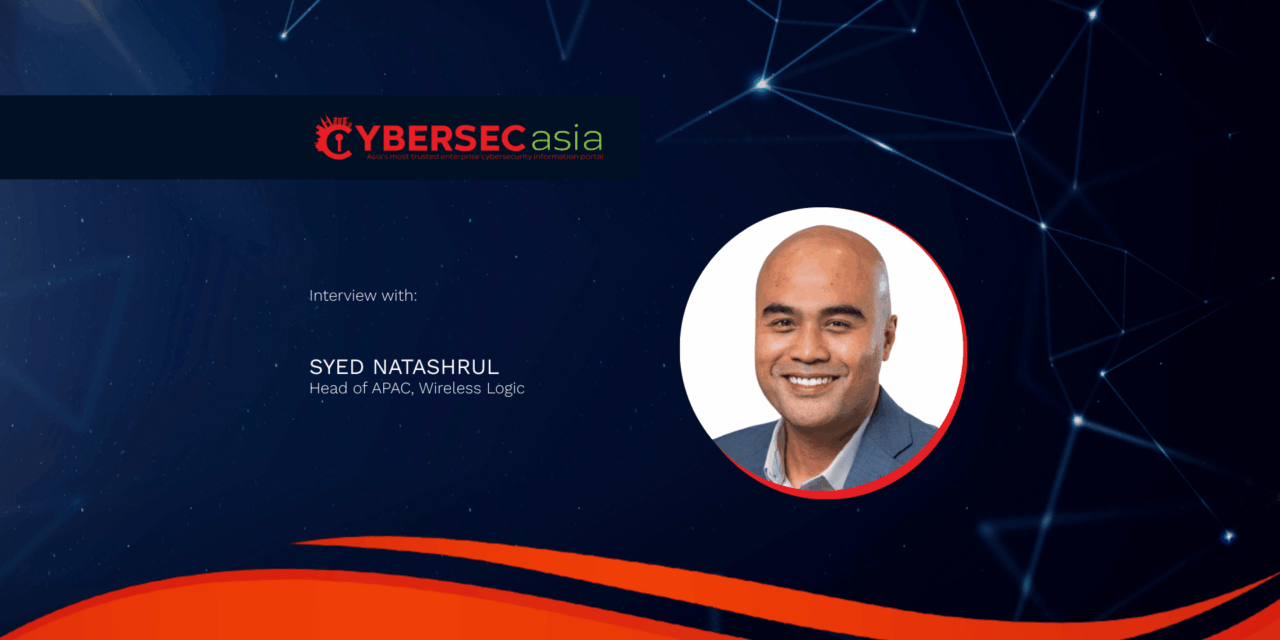
As IoT shifts from simple connectivity to outcome-driven, integrated enterprise solutions, we find out from Syed Natashrul, Head of APAC, Wireless Logic about the key IoT trends we cannot ignore, and what we should do about them.
In the year 2026, what does the future of IoT look like for ASEAN?
Syed Natashrul (SN): IoT adoption across ASEAN and the wider APAC region is accelerating rapidly, yet many enterprise deployments remain fragile. Regional IoT and M2M connections are projected to reach 1.3 billion by 2030, while globally, connected devices are expected to hit 22 billion by 2026.
The challenge ahead is no longer about scaling devices, but about ensuring deployments are resilient, secure, and designed to deliver real business outcomes across diverse markets. 2026 represents a turning point where ad hoc experimentation will give way to more strategic, production-grade IoT deployments.
At Wireless Logic, we see this shift as a move toward a unified, interoperable regional ecosystem. For ASEAN enterprises, new upcoming standards like SGP.32 will simplify cross-border provisioning, enabling enterprises to scale deployments across ASEAN more easily. Leveraging our experience and platforms such as Conexa, businesses can manage regional networks from a single control point, ensuring connectivity is reliable and secure.
Enterprises will need to rethink how they deploy IoT across the region as they build resilient, integrated systems, enabling secure remote connectivity and coordinating deployments across borders.
Those that plan with scale, security, and interoperability in mind will gain a competitive advantage, while those that continue with fragmented approaches risk outages, compliance challenges, and delayed regional expansion.
Those that plan with scale, security, and interoperability in mind will gain a competitive advantage, while those that continue with fragmented approaches risk outages, compliance challenges, and delayed regional expansion.
Why is it important to develop a unified cross-border IoT ecosystem?
SN: IoT deployments range from local, regional, to global, and enterprises must now move away from fragmented, country-by-country approaches and towards a unified, interoperable, and data-centric ecosystem.
Despite disparate regulatory backdrops across the ASEAN region, this method of adapting common resilient frameworks enables seamless connectivity, simplifies operations, and allows enterprises to unlock the full value of cross-border data flows.
The adaptation of upcoming global standards such as SGP.32 will be a critical step in this direction. Unlike previous eSIM standards, SGP.32 is designed to handle the complexity of “headless” IoT devices at scale, allowing enterprises to remotely switch network profiles and manage the full SIM lifecycle without physical intervention.
These standards help ensure consistent device management, improve interoperability, and build trust across markets, enabling enterprises in APAC to scale deployments across borders with confidence.
With IoT spending projected to surge by 2027, organizations must anticipate the impact of upcoming international security and compliance requirements. A unified, standards-based ecosystem allows enterprises to manage risk consistently, reduce compliance complexity, and scale IoT deployments with confidence across borders.
What should be done to ensure resilience and trust, especially in AI-ready IoT?
SN: To ensure resilience and trust in AI-ready IoT systems, enterprises must adopt a “not if, but when” mindset. As major outages, cyberattacks, infrastructure overloads, and extreme events have shown, downtime is a certainty, and not a hypothetical risk. In AI-enabled environments, where decisions are automated and systems operate at scale, the impact of failure will be amplified significantly.
Resilience must start at the design stage. Systems should be built to fail safely, operate offline where necessary, and recover quickly. For instance, enterprises can achieve this through Wireless Logic’s managed IoT platforms, which provide secure, scalable connectivity, proactive monitoring, and cross-border network redundancy that keep deployments online even under adverse conditions.
We provide a foundational 360-degree security framework to help organizations Defend, Detect, and React across people, processes, and technology. This framework covers preventative controls such as secure SIMs, private networks, encryption, and access management; enables continuous visibility and insights through real-time monitoring, anomaly detection, and threat intelligence; and ensures rapid response and recovery through incident management and automated countermeasures.
Trust is built through a comprehensive security strategy. By embedding these controls end-to-end, enterprises can maintain regulatory confidence, protect data, and instill confidence in IoT operations, while supporting the safe, scalable adoption of AI-enabled capabilities.
In which industries do you foresee the most transformative use of AI-enabled IoT or AIoT?
SN: AI-enabled IoT has the potential to be transformative across multiple industries, particularly AI-enabled IoT has the potential to be transformative across multiple industries, particularly where scale, complexity, and real-time decision-making are critical. As cyberthreats grow in both sophistication and volume, AI also plays a vital role in strengthening IoT security through advanced threat detection, predictive analysis, and automated real-time response.
However, this transformation must be approached with caution. While AI can significantly enhance IoT security and operational efficiency, cybercriminals are also leveraging AI to execute more complex attacks, such as advanced malware and targeted phishing. Enterprises adopting AI-driven IoT solutions must therefore avoid caomplacency and continue to prioritize routine updates, testing, and governance, recognizing that AI systems themselves can become attack surfaces.
At Wireless Logic, we see one of the most compelling examples of AI-enabled IoT transformation in ASEAN in the supply chain and logistics sector. As the region experiences strong growth in trade and e-commerce, enterprises are increasingly combining AI with IoT technologies to improve visibility and resilience. Use cases include AI-enabled safety cameras, smart sensors, predictive maintenance systems, real-time fleet tracking, and end-to-end shipment monitoring.
These applications allow organizations to anticipate equipment failures, optimize routes, reduce operational risks, and respond quickly to disruptions. When implemented using coordinated and standardized approaches, they also enable enterprises to scale efficiently across borders — maximizing the value of AI-enabled IoT while supporting regional integration and growth in the year ahead.