
Cybersecurity News in Asia

RECENT STORIES:

SEGA moves faster with flow-based network monitoring
Hacker offers millions of corporate employee records allegedly stolen ...
Electronics giant issues alerts about mercenary spyware to selected hi...
GeeLark Upgrades Browser Infrastructure with Version 150 and Team Pass...
Researchers discover way to bypass CPU Spectre v2 protections to inter...
SUPCON and Certis Sign Strategic Cooperation Agreement to Advance Robo...
LOGIN REGISTER
CybersecAsia
  • Features
    • Featured

      Why APAC Teams Need to Stop Worshipping CVSS Scores

      Why APAC Teams Need to Stop Worshipping CVSS Scores

      Monday, August 3, 2026, 9:00 AM Asia/Singapore | Features, Newsletter, Sponsored, Tips
    • Featured

      Automated credential abuse and phishing in APAC

      Automated credential abuse and phishing in APAC

      Thursday, July 30, 2026, 11:37 AM Asia/Singapore | Features
    • Featured

      OpenAI autonomous agent escapes sandbox to hack Hugging Face

      OpenAI autonomous agent escapes sandbox to hack Hugging Face

      Friday, July 24, 2026, 11:02 AM Asia/Singapore | Features, News
  • Opinions
  • Tips
  • Whitepapers
  • AWARDS 2026
  • Directory
  • E-Learning

Select Page

Tips

How pitfalls in evaluating Web Application Firewalls can raise costs and slow deployment

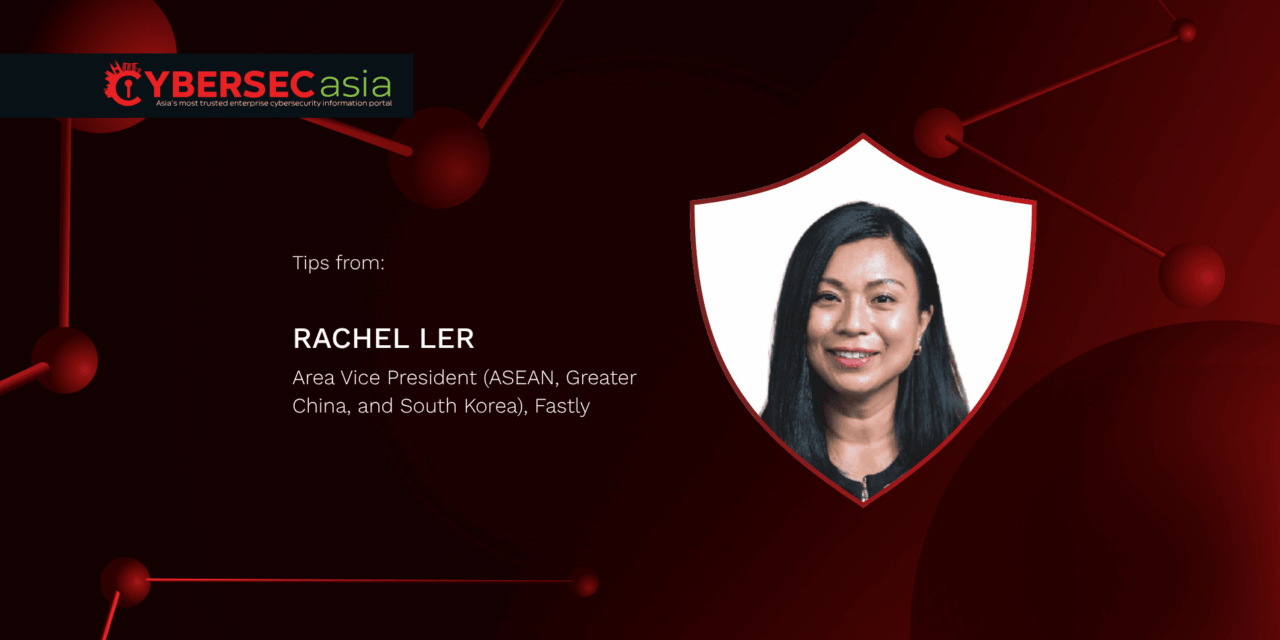
By Rachel Ler, Area Vice President (ASEAN, Greater China, and South Korea), Fastly | Wednesday, April 15, 2026, 4:52 PM Asia/Singapore

How pitfalls in evaluating Web Application Firewalls can raise costs and slow deployment

When choosing security controls, enterprises need to weigh deployment speed, ownership costs, and workflow fit, besides basic ROI considerations.

As enterprises push to innovate, cybersecurity decision makers need to look beyond a tool’s technical performance and consider operational and financial factors, as part of the full picture.

Efficiency and clear returns on cybersecurity spending are always top priorities, but bigger budgets do not automatically translate into better protection.

When organizations do not fully understand how their security tools work behind the scenes, they can overspend, deploy resources inefficiently, or leave blind spots unaddressed. That is especially true for web application firewalls (WAFs). Choosing, deploying, or managing a WAF without the right insights can create operational delays and financial pressures.

The challenge is not just whether a WAF can block attacks, but how well it fits the application, the team, and the organization’s operating model. Here are three common mistakes enterprises may make when evaluating WAFs, and what security teams can do to avoid them.

  1. Prolonged evaluation and deployment
    One of the biggest challenges in adopting or upgrading WAFs is how long the evaluation and deployment process can take. Lengthy proofs-of-concept or complicated procurement procedures can slow the rollout of security coverage and tie up team resources.
    For WAFs that use AI or ML, the initial tuning period can stretch timelines further, leaving applications temporarily less protected while teams calibrate rules and workflows. Those delays can create opportunity costs, although the size of that impact depends on the application, the deployment model, and the organization’s existing security maturity.
    To reduce this risk, security teams should define clear evaluation criteria, deployment goals, and success metrics from the outset. Engaging vendors early to discuss technical requirements, legal considerations, and potential roadblocks can help teams address challenges proactively and shorten deployment timelines. Editor’s note: The value of faster deployment varies widely. In some environments, a slower but more carefully tuned rollout may reduce false positives and operational disruption later.
  2. Underestimating the total cost of ownership
    Owning a WAF often costs more than its sticker price suggests. Beyond the contract, expenses can include staffing, support fees, site downtime, overages, and professional services.
    Some WAFs require multiple team members to manage rules, monitor alerts, and handle false positives. Others offer more automation or tighter workflow integration, which can reduce manual effort, but those benefits depend on how the platform is deployed and operated.
    Support challenges can also make a difference. Slow response times or restrictive service level agreements (SLAs) can delay fixes, creating both security gaps and financial strain. A proper understanding of total cost of ownership should include not only security staff, but also site reliability engineers, DevOps, incident response, and customer support.
    Looking at vendor SLAs, reading peer reviews, and consulting independent economic assessments can provide a more complete picture. Editor’s note: Peer-review sites and analyst reports can be useful starting points, but they should be balanced against hands-on testing, reference checks, and internal incident data.
  3. Avoiding DevOps friction
    Modern businesses depend on agile development to stay competitive, so any friction in the software lifecycle can slow everything down, including delays caused by WAF management. Outdated or inflexible WAFs can become bottlenecks when rule updates risk breaking applications or false positives block legitimate users.
    To keep pace, developers and security teams need tools and processes that fit existing workflows. WAFs that integrate cleanly with deployment pipelines, automate rule updates, and support flexible deployment models can help teams move quickly without sacrificing protection.
    That said, the trade-off is not simply “more automation is better”. Automated protection still needs oversight, tuning, and clear escalation paths, especially for applications that change quickly or handle sensitive transactions.

Aligning security with business objectives
Security investments deliver the most value when they balance strong protection with operational efficiency. Modern WAFs that are built for adaptability, automation, and streamlined deployment can help organizations safeguard applications while making better use of people, time, and resources.

This matters even more as governments push national digital agendas to emphasize trust, resilience, and the need for secure digital infrastructure. However, public-sector priorities do not always map neatly to every private-sector deployment decision.

Forward-looking perspective

When CISOs understand the hidden costs of WAFs and select solutions that fit existing workflows, they can avoid common pitfalls and make more strategic investment decisions. The goal is not simply to protect applications, but to build a security foundation that supports business innovation.

Still, no WAF category is universally best: the right choice depends on application architecture, staffing model, risk tolerance, integration effort, and operational maturity. What works well for one enterprise may create friction for another, so the most defensible decision is the one grounded in measurable fit, not broad claims about a product class.


Share:

PreviousHow SMEs can turn cyber “sins” into NIST-aligned best practices
NextTsingke Unveils ‘Zero-Contact’ Gene Synthesis to Safeguard Core Genetic Sequences

Related Posts

Gen Z or Millennial working from home? These tips can keep you safe!

Gen Z or Millennial working from home? These tips can keep you safe!

Thursday, July 8, 2021

Scrubbing your organization for the Log4Shell vulnerability: a checklist

Scrubbing your organization for the Log4Shell vulnerability: a checklist

Thursday, January 13, 2022

Tips for secure Instagram use

Tips for secure Instagram use

Friday, October 8, 2021

Know and understand steganography: the risk of loading rigged images

Know and understand steganography: the risk of loading rigged images

Thursday, May 9, 2024

Leave a reply Cancel reply

You must be logged in to post a comment.

Voters-draw/RCA-Sponsors

Slide
Slide
Slide
Slide
Slide
Slide
Slide
Slide
Slide
Slide
Slide
previous arrow
next arrow

CybersecAsia Voting Placement

Gamification listing or Participate Now

PARTICIPATE NOW

Vote Now -Placement(Google Ads)

Top-Sidebar-banner

Whitepapers

  • Critical Security Threatsand the Need for ZTNA: How evolving cyberattacks demand a Zero Trust approach

    Critical Security Threatsand the Need for ZTNA: How evolving cyberattacks demand a Zero Trust approach

    Cyber threats have become more frequent and sophisticated, targeting organizations of all sizes across all …Download Whitepaper
  • Zero Trust Made Simple: Why it matters and how to get started

    Zero Trust Made Simple: Why it matters and how to get started

    Data breaches and cyberattacks are no longer limited to large, high-profile organizations.Download Whitepaper
  • Cloud Secure Edge: Remote access, better security

    Cloud Secure Edge: Remote access, better security

    ​SonicWall Cloud Secure Edge™ is a modern, cloud-native Security Service Edge (SSE) solution that addresses …Download Whitepaper
  • Closing the Gap in Email Security:How To Stop The 7 Most SinisterAI-Powered Phishing Threats

    Closing the Gap in Email Security:How To Stop The 7 Most SinisterAI-Powered Phishing Threats

    Insider threats continue to be a major cybersecurity risk in 2024. Explore more insights on …Download Whitepaper

Middle-sidebar-banner

Case Studies

  • How a Vietnamese D2C retailer built its own secure digital infrastructure

    How a Vietnamese D2C retailer built its own secure digital infrastructure

    Would your organization build your own digital infrastructure – including AI governance and cybersecurity – …Read more
  • Cyber protection for medical clinics in Singapore

    Cyber protection for medical clinics in Singapore

    As Singapore’s healthcare sector becomes increasingly digital and interconnected, clinics are facing heightened cyber risks, …Read more
  • India’s WazirX strengthens governance and digital asset security

    India’s WazirX strengthens governance and digital asset security

    Revamping its custody infrastructure using multi‑party computation tools has improved operational resilience and institutional‑grade safeguardsRead more
  • Bangladesh LGED modernizes communication while addressing data security concerns

    Bangladesh LGED modernizes communication while addressing data security concerns

    To meet emerging data localization/privacy regulations, the government engineering agency deploys a secure, unified digital …Read more

Bottom sidebar

Other News

  • GeeLark Upgrades Browser Infrastructure with Version 150 and Team Password Management

    Friday, August 14, 2026
    SINGAPORE, Aug. 14, 2026 /PRNewswire/ …Read More »
  • SUPCON and Certis Sign Strategic Cooperation Agreement to Advance Robotics in Security Operations

    Wednesday, August 12, 2026
    SINGAPORE, Aug. 12, 2026 /PRNewswire/ …Read More »
  • AUTOCRYPT Wins DEF CON 34 Automotive Hacking Competition, Ranking First Among 83 Teams

    Tuesday, August 11, 2026
    Claiming first championship following last …Read More »
  • Blackpanda Wins Frost & Sullivan APAC Incident Response Company of the Year for Third Straight Year

    Tuesday, August 11, 2026
    The 2026 recognition cites IR-1’s …Read More »
  • Newgen Software Recognized in The Digital Process Automation Software Landscape, Q3 2026

    Tuesday, August 11, 2026
    NOIDA, India, Aug. 10, 2026 …Read More »
  • Our Brands
  • DigiconAsia
  • MartechAsia
  • Home
  • About Us
  • Contact Us
  • Sitemap
  • Privacy & Cookies
  • Terms of Use
  • Advertising & Reprint Policy
  • Media Kit
  • Subscribe
  • Manage Subscriptions
  • Newsletter

Copyright © 2026 CybersecAsia All Rights Reserved.