Cybersecurity News in Asia

RECENT STORIES:

SEGA moves faster with flow-based network monitoring
Cyber protection for medical clinics in Singapore
Beyond firewalls – addressing cybersecurity blind spots
87% of organizations running software with known, exploitable vulnerab...
Leaked memo reveals AI firm’s research focus on “rogue“ or “scheming” ...
AI has gone from experimentation to default in fraud and AML
LOGIN REGISTER
CybersecAsia
  • Features
    • Featured

      Beyond firewalls – addressing cybersecurity blind spots

      Beyond firewalls – addressing cybersecurity blind spots

      Monday, March 2, 2026, 10:24 AM Asia/Singapore | Features
    • Featured

      Where are financial fraud and AML regulations heading in S E Asia?

      Where are financial fraud and AML regulations heading in S E Asia?

      Tuesday, February 10, 2026, 2:44 PM Asia/Singapore | Features
    • Featured

      How AI is reshaping dating in Asia

      How AI is reshaping dating in Asia

      Monday, February 9, 2026, 5:33 AM Asia/Singapore | Features, Newsletter
  • Opinions
  • Tips
  • Whitepapers
  • Awards 2025
  • Directory
  • E-Learning

Select Page

Features

Embedding cybersecurity culture in financial institutions: lessons in leadership, collaboration, and cyber resilience

By B Swaminathan | IMAWS | Thursday, October 30, 2025, 11:37 AM Asia/Singapore

Embedding cybersecurity culture in financial institutions: lessons in leadership, collaboration, and cyber resilience

Insights from a non-profit financial cybersecurity consortium highlight how APAC financial institutions can tackle diverse cyber threats and strengthen collaborative defense.

Today, cybersecurity is no longer a peripheral concern, but a central element of organizational resilience.

Building a robust cybersecurity culture is essential to safeguarding operations and data integrity, requiring active leadership and employee engagement across all levels.

How can organizations embed cybersecurity into their culture, while rethink the role of leadership and evolving investment trends to stay relevant?

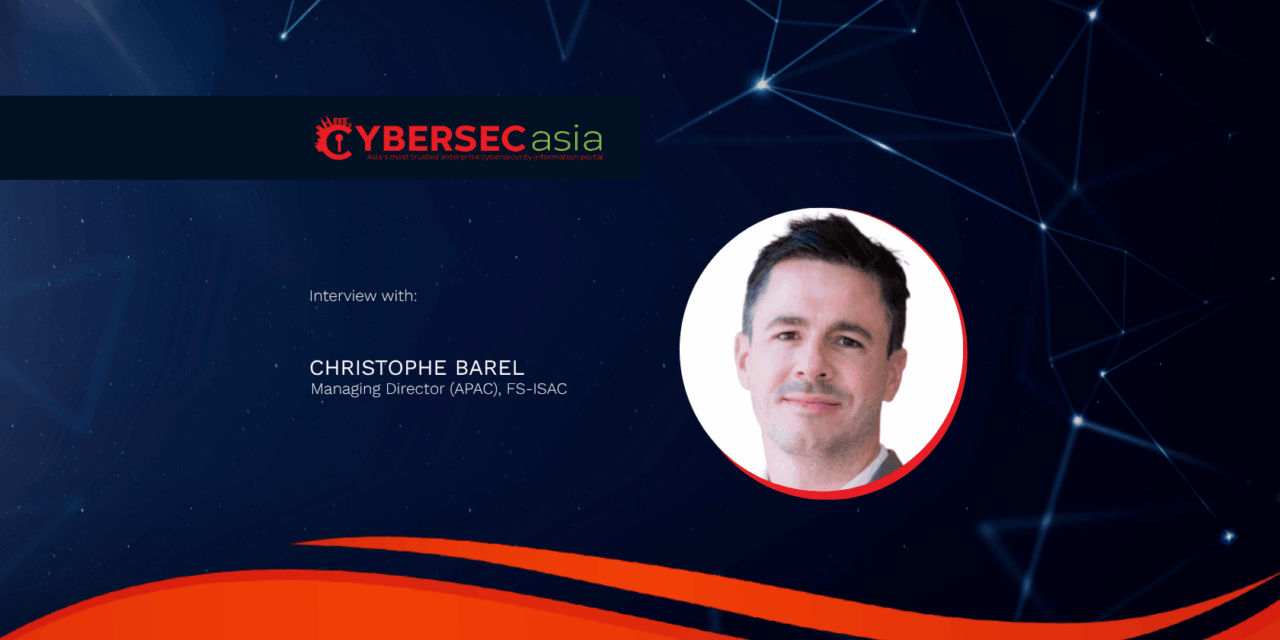
DigiconAsia.net interviewed Christophe Barel, Managing Director (APAC), FS-ISAC for his perspectives from the point of view of a non-profit financial industry cybersecurity resilience consortium.

CybersecAsia: How can organizations embed cybersecurity as part of their culture and leadership mindset, moving beyond compliance to resilience?

Christophe Barel (CB): Cyber risk is increasingly recognized as a major business threat worldwide, yet it often remains treated as a mere compliance checklist.

Embedding cybersecurity into organizational culture requires:

  • Adopting Secure-by-Design principles, meaning security must be integrated from the outset of business processes instead of being an afterthought. This approach calls for appropriate budgeting, ongoing cyber hygiene, collaboration to share intelligence, proactive threat detection, and regular incident response exercises.
  • Clear and frequent communication about cybersecurity practices to all employees. These resilience-focused efforts help organizations minimize the impact of cyberattacks, sustain business operations if disrupted, and adapt swiftly to emerging threats.
  • Leadership plays a pivotal role in this transformation by setting the tone at the top, championing security initiatives, allocating sufficient resources, and fostering a culture of accountability where cybersecurity is seen as an enterprise-wide responsibility rather than solely an IT concern.

Practical benchmarks such as timely software patching, data encryption, strong password policies, use of VPNs, secure configurations, and continual employee training should be regularly tracked and reported. These measures drive improved compliance, quicker incident responses, and stronger adherence to security standards throughout the organization.

CybersecAsia: What training and engagement methods best cultivate cyber-aware, empowered employees who act as a strong first line of defense?

CB: Real-world scenario-based cyber exercises have proven highly effective in educating employees on current cyber threats and building rapid response skills. Such exercises also improve collaboration within and across sectors, facilitating better information sharing and coordinated crisis management.

Creating a culture of shared responsibility begins with making incident reporting straightforward, encouraging employees to flag suspicious activities quickly without fear of repercussions. Also:

  • Promoting open communication and teamwork fosters an environment where cybersecurity is everyone’s duty, extending beyond the IT department.
  • Visible leadership support reinforces this message, motivating employees to prioritize cyber awareness in their daily workflows.
  • Empowering employees includes not only awareness programs but also the provision of necessary security tools, such as antivirus software and password managers. Accessible incident reporting channels that are consistently promoted can help embed cybersecurity practices into the organizational fabric, reinforcing that maintaining strong cyber hygiene is a collective effort.

CybersecAsia: How can organizations dismantle silos between cybersecurity, IT, and business teams to achieve unified resilience and coordination?

CB: Siloed functions often hinder communication, lead to duplicated efforts, and cause missed warning signs of cyber incidents, which can have severe financial and reputational consequences.

The first step towards overcoming these barriers is recognizing the need for cross-functional communication and establishing consistent channels for information sharing.

A unified approach helps eliminate overlaps and ensures resources are deployed efficiently. Organizations can create integrated frameworks or playbooks to guide collaboration between cybersecurity, fraud, financial crime, anti-money laundering, and business teams.

These shared tools provide a common language, clearly defined roles, escalation paths, and dependencies — allowing for faster, more informed decisions and stronger collective defenses — well before incidents can arise.

CybersecAsia: How has investment in cybersecurity evolved in financial institutions across the Asia Pacific region, and what are the drivers behind this shift?

CB: Over the past decade, organizations in the Asia Pacific region have significantly increased their cybersecurity investments. Internal research indicates that nearly half of firms polled planned to boost their IT budgets in coming years with cybersecurity as a top priority. Rising cyber threats are fueling this trend, pushing financial firms to enhance their defenses continually.

One major area of concern is supply chain risk, as many institutions depend on common service providers whose vulnerabilities can affect many firms simultaneously. This risk has led to greater investment in third-party risk management infrastructure and processes.

Additionally, rigorous regulatory requirements, such as those imposed by regional financial authorities, further compel institutions to strengthen cyber risk controls and resilience measures.

In response to the increasing complexity and sophistication of cyber threats, financial firms are also exploring advanced technologies such as quantum-resistant encryption, AI for threat detection, and Zero Trust architectures. Recent strategies include boosting internal talent focused on emerging technologies to prepare for future challenges.

CybersecAsia thanks Christophe Barel for sharing his consortium’s views.
Share:

PreviousUpgrading biometric authentication system protects customers in the Philippines: UnionDigital Bank
NextAndroid trojan mimics human typing traits to evade behavioral detection routines

Related Posts

Protecting digital assets amidst a regional digital currency race

Protecting digital assets amidst a regional digital currency race

Monday, June 14, 2021

Emotet malware resurfaces after five months of absence

Emotet malware resurfaces after five months of absence

Wednesday, August 12, 2020

The zero trust approach to securing widespread remote-working

The zero trust approach to securing widespread remote-working

Monday, October 12, 2020

Time to add Identity Threat Detection and Response to your cyber arsenal 

Time to add Identity Threat Detection and Response to your cyber arsenal 

Wednesday, February 14, 2024

Leave a reply Cancel reply

You must be logged in to post a comment.

Voters-draw/RCA-Sponsors

Slide
Slide
Slide
Slide
Slide
Slide
Slide
Slide
Slide
Slide
Slide
Slide
Slide
Slide
previous arrow
next arrow

CybersecAsia Voting Placement

Gamification listing or Participate Now

PARTICIPATE NOW

Vote Now -Placement(Google Ads)

Top-Sidebar-banner

Whitepapers

  • Closing the Gap in Email Security:How To Stop The 7 Most SinisterAI-Powered Phishing Threats

    Closing the Gap in Email Security:How To Stop The 7 Most SinisterAI-Powered Phishing Threats

    Insider threats continue to be a major cybersecurity risk in 2024. Explore more insights on …Download Whitepaper
  • 2024 Insider Threat Report: Trends, Challenges, and Solutions

    2024 Insider Threat Report: Trends, Challenges, and Solutions

    Insider threats continue to be a major cybersecurity risk in 2024. Explore more insights on …Download Whitepaper
  • AI-Powered Cyber Ops: Redefining Cloud Security for 2025

    AI-Powered Cyber Ops: Redefining Cloud Security for 2025

    The future of cybersecurity is a perfect storm: AI-driven attacks, cloud expansion, and the convergence …Download Whitepaper
  • Data Management in the Age of Cloud and AI

    Data Management in the Age of Cloud and AI

    In today’s Asia Pacific business environment, organizations are leaning on hybrid multi-cloud infrastructures and advanced …Download Whitepaper

Middle-sidebar-banner

Case Studies

  • Cyber protection for medical clinics in Singapore

    Cyber protection for medical clinics in Singapore

    As Singapore’s healthcare sector becomes increasingly digital and interconnected, clinics are facing heightened cyber risks, …Read more
  • India’s WazirX strengthens governance and digital asset security

    India’s WazirX strengthens governance and digital asset security

    Revamping its custody infrastructure using multi‑party computation tools has improved operational resilience and institutional‑grade safeguardsRead more
  • Bangladesh LGED modernizes communication while addressing data security concerns

    Bangladesh LGED modernizes communication while addressing data security concerns

    To meet emerging data localization/privacy regulations, the government engineering agency deploys a secure, unified digital …Read more
  • What AI worries keep members of the Association of Certified Fraud Examiners sleepless?

    What AI worries keep members of the Association of Certified Fraud Examiners sleepless?

    This case study examines how many anti-fraud professionals reported feeling underprepared to counter rising AI-driven …Read more

Bottom sidebar

Other News

  • DoveRunner Expands Presence in Southeast Asia with New Office in Jakarta

    Thursday, February 26, 2026
    JAKARTA, Indonesia, Feb. 25, 2026 …Read More »
  • Proofpoint partners with Concentrix to strengthen human- and agent-centric cybersecurity across Asia Pacific

    Tuesday, February 24, 2026
    Partnership integrates Proofpoint’s collaboration and …Read More »
  • Indonesia’s MDI Ventures Doubles Down on Execution and Trust to Unlock Regional Portfolio Value

    Friday, February 20, 2026
    The Telkom-backed VC reinforces cross-sector …Read More »
  • Blackpanda Japan Announces Strategic Partnership with SoftBank to Strengthen Cyber Incident Response in Japan

    Wednesday, February 11, 2026
    SINGAPORE, Feb. 10, 2026 /PRNewswire/ …Read More »
  • Cohesity Collaborates with Google Cloud to Deliver Secure Sandbox Capabilities and Comprehensive Threat Insights Designed to Eliminate Hidden Malware

    Saturday, February 7, 2026
    Embedded Google Threat Intelligence capabilities, …Read More »
  • Our Brands
  • DigiconAsia
  • MartechAsia
  • Home
  • About Us
  • Contact Us
  • Sitemap
  • Privacy & Cookies
  • Terms of Use
  • Advertising & Reprint Policy
  • Media Kit
  • Subscribe
  • Manage Subscriptions
  • Newsletter

Copyright © 2026 CybersecAsia All Rights Reserved.