


Cybersecurity News in Asia

RECENT STORIES:

SEGA moves faster with flow-based network monitoring
Leveraging digital twins to combat rising AI-powered threats
Using AI coding tools may incur hidden technical debt: research
AI is reshaping cyber risk: Time to rethink cybersecurity regionally
Can cyber compliance stop being a cost — and start paying off?
Agentic AI emerge as enterprise insider threats predicted in 2026
LOGIN REGISTER
CybersecAsia
  • Features
    • Featured

      Leveraging digital twins to combat rising AI-powered threats

      Leveraging digital twins to combat rising AI-powered threats

      Thursday, January 8, 2026, 1:58 PM Asia/Singapore | Features
    • Featured

      Editor’s pick: Cybersecurity trends in 2026

      Editor's pick: Cybersecurity trends in 2026

      Wednesday, January 7, 2026, 10:36 AM Asia/Singapore | Cyberthreat Landscape, Features, Newsletter
    • Featured

      Exploding identity fraud and deepfakes challenge manual oversight of autonomous AI

      Exploding identity fraud and deepfakes challenge manual oversight of autonomous AI

      Tuesday, December 30, 2025, 9:27 AM Asia/Singapore | Features, Newsletter
  • Opinions
  • Tips
  • Whitepapers
  • Awards 2025
  • Directory
  • E-Learning

Select Page

Opinions

Shadow AI: Open source GenAI’s hidden threats to enterprise security

By David Sajoto, Vice President and General Manager (Asia-Pacific and Japan), Mimecast | Friday, April 4, 2025, 11:29 AM Asia/Singapore

Shadow AI: Open source GenAI’s hidden threats to enterprise security

Open source generative AI tools, when not managed well, amplify security risks through shadow IT, putting sensitive data and systems at risk

Across the Asia-Pacific region, organizations are grappling with a complex challenge: how to harness AI’s transformative powers without opening themselves up to unprecedented security risks.

Despite continued investment in traditional data loss tools, organizations are facing a surge in data loss incidents over recent years, a trend that is expected to continue rising in the years to come. Information shared with AI tools can expose sensitive information to competitors, putting organizations at risk. All the more alarming is that emerging technologies can amplify such threats due to shadow IT.

Unapproved installation of generative AI (GenAI) tools on work devices without robust IT security, compliance and legal oversight, dramatically expands the corporate attack surface. A lack of IT visibility into such GenAI usage leads to unmonitored security risks, putting sensitive corporate data at risk and creating critical security blind spots.

Shadow AI traps in unregulated AI

Open source AI models offer several advantages, including transparency, community-driven innovation and customization, which can be tailored to the user’s specific needs.

However, this technological freedom comes with a dangerous flipside. When employees use unapproved GenAI software on work devices without their IT department’s knowledge or consent, they unknowingly open digital backdoors into their organization’s most sensitive information.

The consequences: confidential information may be unknowingly exposed, and intellectual property may be compromised, creating inherent risks of data leakage, misuse and regulatory penalties if not properly secured. According to one survey, 35% of organizations polled had suffered data breaches costing between US$1m and US$20m over the last three years. 

Securing data in the GenAI age

Fret not: there is no need to resort to outright banning of certain AI tools. Instead, robust governance is key to harnessing AI power safely.

Rather than restricting innovation, it is my opinion that organizations need to take the following strategic steps to secure enterprise data: 

  1. Maintain clear data and governance policies: Develop and maintain clear, region-specific AI usage policies that address the unique regulatory landscape across any diverse markets that your organization is present in. These policies should specifically address data privacy, security protocols, and approved tools that meet compliance standards, are communicated effectively to all employees, and are rigorously enforced. Organizations must prioritize robust data governance practices that align with rapidly evolving regional regulations, such as Japan’s stringent APPI compliance standards and Singapore’s new governance framework for GenAI.
  2. Gain visibility and control: Ensure total observability into the applications employees are using, including open source GenAI tools. Use appropriate tools to detect and root out shadow IT risks, to regain the necessary control needed to enforce security policies and protect sensitive data.
  3. Invest in effective employee training: Invest in security awareness training that educates employees about the specific risks associated with shadow IT GenAI tools. This empowers staff to be part of the solution instead of being the source of risks.

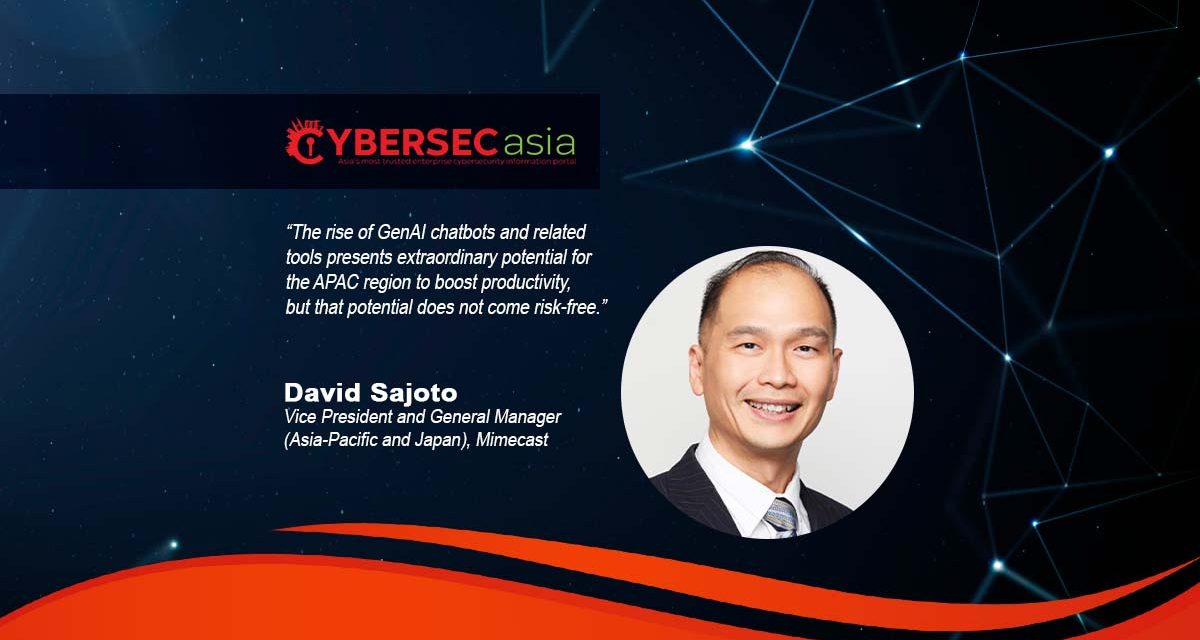
The rise of GenAI chatbots and related tools presents extraordinary potential for businesses in the APAC region to boost productivity, but that potential does not come risk-free.

As the AI landscape continues to evolve in the region at breakneck speed, it remains crucial for enterprises to adopt a proactive approach to AI security.


Share:

PreviousCloud vulnerability exploitation: a wake-up call for security teams amid rising automation?
NextCohesity Streamlines Protection and Increases Resilience of Critical Database Operations Through Integration with Nutanix

Related Posts

The five commandments of 5G security

The five commandments of 5G security

Thursday, June 11, 2020

Tightening e-commerce security without ruining the customer experience

Tightening e-commerce security without ruining the customer experience

Monday, August 24, 2020

What were 2020’s top cybersecurity priorities, and how will they change this year?

What were 2020’s top cybersecurity priorities, and how will they change this year?

Tuesday, January 5, 2021

FIDO2 for the financial sector: pros and cons

FIDO2 for the financial sector: pros and cons

Tuesday, August 29, 2023

Leave a reply Cancel reply

You must be logged in to post a comment.

Voters-draw/RCA-Sponsors

Slide
Slide
Slide
Slide
Slide
Slide
Slide
Slide
Slide
Slide
Slide
Slide
Slide
Slide
previous arrow
next arrow

CybersecAsia Voting Placement

Gamification listing or Participate Now

PARTICIPATE NOW

Vote Now -Placement(Google Ads)

Top-Sidebar-banner

Whitepapers

  • Closing the Gap in Email Security:How To Stop The 7 Most SinisterAI-Powered Phishing Threats

    Closing the Gap in Email Security:How To Stop The 7 Most SinisterAI-Powered Phishing Threats

    Insider threats continue to be a major cybersecurity risk in 2024. Explore more insights on …Download Whitepaper
  • 2024 Insider Threat Report: Trends, Challenges, and Solutions

    2024 Insider Threat Report: Trends, Challenges, and Solutions

    Insider threats continue to be a major cybersecurity risk in 2024. Explore more insights on …Download Whitepaper
  • AI-Powered Cyber Ops: Redefining Cloud Security for 2025

    AI-Powered Cyber Ops: Redefining Cloud Security for 2025

    The future of cybersecurity is a perfect storm: AI-driven attacks, cloud expansion, and the convergence …Download Whitepaper
  • Data Management in the Age of Cloud and AI

    Data Management in the Age of Cloud and AI

    In today’s Asia Pacific business environment, organizations are leaning on hybrid multi-cloud infrastructures and advanced …Download Whitepaper

Middle-sidebar-banner

Case Studies

  • Bangladesh LGED modernizes communication while addressing data security concerns

    Bangladesh LGED modernizes communication while addressing data security concerns

    To meet emerging data localization/privacy regulations, the government engineering agency deploys a secure, unified digital …Read more
  • What AI worries keeps members of the Association of Certified Fraud Examiners sleepless?

    What AI worries keeps members of the Association of Certified Fraud Examiners sleepless?

    This case study examines how many anti-fraud professionals reported feeling underprepared to counter rising AI-driven …Read more
  • Meeting the business resilience challenges of digital transformation

    Meeting the business resilience challenges of digital transformation

    Data proves to be key to driving secure and sustainable digital transformation in Southeast Asia.Read more
  • Upgrading biometric authentication system protects customers in the Philippines: UnionDigital Bank

    Upgrading biometric authentication system protects customers in the Philippines: UnionDigital Bank

    An improved dual-liveness biometric framework can counter more deepfake threats, ensure compliance, and protect underbanked …Read more

Bottom sidebar

Other News

  • CYFIRMA’s 2025 Impact Recap Showcases DeCYFIR, Preemptive External Threat Landscape Management Platform, Delivering Measurable Global Defense Against Emerging Threats

    Tuesday, December 30, 2025
    SINGAPORE and TOKYO, Dec. 29, …Read More »
  • Taoping Announces Transformational Growth Milestones: New Corporate Headquarters and US$2 Million Smart Infrastructure Contracts

    Monday, December 29, 2025
    TIANJIN, China, Dec. 29, 2025 …Read More »
  • SAESOL Tech to Unveil Next-Generation V2X Security Technology Protecting Vulnerable Road Users at CES 2026

    Tuesday, December 23, 2025
    First public showcase of “S2X …Read More »
  • Fescaro makes strong Kosdaq debut, eyes global auto cybersecurity

    Friday, December 19, 2025
    SUWON, South Korea, Dec. 19, …Read More »
  • CYFIRMA Announces DeCYFIR 4.0: Industry-Leading AI Platform Engineered for Preemptive Protection Against Future Threats

    Friday, December 19, 2025
    Revolutionary 9 Pillar AI Architecture …Read More »
  • Our Brands
  • DigiconAsia
  • MartechAsia
  • Home
  • About Us
  • Contact Us
  • Sitemap
  • Privacy & Cookies
  • Terms of Use
  • Advertising & Reprint Policy
  • Media Kit
  • Subscribe
  • Manage Subscriptions
  • Newsletter

Copyright © 2026 CybersecAsia All Rights Reserved.