
Cybersecurity News in Asia

RECENT STORIES:

SEGA moves faster with flow-based network monitoring
Is your AI secretly sabotaging your organization?
Another wakeup call about the risks of AI-driven development tools
Lessons learnt from the first reported AI-orchestrated attack
Cybersecurity firm issues urgent reminders for Black Friday and Cyber ...
SGS Highlights Cybersecurity Capabilities With World’s First EU ...
LOGIN REGISTER
CybersecAsia
  • Features
    • Featured

      Is your AI secretly sabotaging your organization?

      Is your AI secretly sabotaging your organization?

      Monday, December 1, 2025, 4:25 PM Asia/Singapore | Features, Newsletter
    • Featured

      Lessons learnt from the first reported AI-orchestrated attack

      Lessons learnt from the first reported AI-orchestrated attack

      Friday, November 28, 2025, 6:33 PM Asia/Singapore | Cyber Espionage, Features, Tips
    • Featured

      The new face of fraud in the AI era

      The new face of fraud in the AI era

      Tuesday, November 25, 2025, 9:57 AM Asia/Singapore | Features, Newsletter, Tips
  • Opinions
  • Tips
  • Whitepapers
  • Awards 2025
  • Directory
  • E-Learning

Select Page

Tips

Mitigating the human factor in the critical battleground of AI-powered cybersecurity risks

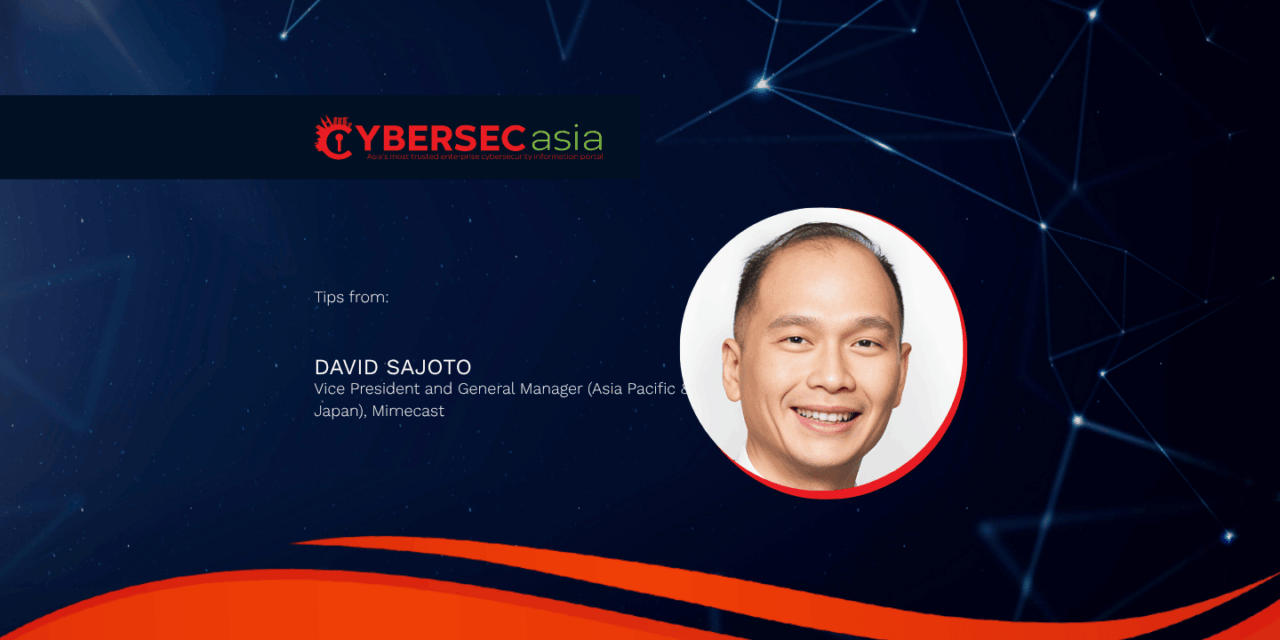
By David Sajoto, Vice President and General Manager (Asia-Pacific and Japan), Mimecast | Tuesday, October 21, 2025, 1:43 PM Asia/Singapore

Mitigating the human factor in the critical battleground of AI-powered cybersecurity risks

Even the most sophisticated cyber defenses may fail if human behavior is overlooked. Find out how to mitigate this critical factor.

When a cyber incident occurs, the instinctive reaction for many organizations is to invest in the latest tools: advanced firewalls, AI-driven threat detection, and endpoint protection.

While technology remains essential, the decisive battleground is often not in the hardware, but in the human factors.

Over the years numerous surveys and reports have linked cyber weaknesses to the daily decisions, habits, and actions of employees to the most exploited vulnerabilities. For example: systemic behavioral gaps, employees turning to unapproved AI tools, sharing sensitive data, or bypassing safeguards.

Closing this human risk gap is just as critical as deploying advanced defenses.

Why the human layer is under siege

Cyber attackers now recognize that it is far easier to manipulate people than break hardened systems.

At the same time, employees operate in increasingly complex digital environments. Hybrid work, global collaboration, and the explosion of productivity tools mean sensitive data moves outside traditional perimeters. Shadow AI is rising as employees turn to consumer AI tools to speed their work, often bypassing corporate security controls.

These dynamics create fertile ground for attackers: they do not need to breach systems when they can exploit human behaviour instead.

Training alone is not enough

For years, organizations have relied on annual awareness training or generic phishing simulations. These programs may satisfy regulators, but they rarely result in lasting behavior change. Employees may remember a lesson for a few weeks, but under pressure, old habits can return.

Since one-off training cannot keep pace with the evolving sophistication of attacks, the solution lies in continuous and adaptive interventions:

  • Employees handling financial transactions should be regularly exposed to simulations mimicking business email compromise attempts.
  • Teams experimenting with AI tools need targeted guidance on what information should never be input into unvetted platforms.
  • Security teams should track the time employees take to report suspicious emails, reductions in policy violations, and declining click-through rates on risky links. These measures provide concrete evidence of improvement and allow leaders to refine interventions based on outcomes, not assumptions

The goal is not just to instill awareness: it is to cultivate measurable, real-world behavioral change.

From awareness to actionable behavioral analytics

By monitoring patterns in how employees interact with communications and systems, organizations can tap behavioral analytics to bridge the gap between knowledge and action.

For instance, repeated interactions with suspicious emails, delayed reporting of phishing attempts, or frequent bypassing of established communication procedures — can all be signals of potential risk.

Importantly, this approach is not about creating a culture of surveillance. Employees need to understand what is measured and why.

Also, behavioral analytics should guide interventions such as targeted coaching, tailored awareness training, or reminders that reinforce safe behaviour, rather than punishment. The aim is to empower employees to act safely while providing security teams with actionable insight.

Addressing the human layer is therefore not just a technical concern: it is a strategic imperative. Building resilience in the human layer strengthens the overall security posture and creates a workforce that is vigilant and informed.

Practical steps for CISOs

Securing the human layer requires more than training. CISOs should focus on five interconnected priorities:

  1. Instituting continuous, role-based training that adapts to evolving threats. One-off modules are replaced with scenario-based lessons delivered when and where employees need them
  2. Leveraging behavioral analytics to track anomalies, flag potential lapses, and reinforce safe behavior
  3. Mandating AI governance that enforces access controls, sets clear policies, and educates employees on safe AI usage, closing the shadow AI gap
  4. Establishing a security-first corporate culture that encourages reporting without fear, rewards vigilance, and integrates cybersecurity into everyday operations
  5. Aligning with regulatory policies and ensuring that training reflects local compliance requirements and industry best practices

These measures transform the human layer from a liability into a strategic asset, aligning behavior, technology, and governance to mitigate risk.

In 2025, the most effective firewall is not built from code or silicon. It is shaped by human judgement, culture, and the decisions employees make every day. Technology alone cannot prevent breaches: even the most sophisticated systems fail if human behavior is overlooked.


Share:

PreviousGlobe Teleservices Partners with Maxis to Offer Enhanced Digital Security to Its Customers
NextOct 2025 Patch Tuesday fixes 183 vulnerabilities, including two zero days

Related Posts

Only with appropriate measures can AI technology be truly transformative

Only with appropriate measures can AI technology be truly transformative

Thursday, May 11, 2023

Dissecting the ransomware landscape in 2023: one firm’s findings

Dissecting the ransomware landscape in 2023: one firm’s findings

Friday, March 22, 2024

Generative AI will enhance EV user friendliness, but mind the cyber risks

Generative AI will enhance EV user friendliness, but mind the cyber risks

Thursday, April 27, 2023

Moving SIEM to the cloud – more than just cost savings

Moving SIEM to the cloud – more than just cost savings

Monday, April 25, 2022

Leave a reply Cancel reply

You must be logged in to post a comment.

Voters-draw/RCA-Sponsors

Slide
Slide
Slide
Slide
Slide
Slide
Slide
Slide
Slide
Slide
Slide
Slide
Slide
Slide
previous arrow
next arrow

CybersecAsia Voting Placement

Gamification listing or Participate Now

PARTICIPATE NOW

Vote Now -Placement(Google Ads)

Top-Sidebar-banner

Whitepapers

  • Closing the Gap in Email Security:How To Stop The 7 Most SinisterAI-Powered Phishing Threats

    Closing the Gap in Email Security:How To Stop The 7 Most SinisterAI-Powered Phishing Threats

    Insider threats continue to be a major cybersecurity risk in 2024. Explore more insights on …Download Whitepaper
  • 2024 Insider Threat Report: Trends, Challenges, and Solutions

    2024 Insider Threat Report: Trends, Challenges, and Solutions

    Insider threats continue to be a major cybersecurity risk in 2024. Explore more insights on …Download Whitepaper
  • AI-Powered Cyber Ops: Redefining Cloud Security for 2025

    AI-Powered Cyber Ops: Redefining Cloud Security for 2025

    The future of cybersecurity is a perfect storm: AI-driven attacks, cloud expansion, and the convergence …Download Whitepaper
  • Data Management in the Age of Cloud and AI

    Data Management in the Age of Cloud and AI

    In today’s Asia Pacific business environment, organizations are leaning on hybrid multi-cloud infrastructures and advanced …Download Whitepaper

Middle-sidebar-banner

Case Studies

  • What AI worries keeps members of the Association of Certified Fraud Examiners sleepless?

    What AI worries keeps members of the Association of Certified Fraud Examiners sleepless?

    This case study examines how many anti-fraud professionals reported feeling underprepared to counter rising AI-driven …Read more
  • Meeting the business resilience challenges of digital transformation

    Meeting the business resilience challenges of digital transformation

    Data proves to be key to driving secure and sustainable digital transformation in Southeast Asia.Read more
  • Upgrading biometric authentication system protects customers in the Philippines: UnionDigital Bank

    Upgrading biometric authentication system protects customers in the Philippines: UnionDigital Bank

    An improved dual-liveness biometric framework can counter more deepfake threats, ensure compliance, and protect underbanked …Read more
  • HOSTWAY gains 73% operational efficiency for private cloud operations  

    HOSTWAY gains 73% operational efficiency for private cloud operations  

    With NetApp storage solutions, the Korean managed cloud service provider offers a lean, intelligent architecture, …Read more

Bottom sidebar

  • Our Brands
  • DigiconAsia
  • MartechAsia
  • Home
  • About Us
  • Contact Us
  • Sitemap
  • Privacy & Cookies
  • Terms of Use
  • Advertising & Reprint Policy
  • Media Kit
  • Subscribe
  • Manage Subscriptions
  • Newsletter

Copyright © 2025 CybersecAsia All Rights Reserved.