
Cybersecurity News in Asia

RECENT STORIES:

SEGA moves faster with flow-based network monitoring
Leveraging digital twins to combat rising AI-powered threats
Using AI coding tools may incur hidden technical debt: research
AI is reshaping cyber risk: Time to rethink cybersecurity regionally
Can cyber compliance stop being a cost — and start paying off?
Agentic AI emerge as enterprise insider threats predicted in 2026
LOGIN REGISTER
CybersecAsia
  • Features
    • Featured

      Leveraging digital twins to combat rising AI-powered threats

      Leveraging digital twins to combat rising AI-powered threats

      Thursday, January 8, 2026, 1:58 PM Asia/Singapore | Features
    • Featured

      Editor’s pick: Cybersecurity trends in 2026

      Editor's pick: Cybersecurity trends in 2026

      Wednesday, January 7, 2026, 10:36 AM Asia/Singapore | Cyberthreat Landscape, Features, Newsletter
    • Featured

      Exploding identity fraud and deepfakes challenge manual oversight of autonomous AI

      Exploding identity fraud and deepfakes challenge manual oversight of autonomous AI

      Tuesday, December 30, 2025, 9:27 AM Asia/Singapore | Features, Newsletter
  • Opinions
  • Tips
  • Whitepapers
  • Awards 2025
  • Directory
  • E-Learning

Select Page

Opinions

Can cyber compliance stop being a cost — and start paying off?

By Niko Akatyev, Principal Cybersecurity Architect, Bitdefender | Thursday, January 8, 2026, 5:35 AM Asia/Singapore

Can cyber compliance stop being a cost — and start paying off?

If strong regulatory compliance is inevitable, why not make it part of a wider growth strategy?

It is easy to view compliance as the least glamorous part of cybersecurity.

But, what if those same frameworks could serve as a strategic and operational compass — a guide to build stronger, smarter, and more resilient security?

This requires a mindset shift: using compliance not just to avoid penalties, but to improve security outcomes and create business advantage. When implemented thoughtfully, compliance becomes the structure, language, and discipline that unite cybersecurity and business strategy.

The regulatory tide is rising

Across the Asia Pacific region, regulatory oversight is accelerating. Over the next 12 to 24 months, this momentum will intensify as multinational firms face overlapping frameworks and broader supervisory demands. It would be prudent for enterprises to anticipate requirements early and design scalable controls, rather than scrambling to retrofit compliance when new rules arrive.

When organizations align governance, culture, tooling, and metrics around compliance, they transform defence into advantage:

  • Governance ensures executive ownership and accountability
  • Culture embeds security into everyday processes, from onboarding to procurement
  • Tooling translates policy into measurable, auditable controls

Treating compliance as strategic infrastructure delivers tangible business value. Organizations that do so gain faster market access, reduce insurance premiums, attract quality talent, improve security posture, and optimize operations. Compliance becomes the shared language between technical teams, leadership, and external stakeholders — bridging gaps that traditionally slow decision-making.

Managing and balancing oversight

Not all regulatory efforts improve security. Overzealous or impractical mandates can stifle innovation, overburden SMEs, and divert resources from defence. Effective regulation must be practical and proportionate. Frameworks like the UK’s Cyber Essentials offer scalable pathways that let smaller organizations implement essential controls without excessive overhead.

Policymakers should also consider positive incentives for compliance maturity: recognition programs, simplified renewals, or funding assistance. Forward-thinking regulators now explore outcome-based standards rather than prescriptive checklists — allowing innovation while maintaining accountability for results.

Building capability from the ground up

For SMEs, compliance challenges are acute. They rarely have deep compliance teams or large budgets yet face the same threat landscape as major enterprises. The key is to start early, build capability incrementally, and use frameworks to structure your cybersecurity strategy.

  • Educate teams on emerging requirements before they become law.
  • Anticipate new obligations, not enforcement.
  • Invest in partnerships — managed service providers, auditors, or automation platforms — that extend your capability efficiently.

The goal is not perfection but progressive resilience: maintaining asset inventories, hardening systems, performing regular vulnerability assessments, and testing incident-response plans.

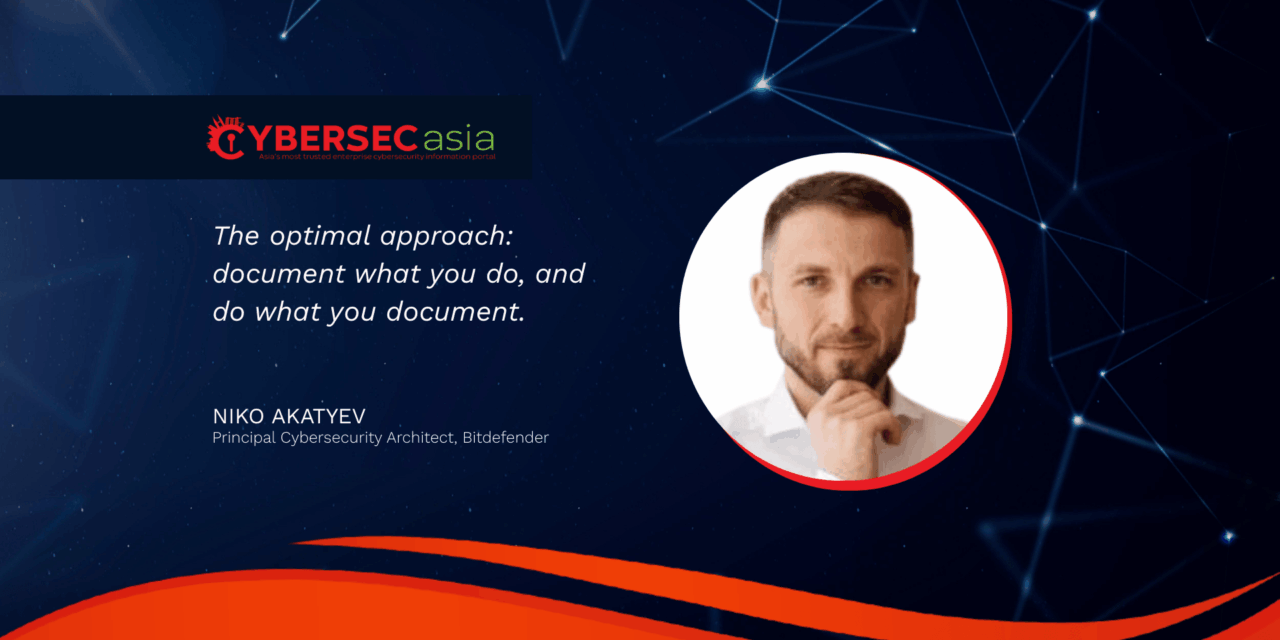
In practice, many enterprises may end up leaning too far one way: heavy tooling with weak documentation, or vice versa. Both create blind spots. Without documentation, technology is inconsistent; without tools, documented processes cannot be validated or scaled. The optimal approach: document what you do, and do what you document.

Align practical documentation with well-configured technologies to turn compliance from checkbox to operational reality. Modern platforms — orchestration tools, continuous monitoring, automated evidence collection — reduce manual burden while improving accuracy. These create living documentation that updates as environments change.

Compliance as a trust multiplier

Compliance builds trust. When customers, partners, and investors see that your security is structured, measured, and independently verified, it signals maturity and reliability. Certifications serve as differentiators that prove your organization takes security seriously and upholds best practices.

Automate wherever possible, leverage managed solutions, and fully implement technologies rather than multiplying tools. Seek expert guidance when needed, but remember: culture and commitment complete the loop.

Remember, compliance is a continuous journey, not a destination. Organizations that treat it as opportunity — not burden — will thrive. Most frameworks share common principles, so establish those first to ease future alignment across jurisdictions. When used as a compass rather than a cage, compliance helps organizations to navigate uncertainty with confidence, align teams around shared goals, and create sustainable competitive advantage. Those that embrace it as strategic infrastructure — not a cost centre — will earn trust, partnerships, and market preference in an increasingly security-conscious world.
When used as a compass rather than a cage, compliance helps organizations to navigate uncertainty with confidence, align teams around shared goals, and create sustainable competitive advantage. Those that embrace it as strategic infrastructure — not a cost centre — will earn trust, partnerships, and market preference in an increasingly security-conscious world.
Share:

PreviousAgentic AI emerge as enterprise insider threats predicted in 2026
NextAI is reshaping cyber risk: Time to rethink cybersecurity regionally

Related Posts

What causes ransomware victims to pay up despite “do not pay” policies?

What causes ransomware victims to pay up despite “do not pay” policies?

Thursday, July 25, 2024

If you thought cyberattacks were bad this year, wait till 2022

If you thought cyberattacks were bad this year, wait till 2022

Tuesday, November 9, 2021

A peek into the work day of hackers from various threat-group sizes

A peek into the work day of hackers from various threat-group sizes

Tuesday, May 2, 2023

Will the complexities of 5G security destroy its potential?

Will the complexities of 5G security destroy its potential?

Wednesday, February 19, 2020

Leave a reply Cancel reply

You must be logged in to post a comment.

Voters-draw/RCA-Sponsors

Slide
Slide
Slide
Slide
Slide
Slide
Slide
Slide
Slide
Slide
Slide
Slide
Slide
Slide
previous arrow
next arrow

CybersecAsia Voting Placement

Gamification listing or Participate Now

PARTICIPATE NOW

Vote Now -Placement(Google Ads)

Top-Sidebar-banner

Whitepapers

  • Closing the Gap in Email Security:How To Stop The 7 Most SinisterAI-Powered Phishing Threats

    Closing the Gap in Email Security:How To Stop The 7 Most SinisterAI-Powered Phishing Threats

    Insider threats continue to be a major cybersecurity risk in 2024. Explore more insights on …Download Whitepaper
  • 2024 Insider Threat Report: Trends, Challenges, and Solutions

    2024 Insider Threat Report: Trends, Challenges, and Solutions

    Insider threats continue to be a major cybersecurity risk in 2024. Explore more insights on …Download Whitepaper
  • AI-Powered Cyber Ops: Redefining Cloud Security for 2025

    AI-Powered Cyber Ops: Redefining Cloud Security for 2025

    The future of cybersecurity is a perfect storm: AI-driven attacks, cloud expansion, and the convergence …Download Whitepaper
  • Data Management in the Age of Cloud and AI

    Data Management in the Age of Cloud and AI

    In today’s Asia Pacific business environment, organizations are leaning on hybrid multi-cloud infrastructures and advanced …Download Whitepaper

Middle-sidebar-banner

Case Studies

  • Bangladesh LGED modernizes communication while addressing data security concerns

    Bangladesh LGED modernizes communication while addressing data security concerns

    To meet emerging data localization/privacy regulations, the government engineering agency deploys a secure, unified digital …Read more
  • What AI worries keeps members of the Association of Certified Fraud Examiners sleepless?

    What AI worries keeps members of the Association of Certified Fraud Examiners sleepless?

    This case study examines how many anti-fraud professionals reported feeling underprepared to counter rising AI-driven …Read more
  • Meeting the business resilience challenges of digital transformation

    Meeting the business resilience challenges of digital transformation

    Data proves to be key to driving secure and sustainable digital transformation in Southeast Asia.Read more
  • Upgrading biometric authentication system protects customers in the Philippines: UnionDigital Bank

    Upgrading biometric authentication system protects customers in the Philippines: UnionDigital Bank

    An improved dual-liveness biometric framework can counter more deepfake threats, ensure compliance, and protect underbanked …Read more

Bottom sidebar

Other News

  • CYFIRMA’s 2025 Impact Recap Showcases DeCYFIR, Preemptive External Threat Landscape Management Platform, Delivering Measurable Global Defense Against Emerging Threats

    Tuesday, December 30, 2025
    SINGAPORE and TOKYO, Dec. 29, …Read More »
  • Taoping Announces Transformational Growth Milestones: New Corporate Headquarters and US$2 Million Smart Infrastructure Contracts

    Monday, December 29, 2025
    TIANJIN, China, Dec. 29, 2025 …Read More »
  • SAESOL Tech to Unveil Next-Generation V2X Security Technology Protecting Vulnerable Road Users at CES 2026

    Tuesday, December 23, 2025
    First public showcase of “S2X …Read More »
  • Fescaro makes strong Kosdaq debut, eyes global auto cybersecurity

    Friday, December 19, 2025
    SUWON, South Korea, Dec. 19, …Read More »
  • CYFIRMA Announces DeCYFIR 4.0: Industry-Leading AI Platform Engineered for Preemptive Protection Against Future Threats

    Friday, December 19, 2025
    Revolutionary 9 Pillar AI Architecture …Read More »
  • Our Brands
  • DigiconAsia
  • MartechAsia
  • Home
  • About Us
  • Contact Us
  • Sitemap
  • Privacy & Cookies
  • Terms of Use
  • Advertising & Reprint Policy
  • Media Kit
  • Subscribe
  • Manage Subscriptions
  • Newsletter

Copyright © 2026 CybersecAsia All Rights Reserved.