
Cybersecurity News in Asia

RECENT STORIES:

SEGA moves faster with flow-based network monitoring
Iran-linked cyberattack hits major US medical device maker’s global op...
Inspira Enterprise Joins the Microsoft Intelligent Security Associatio...
Athena Intelligence Launches India Push Amid Rising Cross-Border Corpo...
Global Technology Leaders to Convene at ATxEnterprise 2026 to Address ...
Guidebook download: Streamlining video surveillance projects with Hikv...
LOGIN REGISTER
CybersecAsia
  • Features
    • Featured

      Agentic AI: The next great productivity hack or the ultimate security nightmare of 2026?

      Agentic AI: The next great productivity hack or the ultimate security nightmare of 2026?

      Wednesday, March 18, 2026, 3:00 PM Asia/Singapore | Features, Newsletter
    • Featured

      Misconfigured AI: Hype or real threat to APAC Infrastructure?

      Misconfigured AI: Hype or real threat to APAC Infrastructure?

      Monday, March 16, 2026, 7:36 PM Asia/Singapore | Features, Tips
    • Featured

      Building trust in Asia’s financial sector with digital identity innovations

      Building trust in Asia’s financial sector with digital identity innovations

      Monday, March 16, 2026, 9:45 AM Asia/Singapore | Features, Newsletter
  • Opinions
  • Tips
  • Whitepapers
  • Awards 2025
  • Directory
  • E-Learning

Select Page

Tips

How can APAC unlock AI potential without vulnerability to adoption pitfalls?

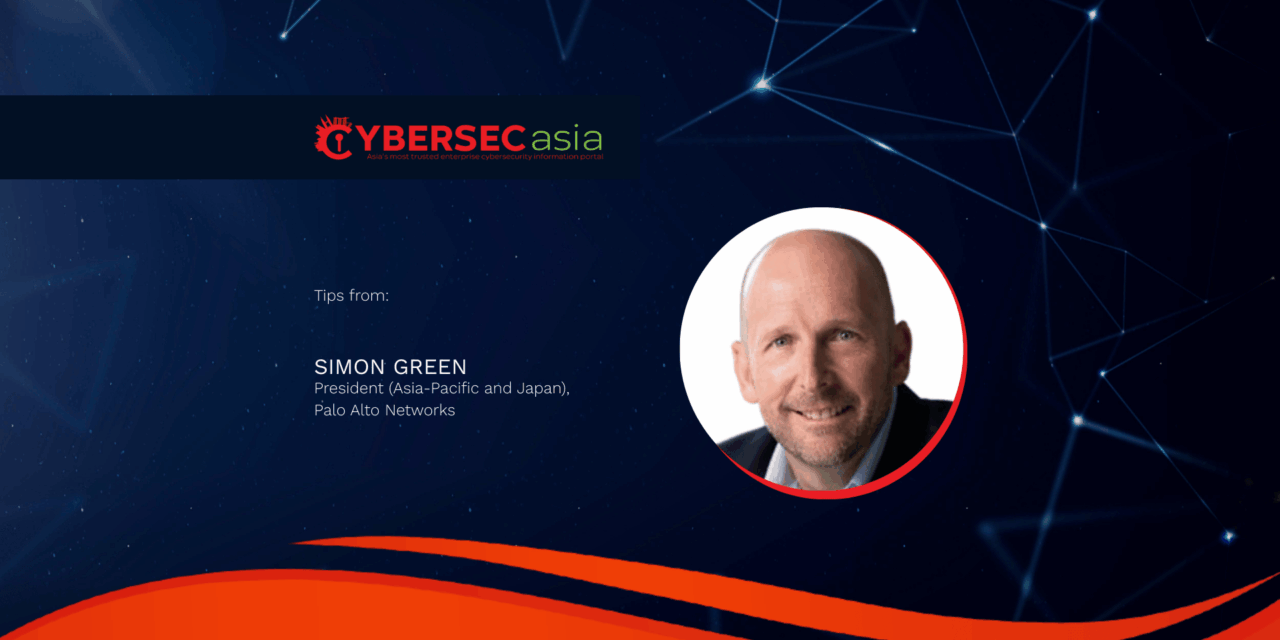
By Simon Green, President (Asia-Pacific and Japan), Palo Alto Networks | Wednesday, March 4, 2026, 6:00 PM Asia/Singapore

How can APAC unlock AI potential without vulnerability to adoption pitfalls?

Generative AI adoption accelerates leaks/attacks and unpredictable risks and biases. This necessitates new thinking for resilient defenses beyond traditional cyber tools.

Across the Asia Pacific region (APAC), countries have different national AI strategies: Australia prioritizes responsible, trust-based adoption; Japan embeds AI in Society 5.0; Singapore focuses on centers of excellence, talent, and AI for public good.

While these strategies are driving AI adoption, they also introduce hidden security risks in AI systems and data. For instance, organizations today are rapidly adopting GenAI tools for significant productivity benefits accruing to writing assistants and coding applications. However, this widespread use is fueling a parallel surge in data leaks, intellectual property loss, and regulatory exposure.

Cybercriminals are leveraging AI to enhance the speed and sophistication of attacks, so traditional security tools are no longer sufficient. Additionally, some surveys show that many organizations have limited to no control over data shared in GenAI tools, while a substantial portion of encrypted traffic goes uninspected, leaving firms vulnerable to hidden threats such as malware and data exfiltration.

How can organizations in the region build resilient security strategies that keep pace with AI-driven threats?

Strengthening organizational resilience

First, Organizations should review cybersecurity strategies to address tool sprawl and complexity. Regional leaders polled have often cited complexity as their biggest challenge to security. The increasing difficulty of managing security across numerous tools, systems, processes, and cyber threats has to be addressed by moving beyond a piecemeal approach to security.

Organizations should evaluate integrated security approaches to consolidate tools and improve efficiency, though ROI varies by implementation. An integrated approach simplifies security by combining multiple tools, leading to an return-on-investment that is higher than that of fragmented strategies. It also fosters better communication and decision-making among all stakeholders. In addition, public-private partnerships are vital for building a stronger cybersecurity ecosystem, as they create solutions that meet national needs. To effectively manage cascading or cross-sector AI risks, a structured co-governance model is essential: one that enables governments and operators to jointly test AI systems, updates, and high-risk use cases.

Next, cybersecurity cannot stop at the organizational perimeter — to curb lateral movement, extend identity security and privilege management to all users, external suppliers, devices, and apps using zero trust principles.

Equally important is ensuring accountability. Defenders need to combine automated detection with human review. In addition, employees must be empowered through education and strong internal safeguards to uphold a culture of security.

Ultimately, AI security is a shared responsibility, requiring a strong mix of technology, people, and partnerships. By uniting zero trust principles with Responsible AI governance, organizations can build a resilient, adaptive security posture that is not only prepared for today’s threats but also future-ready for the evolving landscape.

Resilience has to be achieve through a prevention-first paradigm, ensuring attackers are stopped before breaches occur.

Share:

PreviousRedefining the future of cyber insurance
NextExperts warn of Iranian cyber retaliation after massive US-Israeli digital offensive

Related Posts

Cybercriminals are turning to Kubernetes cloud native environments

Cybercriminals are turning to Kubernetes cloud native environments

Friday, April 22, 2022

Ransomware prevention is better than cure

Ransomware prevention is better than cure

Wednesday, June 30, 2021

The world’s manufacturing industries are in Conti’s gunsights: threat report

The world’s manufacturing industries are in Conti’s gunsights: threat report

Monday, August 15, 2022

Q1 2020 saw a six-fold increase in attacks on cloud accounts

Q1 2020 saw a six-fold increase in attacks on cloud accounts

Tuesday, June 2, 2020

Leave a reply Cancel reply

You must be logged in to post a comment.

Voters-draw/RCA-Sponsors

Slide
Slide
Slide
Slide
Slide
Slide
Slide
Slide
Slide
Slide
Slide
Slide
Slide
Slide
previous arrow
next arrow

CybersecAsia Voting Placement

Gamification listing or Participate Now

PARTICIPATE NOW

Vote Now -Placement(Google Ads)

Top-Sidebar-banner

Whitepapers

  • Closing the Gap in Email Security:How To Stop The 7 Most SinisterAI-Powered Phishing Threats

    Closing the Gap in Email Security:How To Stop The 7 Most SinisterAI-Powered Phishing Threats

    Insider threats continue to be a major cybersecurity risk in 2024. Explore more insights on …Download Whitepaper
  • 2024 Insider Threat Report: Trends, Challenges, and Solutions

    2024 Insider Threat Report: Trends, Challenges, and Solutions

    Insider threats continue to be a major cybersecurity risk in 2024. Explore more insights on …Download Whitepaper
  • AI-Powered Cyber Ops: Redefining Cloud Security for 2025

    AI-Powered Cyber Ops: Redefining Cloud Security for 2025

    The future of cybersecurity is a perfect storm: AI-driven attacks, cloud expansion, and the convergence …Download Whitepaper
  • Data Management in the Age of Cloud and AI

    Data Management in the Age of Cloud and AI

    In today’s Asia Pacific business environment, organizations are leaning on hybrid multi-cloud infrastructures and advanced …Download Whitepaper

Middle-sidebar-banner

Case Studies

  • Cyber protection for medical clinics in Singapore

    Cyber protection for medical clinics in Singapore

    As Singapore’s healthcare sector becomes increasingly digital and interconnected, clinics are facing heightened cyber risks, …Read more
  • India’s WazirX strengthens governance and digital asset security

    India’s WazirX strengthens governance and digital asset security

    Revamping its custody infrastructure using multi‑party computation tools has improved operational resilience and institutional‑grade safeguardsRead more
  • Bangladesh LGED modernizes communication while addressing data security concerns

    Bangladesh LGED modernizes communication while addressing data security concerns

    To meet emerging data localization/privacy regulations, the government engineering agency deploys a secure, unified digital …Read more
  • What AI worries keep members of the Association of Certified Fraud Examiners sleepless?

    What AI worries keep members of the Association of Certified Fraud Examiners sleepless?

    This case study examines how many anti-fraud professionals reported feeling underprepared to counter rising AI-driven …Read more

Bottom sidebar

Other News

  • Inspira Enterprise Joins the Microsoft Intelligent Security Association

    Wednesday, March 25, 2026
    MUMBAI, India, March 24, 2026 …Read More »
  • Athena Intelligence Launches India Push Amid Rising Cross-Border Corporate Risk

    Tuesday, March 24, 2026
    Aditya Jain appointed to lead …Read More »
  • Global Technology Leaders to Convene at ATxEnterprise 2026 to Address the Future of Digital Infrastructure, AI, and Cyber Trust

    Tuesday, March 24, 2026
    SINGAPORE, March 24, 2026 /PRNewswire/ …Read More »
  • Guidebook download: Streamlining video surveillance projects with Hikvision’s Hik-Partner Pro Designer

    Tuesday, March 24, 2026
    HANGZHOU, China, March 24, 2026 …Read More »
  • Olight and Tesla Owners of Silicon Valley Spotlight the ArkPro for Spring Break Travel Safety

    Monday, March 23, 2026
    SHENZHEN, China, March 23, 2026 …Read More »
  • Our Brands
  • DigiconAsia
  • MartechAsia
  • Home
  • About Us
  • Contact Us
  • Sitemap
  • Privacy & Cookies
  • Terms of Use
  • Advertising & Reprint Policy
  • Media Kit
  • Subscribe
  • Manage Subscriptions
  • Newsletter

Copyright © 2026 CybersecAsia All Rights Reserved.