Cybersecurity News in Asia

RECENT STORIES:

SEGA moves faster with flow-based network monitoring
Singtel Receives Frost & Sullivan’s 2025 Singapore Company o...
Just when we thought AI-powered IDEs were invaluable…
Securing the AI ecosystem: The next frontier for APAC enterprises
Fescaro sees rising demand for automotive cybersecurity solutions
Cybersecurity predictions for 2026 start here
LOGIN REGISTER
CybersecAsia
  • Features
    • Featured

      Web browsers that rank lowest for privacy protection

      Web browsers that rank lowest for privacy protection

      Wednesday, December 10, 2025, 8:30 AM Asia/Singapore | Features, Newsletter
    • Featured

      The impact of APAC’s AI buildout on cybersecurity in 2026

      The impact of APAC’s AI buildout on cybersecurity in 2026

      Tuesday, December 9, 2025, 2:57 PM Asia/Singapore | Features
    • Featured

      Is your AI secretly sabotaging your organization?

      Is your AI secretly sabotaging your organization?

      Monday, December 1, 2025, 4:25 PM Asia/Singapore | Features, Newsletter
  • Opinions
  • Tips
  • Whitepapers
  • Awards 2025
  • Directory
  • E-Learning

Select Page

News

As cybersecurity threats to critical infrastructure escalate, US Congress reexamines Stuxnet legacy

By CybersecAsia editors | Monday, July 28, 2025, 2:03 PM Asia/Singapore

As cybersecurity threats to critical infrastructure escalate, US Congress reexamines Stuxnet legacy

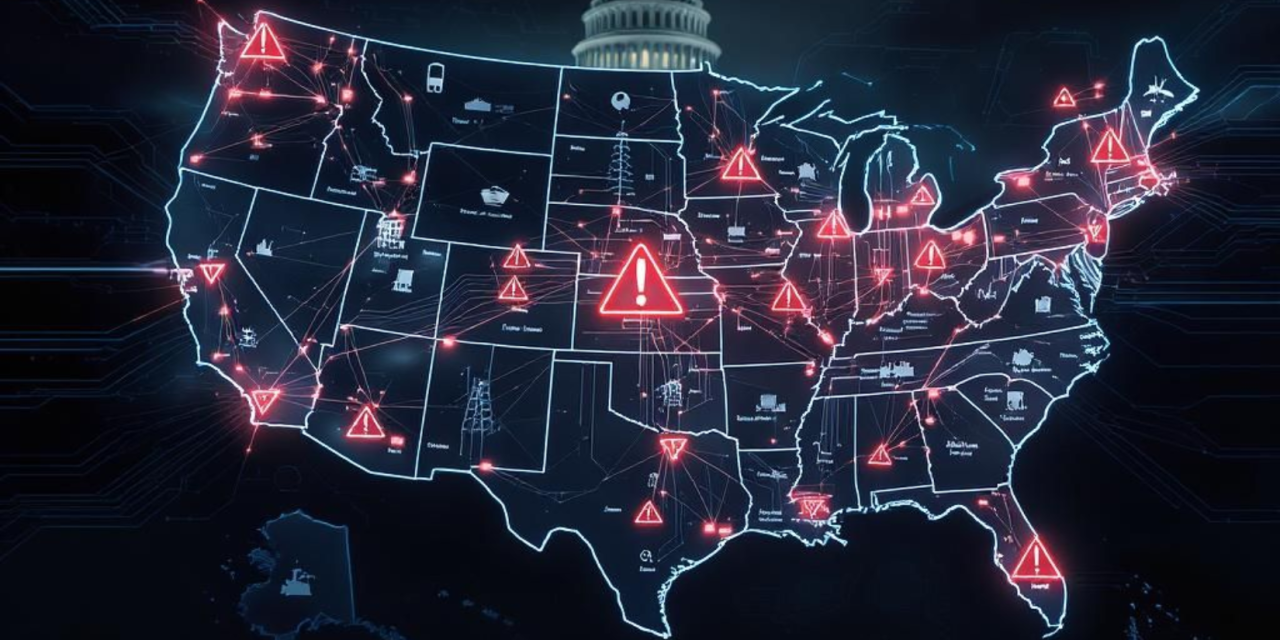
Experts urge action on widespread OT vulnerabilities, citing rising state-linked intrusions, water-utility lapses and AI-driven energy-grid risks.

On 16 July 2025, it was announced that the US House Homeland Security Subcommittee on Cybersecurity and Infrastructure Protection would convene on 22 July to revisit the Stuxnet worm — 15 years after its deployment — and assess how today’s adversaries can emulate or surpass that landmark attack against critical infrastructure.

Such concerns have been mounting since February 2024, when CISA and allied agencies had warned that Volt Typhoon actors were pre-positioning inside US energy, water and transport networks for potential disruption during a geopolitical crisis. The EPA has since stepped up enforcement after finding over 70% of inspected water utilities out of basic cyber compliance.

According to Robert M Lee, CEO, Dragos, an expert witness invited to the hearing, his firm’s Feb 2025 OT/ICS research had concluded that OT has become a mainstream target, and that even advanced cyber operations had been “employing unsophisticated tactics to compromise and disrupt critical infrastructure.”

Elsewhere, industry voices concur on the urgency of realistic tabletop tests. Dr Eric Schmidt, former CEO,  Google, had on 9 April 2025’s House Energy and Commerce Committee about the importance of a secure energy grid for achieving AI dominance: “If China comes to superintelligence first, it changes the dynamic of power globally, in ways that we have no way of understanding or predicting.”

According to Scott Register, VP, Security Solutions, Keysight Technologies, expressed one private-sector concern: “Energy grids are being stretched beyond limits and AI could push up energy prices and create shortages. Energy is essential to powering the boom in AI and this makes it a prime target for threat actors seeking to destabilize AI leadership or dependent critical systems.”

With the US Congress eyeing reauthorization of key cyber statutes later this year, the Stuxnet anniversary hearing highlights a consensus: deterrence now depends less on discovering the next Zero Day vulnerability than on closing everyday OT gaps before adversaries exploit them at scale.

More details from the US House Homeland Security Subcommittee on Cybersecurity and Infrastructure Protection hearing will be available at their official website.

Share:

PreviousVietnam Launches NDAChain, the National Blockchain Platform to Accelerate Digital Data Infrastructure by 2026
NextPT Kereta Api Indonesia announces nationwide email and communication overhaul

Related Posts

Ransomware up 148% in the new WFH normal

Ransomware up 148% in the new WFH normal

Monday, April 20, 2020

Are fatigued IT teams and WFH employees putting their employers at risk?

Are fatigued IT teams and WFH employees putting their employers at risk?

Wednesday, August 4, 2021

French luxury conglomerate announces massive April 2025 multi-brand data breach

French luxury conglomerate announces massive April 2025 multi-brand data breach

Thursday, September 18, 2025

How financial institutions and governments can protect aging populations from scams

How financial institutions and governments can protect aging populations from scams

Friday, November 7, 2025

Leave a reply Cancel reply

You must be logged in to post a comment.

Voters-draw/RCA-Sponsors

Slide
Slide
Slide
Slide
Slide
Slide
Slide
Slide
Slide
Slide
Slide
Slide
Slide
Slide
previous arrow
next arrow

CybersecAsia Voting Placement

Gamification listing or Participate Now

PARTICIPATE NOW

Vote Now -Placement(Google Ads)

Top-Sidebar-banner

Whitepapers

  • Closing the Gap in Email Security:How To Stop The 7 Most SinisterAI-Powered Phishing Threats

    Closing the Gap in Email Security:How To Stop The 7 Most SinisterAI-Powered Phishing Threats

    Insider threats continue to be a major cybersecurity risk in 2024. Explore more insights on …Download Whitepaper
  • 2024 Insider Threat Report: Trends, Challenges, and Solutions

    2024 Insider Threat Report: Trends, Challenges, and Solutions

    Insider threats continue to be a major cybersecurity risk in 2024. Explore more insights on …Download Whitepaper
  • AI-Powered Cyber Ops: Redefining Cloud Security for 2025

    AI-Powered Cyber Ops: Redefining Cloud Security for 2025

    The future of cybersecurity is a perfect storm: AI-driven attacks, cloud expansion, and the convergence …Download Whitepaper
  • Data Management in the Age of Cloud and AI

    Data Management in the Age of Cloud and AI

    In today’s Asia Pacific business environment, organizations are leaning on hybrid multi-cloud infrastructures and advanced …Download Whitepaper

Middle-sidebar-banner

Case Studies

  • Bangladesh LGED modernizes communication while addressing data security concerns

    Bangladesh LGED modernizes communication while addressing data security concerns

    To meet emerging data localization/privacy regulations, the government engineering agency deploys a secure, unified digital …Read more
  • What AI worries keeps members of the Association of Certified Fraud Examiners sleepless?

    What AI worries keeps members of the Association of Certified Fraud Examiners sleepless?

    This case study examines how many anti-fraud professionals reported feeling underprepared to counter rising AI-driven …Read more
  • Meeting the business resilience challenges of digital transformation

    Meeting the business resilience challenges of digital transformation

    Data proves to be key to driving secure and sustainable digital transformation in Southeast Asia.Read more
  • Upgrading biometric authentication system protects customers in the Philippines: UnionDigital Bank

    Upgrading biometric authentication system protects customers in the Philippines: UnionDigital Bank

    An improved dual-liveness biometric framework can counter more deepfake threats, ensure compliance, and protect underbanked …Read more

Bottom sidebar

  • Our Brands
  • DigiconAsia
  • MartechAsia
  • Home
  • About Us
  • Contact Us
  • Sitemap
  • Privacy & Cookies
  • Terms of Use
  • Advertising & Reprint Policy
  • Media Kit
  • Subscribe
  • Manage Subscriptions
  • Newsletter

Copyright © 2025 CybersecAsia All Rights Reserved.