

Cybersecurity News in Asia

RECENT STORIES:

SEGA moves faster with flow-based network monitoring
Tackling next year’s enterprise cyber resilience trends: five strategi...
Web browsers that rank lowest for privacy protection
The impact of APAC’s AI buildout on cybersecurity in 2026
The quantum future is coming – and hackers are already preparing for i...
Autocrypt Announces Product Release of Post-Quantum PKI Product, Pione...
LOGIN REGISTER
CybersecAsia
  • Features
    • Featured

      Web browsers that rank lowest for privacy protection

      Web browsers that rank lowest for privacy protection

      Wednesday, December 10, 2025, 8:30 AM Asia/Singapore | Features, Newsletter
    • Featured

      The impact of APAC’s AI buildout on cybersecurity in 2026

      The impact of APAC’s AI buildout on cybersecurity in 2026

      Tuesday, December 9, 2025, 2:57 PM Asia/Singapore | Features
    • Featured

      Is your AI secretly sabotaging your organization?

      Is your AI secretly sabotaging your organization?

      Monday, December 1, 2025, 4:25 PM Asia/Singapore | Features, Newsletter
  • Opinions
  • Tips
  • Whitepapers
  • Awards 2025
  • Directory
  • E-Learning

Select Page

News

Critical Zero Day web application firewall vulnerability enables remote takeover

By CybersecAsia editors | Thursday, November 20, 2025, 6:36 AM Asia/Singapore

Critical Zero Day web application firewall vulnerability enables remote takeover

With a severity of 9.8, the vulnerability requires urgent patching that is already available.

A critical Zero Day vulnerability identified as CVE-2025-64446 has been actively exploited since October 2025, posing severe cybersecurity risks globally, according to various news reports.

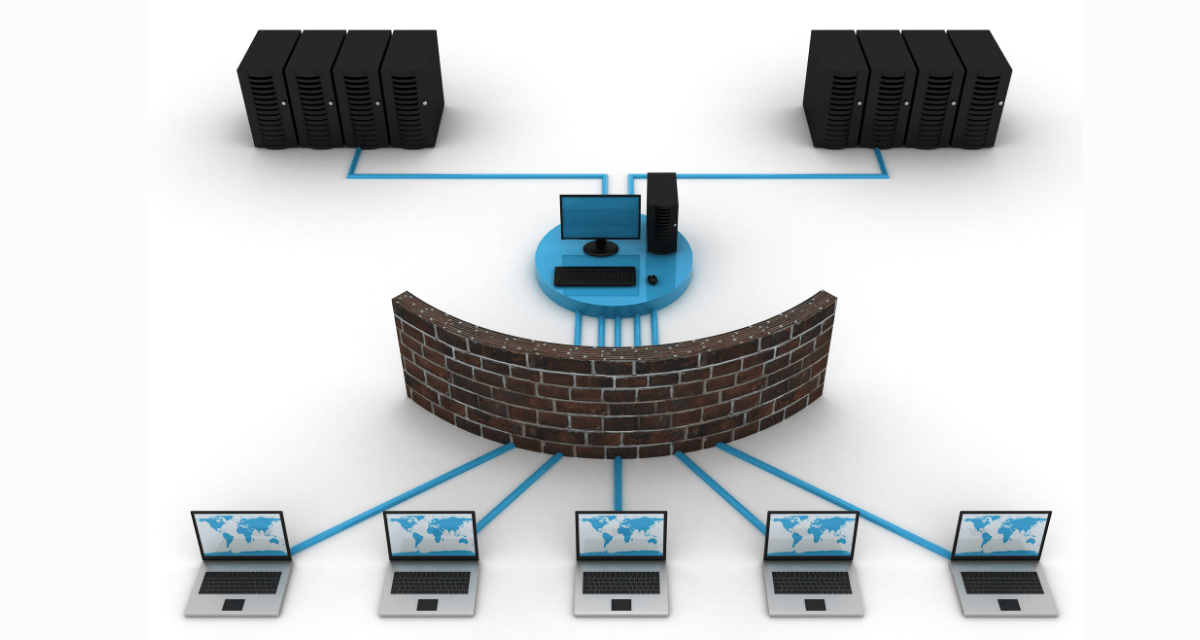
This high-severity flaw, rated 9.8/10 on the CVSS scale, is found in the Fortinet FortiWeb Web Application Firewall, versions 8.0.1 and earlier.

CVE-2025-64446 allows unauthenticated attackers to gain full administrative privileges on vulnerable devices, representing a significant compromise of network perimeter defenses. The vulnerability arises from a path traversal combined with an authentication bypass in the software’s request handling system:

  • Attackers send specially crafted HTTP POST requests targeting the endpoint /api/v2.0/cmdb/system/admin%3f/../../../../../cgi-bin/fwbcgi.
    This sequence bypasses normal authentication checks and grants attackers the ability to execute arbitrary administrative commands remotely.
  • A common exploitation method involves creating persistent unauthorized admin accounts with attacker-chosen usernames and passwords, enabling long-term control over devices without detection.
  • The consequences of exploitation are grave. Attackers can disable or manipulate firewall rules, intercept, and modify application traffic, and use compromised FortiWeb devices as launch pads for lateral movement inside corporate networks. Due to the software’s integration with other Fortinet products, attackers may gain broader access to critical internal systems and sensitive data.
  • Public proof-of-concept exploits surfaced quickly after initial detection in early October, with active exploitation reported worldwide including IP addresses in North America, Europe, and Asia.

The US Cybersecurity and Infrastructure Security Agency (CISA) has added CVE-2025-64446 to its Known Exploited Vulnerabilities catalog, emphasizing an urgent need for patching. Fortinet has responded by releasing version 8.0.2, which blocks exploitation attempts by returning HTTP 403 Forbidden responses, mitigating the vulnerability.

Organizations affected should immediately upgrade to version 8.0.2 or later, restrict internet exposure of management interfaces, and conduct thorough inspections for unknown administrative accounts or suspicious activity to detect prior compromise.

Monitoring logs for anomaly indicators and following Fortinet’s advisories are essential defensive measures. This incident underscores the urgency of maintaining rigorous patch management protocols and vigilant network monitoring to protect vital security infrastructure against emerging zero-day threats.


Share:

PreviousMajor internet infrastructure outage disrupts access to numerous popular platforms
NextBitsight Reports 50% Growth in APAC Amid Rising Demand for Cyber Risk Intelligence

Related Posts

Data management and protection in the WFH multi-cloud era

Data management and protection in the WFH multi-cloud era

Friday, September 4, 2020

Ethical hackers share their views on what to expect in 2021

Ethical hackers share their views on what to expect in 2021

Thursday, November 26, 2020

With the US midterms around the corner, watch out for APT42

With the US midterms around the corner, watch out for APT42

Friday, September 9, 2022

Hackers cap off 2020 with 3.3bn RDP attacks: a 242% surge

Hackers cap off 2020 with 3.3bn RDP attacks: a 242% surge

Tuesday, January 5, 2021

Leave a reply Cancel reply

You must be logged in to post a comment.

Voters-draw/RCA-Sponsors

Slide
Slide
Slide
Slide
Slide
Slide
Slide
Slide
Slide
Slide
Slide
Slide
Slide
Slide
previous arrow
next arrow

CybersecAsia Voting Placement

Gamification listing or Participate Now

PARTICIPATE NOW

Vote Now -Placement(Google Ads)

Top-Sidebar-banner

Whitepapers

  • Closing the Gap in Email Security:How To Stop The 7 Most SinisterAI-Powered Phishing Threats

    Closing the Gap in Email Security:How To Stop The 7 Most SinisterAI-Powered Phishing Threats

    Insider threats continue to be a major cybersecurity risk in 2024. Explore more insights on …Download Whitepaper
  • 2024 Insider Threat Report: Trends, Challenges, and Solutions

    2024 Insider Threat Report: Trends, Challenges, and Solutions

    Insider threats continue to be a major cybersecurity risk in 2024. Explore more insights on …Download Whitepaper
  • AI-Powered Cyber Ops: Redefining Cloud Security for 2025

    AI-Powered Cyber Ops: Redefining Cloud Security for 2025

    The future of cybersecurity is a perfect storm: AI-driven attacks, cloud expansion, and the convergence …Download Whitepaper
  • Data Management in the Age of Cloud and AI

    Data Management in the Age of Cloud and AI

    In today’s Asia Pacific business environment, organizations are leaning on hybrid multi-cloud infrastructures and advanced …Download Whitepaper

Middle-sidebar-banner

Case Studies

  • Bangladesh LGED modernizes communication while addressing data security concerns

    Bangladesh LGED modernizes communication while addressing data security concerns

    To meet emerging data localization/privacy regulations, the government engineering agency deploys a secure, unified digital …Read more
  • What AI worries keeps members of the Association of Certified Fraud Examiners sleepless?

    What AI worries keeps members of the Association of Certified Fraud Examiners sleepless?

    This case study examines how many anti-fraud professionals reported feeling underprepared to counter rising AI-driven …Read more
  • Meeting the business resilience challenges of digital transformation

    Meeting the business resilience challenges of digital transformation

    Data proves to be key to driving secure and sustainable digital transformation in Southeast Asia.Read more
  • Upgrading biometric authentication system protects customers in the Philippines: UnionDigital Bank

    Upgrading biometric authentication system protects customers in the Philippines: UnionDigital Bank

    An improved dual-liveness biometric framework can counter more deepfake threats, ensure compliance, and protect underbanked …Read more

Bottom sidebar

  • Our Brands
  • DigiconAsia
  • MartechAsia
  • Home
  • About Us
  • Contact Us
  • Sitemap
  • Privacy & Cookies
  • Terms of Use
  • Advertising & Reprint Policy
  • Media Kit
  • Subscribe
  • Manage Subscriptions
  • Newsletter

Copyright © 2025 CybersecAsia All Rights Reserved.